How to Iron Waterproof Fabric
8th May, 2026
Waterproof fabric can sometimes be ironed safely, but the wrong heat setting can permanently damage coatings, laminated layers or surface finishes. That uncertainty is why many sewists hesitate before pressing creases out of waterproof materials.
Some fabrics respond well to gentle pressing with protection, while others can bubble, melt or lose their appearance after only a few seconds of direct heat. The safest approach depends on the type of waterproof fabric, its coating and how it has been finished.
Our guide explains how to reduce creases carefully, when ironing may be risky, and which alternatives can work better for waterproof sewing projects.
What Is Waterproof Fabric and Can It Be Ironed?
Some waterproof fabrics can be ironed carefully, while others can become damaged by heat, so the safest method depends on the fabric type and coating.
Waterproof fabric, as a term, is quite broad generally, as this can cover a lot of different materials that have such waterproof qualities, including:
- PU-coated fabrics
- Laminated fabrics
- Synthetic outdoor materials
- Breathable waterproof fabrics
- Water-resistant utility fabrics
Each reacts differently to heat. Some tolerate gentle pressing on a low synthetic setting, while others may soften, stick or distort very quickly.
This is why uncertainty around ironing waterproof fabric is so common. A fabric that works well for outdoor cushions may behave very differently from lightweight rainwear fabric or coated bag-making material.
Before sewing, it helps to understand how your chosen material handles heat, folding and pressing.
Is It Safe to Iron Waterproof Fabric?
Waterproof fabric can sometimes be ironed on low heat with protection, but direct heat can permanently damage certain coatings and membranes.
The biggest mistake is assuming all synthetic fabrics behave the same way. Some waterproof coatings are highly heat-sensitive, especially laminated or coated materials designed for outdoor use.
Heat risks may include:
- Surface shine
- Bubbling
- Warping
- Coating distortion
- Layers separating over time
In some cases, damage may not appear immediately. A fabric might look fine after ironing, but later show peeling, cracking or weakened areas around folds and seams.
That is why cautious handling matters more than trying to remove every crease perfectly.
Why Heat Can Damage Waterproof Fabric
Excessive heat can melt coatings, distort laminated layers and reduce the appearance or performance of waterproof fabric.
Many waterproof fabrics rely on surface coatings or bonded layers to repel water. Direct heat can interfere with those finishes, especially if the iron is left in one place for too long.
Common signs of heat damage include:
- Shiny patches
- Bubbling or rippling
- Sticky surfaces
- Flattened texture
- Delaminated layers
- Permanent crease marks
For example, heavily pressing folded raincoat fabric on a high cotton setting may leave visible marks or weaken the coated surface.
Some damage also develops gradually. A seam that appears fine immediately after ironing may later separate or crack where the coating softened under heat.
This is why gentle handling and testing matter more than aggressive pressing.
Not sure which waterproof fabrics are easier to work with? Browse the waterproof fabric range carefully and compare coatings, flexibility and intended project use before sewing.
Best Practices Before Ironing Waterproof Fabric
Preparation matters as much as the ironing itself because testing and setup reduce the risk of permanent marks or heat damage.
Before ironing:
- Check any available care guidance first
- Test a scrap or hidden area
- Clean the ironing surface
- Use the lowest effective heat setting
- Remove excess water from the iron if steam is unsuitable
- Prepare a pressing cloth before starting
Smooth coated options, such as Waterproof PU Coated Fabric, usually respond better to careful low-temperature pressing than sudden direct heat.
Trying to fix deep creases too quickly often causes more problems than the creases themselves.
Test a Scrap First
Always test on an offcut, seam allowance or hidden section before ironing the main fabric.
This helps you check:
- Heat tolerance
- Surface changes
- Shine marks
- Texture distortion
- Steam reaction
Even fabrics that look similar can react differently depending on their coating or finish.
Start With Minimal Heat
Begin with the lowest practical heat setting and increase cautiously only if necessary.
A gentle synthetic setting is usually safer than jumping straight to medium or high heat. Slow, careful pressing tends to be less risky than intense direct heat.
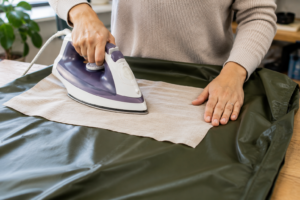
How to Iron Waterproof Fabric Without Causing Damage
Use low heat, a pressing cloth and gentle pressure rather than direct prolonged contact with the iron.
1. Turn the Fabric if Appropriate
If suitable for the fabric type, place the wrong side facing up before pressing.
This can help reduce visible surface marks on coated fabrics.
2. Add a Pressing Cloth
Place a clean cotton pressing cloth between the iron and the fabric.
The cloth helps soften direct heat exposure and reduces the chance of shine or sticking.
3. Use a Low Synthetic Setting
Start with the coolest practical setting rather than guessing.
Avoid high cotton or linen settings unless manufacturer guidance specifically allows it.
4. Keep the Iron Moving
Do not leave the iron resting in one place.
Gentle movement reduces concentrated heat build-up, especially around folds and seams.
5. Let the Fabric Cool Flat
Allow the fabric to cool naturally before folding or moving it.
Handling coated fabric while still warm can sometimes create fresh marks or distortion.
Less heat for slightly longer is usually safer than applying intense heat quickly.
Recommended Temperature Settings for Waterproof Fabric
Most waterproof fabrics should only be exposed to low synthetic heat settings unless manufacturer instructions say otherwise.
Avoid relying on exact universal temperatures because coatings and finishes vary widely.
| Fabric Type | Safer Starting Point | Notes |
| Coated fabric | Low heat | Test carefully |
| Laminated fabric | Very low heat | Often safer with pressing cloth |
| Breathable waterproof fabric | Follow manufacturer guidance | Heat tolerance varies |
Steam can also affect some waterproof coatings differently from dry heat, so approach steaming cautiously unless care guidance confirms suitability.
Should You Use a Protective Layer When Ironing Waterproof Fabric?
A pressing cloth helps reduce direct heat exposure and lowers the risk of shine, melting or coating damage.
A smooth cotton cloth is often the safest option because it creates a barrier between the iron and the waterproof surface.
Avoid textured towels or heavily woven fabrics that may transfer marks onto coated materials.
This can be especially useful when flattening seams during bag making, rainwear sewing or outdoor cover projects where bulky seam allowances need gentle shaping.
Structured materials like Waterproof Ripstop Fabric can crease sharply during storage, so a pressing cloth helps reduce the risk of surface marking while easing folds out gradually.
Alternative Ways to Remove Creases from Waterproof Fabric
Hanging, gentle steaming or allowing fabric to relax naturally can sometimes remove wrinkles more safely than ironing.
Depending on the fabric, alternatives may include:
- Hanging the fabric in a warm room
- Rolling instead of folding
- Finger smoothing seams and creases
- Allowing folded fabric to relax over time
- Using light steam from a distance if suitable
Some wrinkles may soften naturally once the fabric is sewn into shape or allowed to hang freely.
In some cases, slight creasing is preferable to risking permanent heat damage.
Common Mistakes to Avoid When Ironing Waterproof Fabric
Most damage happens when readers use too much heat, skip testing or press directly onto coated surfaces.
Common mistakes include:
- Using a high cotton setting
- Applying steam too aggressively
- Ironing without a pressing cloth
- Leaving the iron stationary
- Ignoring manufacturer guidance
- Trying to flatten every crease completely
Some heat damage is irreversible, particularly on coated or laminated materials.
Working slowly and cautiously is usually more effective than trying to achieve a perfectly pressed finish immediately.
How to Care for Waterproof Fabric After Ironing
Let the waterproof fabric cool fully and store it carefully to avoid new creases or stress marks.
It also helps to:
- Store fabric dry
- Avoid tight folding where possible
- Roll fabric instead of sharply creasing it
- Recheck seams and coated areas after pressing
- Keep heavy objects off folded fabric during storage
Outdoor furnishing materials such as our Striped Waterproof Outdoor Fabric often keep their finish looking better for longer when stored loosely rather than folded tightly between uses.
Proper storage often reduces the need for repeated ironing later.
If you are unsure which waterproof fabric is easiest to work with for your project, browse our range or contact us at UK Fabrics Online for guidance before making your final decision ahead of purchasing.
Leave a Reply