Natural vs Synthetic Waterproof Fabric: What Works Best?
15th May, 2026
Choosing the best waterproof fabric depends less on whether it is natural or synthetic, and more on how the fabric is constructed, coated and used in the finished project.
Some readers prefer natural-looking materials for their texture and appearance, while others prioritise strong weather resistance and easy maintenance. Both approaches can work well, but they suit different sewing projects and expectations.
This guide compares natural and synthetic waterproof fabrics in practical terms, including durability, comfort, maintenance and outdoor performance, so you can choose a material that fits your project realistically.
What Is Waterproof Fabric?
Waterproof fabric is designed to resist or block water, but the level of protection depends on the material, coating and fabric construction.
Some fabrics rely on tightly woven fibres, while others use coatings, laminates or waterproof backings to reduce moisture penetration. This is why “waterproof fabric” can describe many different materials rather than one specific textile type.
It also helps to understand the difference between water-resistant and waterproof fabrics:
- Water-resistant fabrics may cope with light moisture or splashes
- Waterproof fabrics are generally designed for stronger or more prolonged exposure
Natural and synthetic materials can both be used in waterproof applications, although they often achieve that performance in different ways.
For example:
- Waxed cotton may repel rain through treatment and dense construction
- Coated polyester may rely on a synthetic waterproof layer
- Breathable outdoor fabrics often combine several layers or finishes
Understanding these differences makes it easier to choose a fabric that matches the way your project will actually be used.
Natural Waterproof Fabric: What You Need to Know
Natural fabrics can offer breathability, texture and comfort, but many require treatment or waxing to improve water resistance.
Unlike some synthetic materials, natural fibres are not usually fully waterproof on their own. Instead, they may be treated with waxes, coatings or specialised finishes to help repel moisture.
This gives natural waterproof fabrics a different look and feel that many readers prefer for lifestyle or decorative projects.
Common Natural Waterproof Fabric Types
Some commonly used natural-style waterproof fabrics include:
- Waxed cotton
- Treated canvas
- Oilskin-style fabrics where available and appropriately treated
These fabrics are often chosen for their softer texture, traditional appearance and less technical finish.
Traditional-style materials such as Waxed Cotton Waterproof Fabric are popular for bags, aprons and rustic outdoor accessories where texture and appearance matter alongside light weather resistance.
Waxed cotton, for example, is widely associated with outdoor bags, jackets and rustic accessories because it develops character over time and handles light outdoor use well.
Where Natural Options Work Well
Natural waterproof fabrics often suit:
- Lifestyle bags
- Aprons
- Rustic outdoor décor
- Bench cushions
- Decorative outdoor accessories
- Light outdoor use
Many readers also prefer the way natural fabrics drape and age compared with technical synthetic materials.
That said, natural options can require more maintenance and may absorb moisture more slowly after prolonged exposure. Drying times can also be longer, especially in damp conditions.
Synthetic Waterproof Fabric Explained
Synthetic waterproof fabrics are commonly chosen for strong water resistance, lighter weight and easier maintenance.
Many modern waterproof fabrics use polyester or nylon combined with coatings, backings or laminated layers to improve moisture protection.
These fabrics are widely used for:
- Rainwear
- Outdoor covers
- Garden cushions
- Utility bags
- Protective equipment
- Technical outdoor sewing
If you are comparing project-friendly outdoor materials, exploring different types of waterproof fabric can help you understand how coatings, flexibility and texture vary between options.
Why Synthetic Fabrics Are Popular
Synthetic waterproof fabrics are often chosen because they can offer:
- Lightweight handling
- Faster drying
- Consistent appearance
- Easier cleaning
- Strong water resistance
- Practical outdoor performance
This makes them popular for projects exposed to regular rain, garden use or repeated handling.
Technical materials like Waterproof Oxford Fabric are often chosen for practical outdoor sewing projects because they combine lightweight handling with strong moisture resistance.
Potential Drawbacks
Synthetic options may not suit every project or personal preference.
Some readers prefer the softer texture and appearance of natural materials, while others find technical fabrics less breathable or less comfortable for certain applications.
Environmental concerns may also influence buying decisions, although waterproof performance, coatings and product lifespan all contribute to the overall picture.
Key Differences Between Natural and Synthetic Waterproof Fabric
Natural and synthetic waterproof fabrics differ most in feel, maintenance, water resistance, durability and intended use.
| Feature | Natural Options | Synthetic Options |
| Feel | Softer, textured | Smoother, technical |
| Maintenance | Often higher | Often easier |
| Drying Speed | Slower | Faster |
| Outdoor Exposure | Varies | Often stronger |
| Appearance | Traditional | Modern or technical |
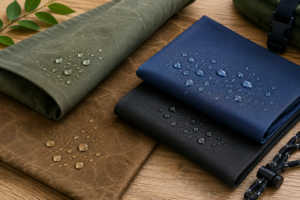
Aesthetics matter just as much as performance for many sewing projects. A waxed cotton tote bag and a coated polyester outdoor cover may both resist moisture, but they create very different finished results.
Browse waterproof fabric options carefully and compare how the material feels, folds and behaves before deciding purely on performance claims.
Benefits of Natural Waterproof Fabric
Natural waterproof fabrics are often chosen for their appearance, texture and comfort rather than maximum technical performance.
Benefits may include:
- Softer handling
- Traditional appearance
- Comfortable texture
- Lifestyle appeal
- Potential breathability depending on construction
These fabrics often suit decorative or everyday outdoor projects where appearance matters alongside practicality.
For example, waxed-style fabrics can work well for rustic bench cushions, utility aprons or handmade accessories where a softer, less technical finish feels more appropriate.
Benefits of Synthetic Waterproof Fabric
Synthetic waterproof fabrics are often preferred for reliable weather resistance, lower maintenance and outdoor durability.
Benefits may include:
- Lightweight handling
- Practical outdoor performance
- Easier maintenance
- Consistent coatings
- Faster drying
This makes synthetic materials especially useful for projects exposed to frequent moisture or heavier outdoor use.
A coated synthetic fabric may suit garden furniture covers or rainwear more effectively than a heavier natural alternative that absorbs water over time.
Which Waterproof Fabric Performs Better in Wet Conditions?
Synthetic waterproof fabrics usually offer more consistent wet-weather performance, but natural fabrics may suit lighter outdoor or lifestyle projects better.
The right choice depends on:
- Exposure level
- Expected weather conditions
- Project purpose
- Maintenance routine
- Appearance preferences
Seams, coatings and fabric construction all affect waterproof performance alongside fibre type.
Best for Heavy Outdoor Exposure
For regular rain or prolonged outdoor exposure, synthetic waterproof fabrics are often the more practical option.
Projects may include:
- Garden covers
- Outdoor storage
- Rainwear
- Protective bags
- Heavy-use outdoor cushions
These fabrics are often lighter, quicker to dry and easier to maintain after repeated exposure to moisture.
For outdoor covers, storage projects and hard-wearing garden use, Camouflage Waterproof Fabric offers a durable synthetic option that is designed to cope with repeated outdoor handling and changing weather conditions.
Best for Style and Everyday Practicality
Natural waterproof fabrics often work well when appearance, texture and comfort matter more than maximum weather protection.
Projects may include:
- Tote bags
- Aprons
- Decorative cushions
- Picnic accessories
- Casual outdoor décor
In these cases, readers may prioritise the look and feel of the finished item alongside light moisture resistance.
Durability and Lifespan of Waterproof Fabric Types
Durability depends on the fabric quality, coating, exposure and care routine rather than fibre type alone.
Several factors influence lifespan, including:
- UV exposure
- Abrasion
- Folding stress
- Coating wear
- Cleaning methods
- Storage conditions
Poor storage or repeated harsh handling can shorten the lifespan of both natural and synthetic waterproof fabrics.
A well-maintained fabric that suits the project properly often performs better long-term than a technically stronger material used in the wrong environment.
Environmental Impact of Natural vs Synthetic Waterproof Fabric
Environmental impact is complex because waterproof fabrics involve fibre sourcing, coatings, lifespan, maintenance and disposal considerations.
Natural fibres are sometimes viewed as the more sustainable choice, but waterproof treatments, waxes and coatings can also influence environmental impact.
Likewise, synthetic fabrics may raise concerns around fibre sourcing or disposal, but longer product lifespan and durability may reduce replacement frequency in some cases.
Rather than assuming one category is automatically better, it is often more useful to consider:
- How long is the fabric likely to last
- How will it be maintained
- Whether the project is likely to be reused regularly
- How suitable is the material for the intended purpose
Balanced decisions usually come from matching the fabric to the project realistically.
Choosing the Right Waterproof Fabric for Your Needs
The best waterproof fabric depends on how the finished item will be used, stored and maintained.
Before buying, think about:
- How much rain or moisture the item will face
- Whether appearance or technical performance matters more
- How easy the fabric is to be cleaned
- Whether weight or flexibility matters
- How confident you feel sewing coated materials
- How often the item will be used outdoors
Questions to Ask Before Buying
Ask yourself:
- Will this project face heavy outdoor exposure?
- Do I want a softer or more technical finish?
- How important is easy maintenance?
- Will the fabric need to fold or drape naturally?
- Am I comfortable sewing thicker coated fabrics?
Comparing fabrics based on real project use usually leads to better results than choosing purely on trends or assumptions.
Browse the waterproof fabric range carefully or contact us if you would like help choosing the right option for your project.
Leave a Reply