How to Clean Faux Suede Upholstery Fabric at Home
14th February, 2026
Faux suede upholstery has a soft, refined finish that gives furniture a premium look. Despite its durability, many homeowners feel cautious about cleaning it. The brushed texture can appear delicate, and there is often concern about watermarks or damage.
In practice, faux suede is engineered to be far more resilient than genuine suede. Once you understand how to clean faux suede upholstery fabric correctly, routine maintenance becomes straightforward.
With the right preparation and a controlled method, you can safely clean a faux suede sofa at home and maintain its appearance long term.
What Faux Suede Upholstery Fabric Is
Faux suede is a synthetic microfibre designed to replicate the look and feel of natural suede. It has a soft nap and matte surface, but unlike real suede, it is manufactured for durability and stain resistance.
Because it is synthetic, faux suede performs well in busy households and commercial environments. It resists everyday wear more effectively than natural hide and is typically easier to maintain. Many upholstery ranges described as suede are developed specifically for sofas, armchairs and high-use seating.
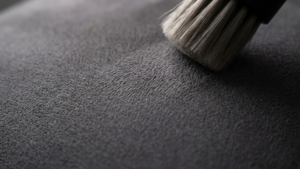
This combination of texture and practicality makes faux suede a popular choice for both homeowners and upholstery professionals advising clients on upholstery fabric maintenance.
Things to Check Before Cleaning Faux Suede
Before starting any cleaning process, take a few precautionary steps. These checks prevent avoidable damage and ensure you use the correct method.
- Identify the care label code: W, S, WS or X
- Review any manufacturer guidance
- Confirm whether covers are removable
- Test colourfastness in a hidden area
- Assess the type of stain
A W code allows water-based cleaners. S indicates solvent-based cleaning only. WS permits either, while X usually restricts cleaning to vacuuming only.
Always carry out a patch test in an inconspicuous area before treating visible sections. This simple precaution significantly reduces risk.
How to Clean Faux Suede Upholstery Fabric at Home
If you are looking for clear guidance on how to clean faux suede upholstery fabric at home, follow a structured approach rather than improvising.
Begin by vacuuming the entire surface using an upholstery attachment. This removes dust and loose debris that could otherwise spread during cleaning. Pay close attention to seams and creases.
Next, use a soft brush to lift the nap gently. Brushing in a consistent direction helps maintain the fabric’s even finish.
When treating a specific stain, lightly dampen a clean cloth with a solution suitable for the care code. Avoid applying liquid directly to the fabric. Blot the area carefully rather than rubbing, as aggressive scrubbing can flatten fibres and alter the texture.
Once the mark begins to lift, use a dry cloth to absorb any remaining moisture. Controlled air drying is essential. Allow the fabric to dry naturally in a well-ventilated room, keeping it away from radiators, heaters or direct sunlight.
This method allows you to clean a faux suede sofa safely without compromising the fabric’s structure.
Removing Common Stains from Faux Suede Upholstery
Different stains require different treatment methods. Acting quickly improves the outcome.
Food and drink spills should be blotted immediately with a clean, dry cloth. If the care code permits water-based cleaning, apply a mild detergent solution sparingly and continue blotting until the stain reduces. Avoid soaking the area.
Grease marks respond well to absorption. Applying a small amount of baking soda to the affected area and leaving it for several hours allows oil to draw out. The residue can then be brushed away gently.
Ink stains require caution. If solvent cleaning is permitted, dab the mark carefully with a cloth containing a small amount of rubbing alcohol. Work slowly and avoid spreading the stain further.
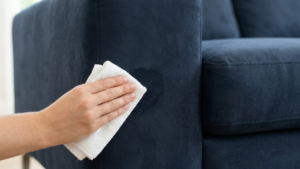
These techniques help remove stains from faux suede while protecting the nap and finish.
How to Dry Faux Suede Upholstery Properly
Drying should never be rushed. Direct heat can stiffen fibres and cause visible watermarking. Instead, ensure steady air circulation and allow the fabric to dry gradually.
Once fully dry, gently brush the surface again to restore softness and maintain a consistent appearance. Proper drying is a key part of faux suede upholstery care and often determines the final result.
Mistakes to Avoid When Cleaning Faux Suede Fabric
Certain common errors cause more damage than the stains themselves:
- Over-wetting the fabric
- Scrubbing aggressively
- Ignoring care label instructions
- Using bleach-based or harsh cleaners
- Skipping patch testing
Avoiding these mistakes protects the fabric’s durability and reduces the risk of permanent marks.
How to Keep Faux Suede Upholstery Clean for Longer
Long-term upholstery fabric maintenance reduces the need for deep cleaning. Regular vacuuming prevents dust from settling into fibres, while prompt attention to spills stops stains from setting.
Rotating cushions distributes wear evenly and helps maintain shape. Keeping furniture out of prolonged direct sunlight supports colour retention. Fabric protection sprays formulated for synthetic fibres can also add an additional barrier against staining.
Consistent faux suede upholstery care ensures the fabric retains both its appearance and performance over time.
Understanding how to clean faux suede upholstery fabric removes the uncertainty that often surrounds this material. With the correct checks, careful spot treatment and controlled drying, faux suede can be maintained safely at home.
A structured approach to cleaning and ongoing maintenance protects both appearance and longevity. If you are selecting upholstery for a new project and would like expert guidance, then UK Fabrics Online is the right place to be, so feel free to contact us for tailored advice.
Leave a Reply