How to Get Blood Out of Fabric: Easy Cleaning Tips
26th February, 2026
A blood stain can feel urgent and stressful, especially when it appears on a favourite sofa, cushion or freshly made soft furnishing. Whether it is a small accident at home or a minor cut during a DIY project, the priority is usually the same: act quickly and avoid permanent marks.
The good news is that most stains can be treated successfully at home. Understanding how to get blood out of fabric starts with knowing that different materials require slightly different approaches. Upholstery, clothing and soft furnishings all respond differently depending on fibre type and construction.
If you are trying to protect your sofa or refresh your soft furnishings, proper care helps preserve both appearance and longevity.
Choosing durable upholstery fabric beforehand is a blessing, but knowing how to clean it correctly when a problem does arise is just as essential.
Why Blood Stains Are Hard to Remove
Blood contains proteins that bind quickly to fabric fibres. When exposed to heat, those proteins coagulate and effectively set into the material. This is why hot water makes stains worse rather than better.
Porous fabrics absorb liquid rapidly, allowing the stain to travel deeper beneath the surface. Upholstery can be particularly challenging because liquid may sink into padding as well as surface fibres.
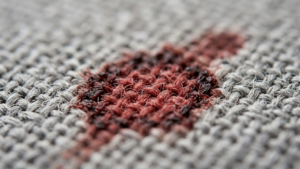
Understanding this initial reaction explains why cold water and gentle treatment is one of the most effective blood stain removal tips out there.
Things to Check Before Removing Blood Stains
Before you begin treating the stain, take a moment to assess the fabric. This reduces the risk of damage and improves your results.
- Identify the fabric type: natural or synthetic
- Check the cleaning code label, such as W, S, WS or X
- Confirm whether the fabric is removable or fixed upholstery
- Test colourfastness in a hidden area
- Consider whether the stain is fresh or dried
Care codes determine whether water-based or solvent-based cleaning is safe. Even if the label permits cleaning, always test a small concealed area first. This simple step prevents unexpected fading or discolouration.
How to Get Blood Out of Fabric
If you are unsure how to get blood out of fabric, follow a careful and methodical process. Acting quickly improves the outcome significantly.
- Blot the stain gently with a clean cloth dampened in cold water.
- Avoid hot water at all stages, as heat will set the stain.
- Apply a suitable cleaning solution depending on the fabric type.
- Blot carefully rather than rubbing, which can spread the stain.
- Rinse with cold water and allow the fabric to air dry naturally.
This structured approach allows you to remove blood stains from fabric while protecting fibres and colour.
Removing Fresh Blood Stains From Fabric
Fresh stains are generally easier to treat. The key is immediate action and cold water.
Start by holding the removable fabric under a stream of cold running water, allowing the water to push the stain out from the back of the fabric where possible. For fixed upholstery, press a cloth soaked in cold water against the area and continue blotting.
If needed, apply a mild soap solution that is safe for the fabric type. Continue blotting gently until the stain begins to fade. A simple saline solution can also be effective, particularly on lighter fabrics.
Prompt action often means you can remove fresh blood stains completely without leaving a trace.
Removing Dried Blood Stains From Fabric
Dried stains require more patience. If the fabric is removable and the care label permits, soak it in cold water for several hours to help loosen the proteins.
For stubborn areas, create a paste using baking soda and a small amount of cold water. Apply it to the stain and leave it to sit before gently brushing away once dry. This method can help lift residue without excessive moisture.
Hydrogen peroxide may be used cautiously on light-coloured fabrics, but it should never be applied without patch testing first. It can cause bleaching and is not suitable for all materials.
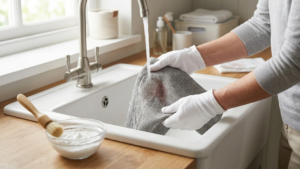
When treating dried stains, always refer back to the care label and avoid aggressive scrubbing. This ensures safe upholstery fabric cleaning and protects the surface texture.
Common Mistakes When Cleaning Blood Stains
Many permanent marks are caused by avoidable errors rather than the stain itself. Take care to avoid the following:
- Using hot water
- Scrubbing aggressively
- Applying bleach without checking the fabric type
- Skipping a patch test
- Over-saturating upholstery
These mistakes can set the stain deeper or damage fibres beyond repair.
How to Prevent Blood Stains Setting
Prevention and quick action make a significant difference. Treat stains as soon as they occur, even if you can only blot with cold water initially.
Keep clean cloths or paper towels nearby in high-use areas, particularly if you have children or regularly undertake DIY projects. Avoid any heat sources until the stain has been fully removed and the fabric is completely clean.
For upholstery, consider suitable protective sprays designed for the specific fibre type. Regular vacuuming and general maintenance also help keep fibres clear and easier to clean when accidents happen.
Ongoing care supports fabric longevity and reduces the impact of everyday mishaps.
Understanding how to get blood out of fabric provides reassurance in what can feel like a stressful moment. With cold water, prompt action and careful treatment, most stains can be removed successfully at home.
Avoid heat, work gently and always check care labels before applying any solution. These simple principles protect both clothing and upholstery from lasting damage.
If you need advice on caring for your fabric or selecting a durable upholstery option for your next project, contact us for expert guidance and support.
Leave a Reply