How to Remove Pen From Fabric Using Household Items
19th January, 2026
Finding a pen mark on fabric can feel frustrating, especially when it lands on something you planned to use or had already sewn. Ink stains are stubborn, but they are not always permanent.
With the right approach and a bit of patience, it is often possible to remove pen from fabric using household items without damaging the material.
This guide walks you through safe, practical methods that experienced home crafters can trust, while helping you avoid the common mistakes that make ink stains worse.
Why Pen Ink Stains Fabric So Easily
Pen ink is designed to flow, spread, and stick. Most inks contain dyes or pigments suspended in solvents, which allows them to penetrate fibres quickly.
Once the liquid carrier soaks in, the colour binds to the fabric structure, making the stain difficult to shift.
The type of pen matters. Ballpoint ink is oil-based and tends to cling stubbornly to fibres. Gel ink is water-based but highly pigmented, which can cause deep staining. Permanent markers are designed to resist moisture and fading, making them the most challenging to remove. Fabric type also plays a role, as absorbent natural fibres hold ink more readily than tightly woven synthetics.
Understanding how different materials behave, including common upholstery fabric types, helps you choose the safest treatment method.
What to Do Before Treating Ink Stains
Before applying any cleaner, preparation is essential. Rushing straight in can spread the stain or permanently set it.
Start by blotting gently with a clean cloth or kitchen paper to lift excess ink. Avoid scrubbing, as this pushes ink deeper into the fibres. Next, identify the fabric type so you know how absorbent and delicate it is. Natural fibres, synthetics, and blends all respond differently.
A colourfastness test is always recommended. Apply a small amount of your chosen solution to an inconspicuous area and dab with a white cloth. If colour transfers or the fabric reacts badly, stop and reassess before continuing.
Removing Pen Ink Using Everyday Household Items
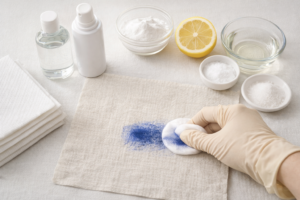
Several common household items can help with pen ink stain removal when used correctly. These options work best on fresh stains but can also improve older marks.
At-a-glance DIY methods:
- Alcohol-based products such as hairspray or hand sanitiser can dissolve many inks. Apply lightly and blot as the ink transfers.
- White vinegar and bicarbonate of soda can be mixed into a paste and dabbed onto the stain, then lifted gently.
- Lemon juice and salt may help lighten ink on lighter fabrics when used sparingly and rinsed promptly.
Each method should be applied gradually, allowing the ink to lift into the cloth rather than spreading across the fabric.
How to Get Pen Out of Cotton and Linen
Cotton and linen are highly absorbent, which makes them more prone to ink stains but also responsive to repeated treatment.
Place the stained area face down over a clean cloth and apply your chosen cleaning solution from the back of the fabric. This encourages the ink to move away from the fibres rather than deeper into them.
Soaking may be useful for persistent stains, but it should be done carefully. Change the water frequently to prevent re-depositing ink. When laundering, wash the item separately to avoid transferring ink to other fabrics. Repeat treatments may be needed, but patience usually pays off.
Removing Pen Marks From Synthetic Fabrics
Synthetic fabrics like polyester and nylon tend to absorb less ink, which often makes them easier to clean. Alcohol-based solutions are usually effective, as they break down ink without saturating the fibres.
Apply the solution with a cloth using a gentle circular motion, working from the outside of the stain inward. Blot frequently to lift the ink. Avoid excessive pressure, as some synthetics can develop shiny patches if the surface is damaged.
Cleaning Pen Stains From Upholstery and Cushions
Ink on upholstery requires a careful, controlled approach to avoid watermarks or fabric distortion.
Step-by-step spot treatment:
- Blot excess ink immediately with a dry cloth.
- Apply a small amount of cleaning solution to a cloth, not directly to the fabric.
- Dab gently, lifting ink as it transfers.
- Allow the area to dry fully between applications.
- Brush or smooth the fabric once dry to restore texture.
Over-wetting upholstery can cause rings or damage padding, so slow, repeated treatments are safer than aggressive cleaning.
What to Avoid When Treating Ink Stains
Certain actions can permanently set ink stains or damage fabric fibres. Avoid using bleach unless you are working with plain white cotton and understand the risks. Heat, whether from tumble dryers, irons, or hot water, can lock ink into fabric and should be avoided until the stain is fully removed.
Harsh scrubbing is another common mistake. While it may seem effective in the moment, it often weakens fibres and spreads the stain, especially on finer fabrics.
How to Handle Old or Set-In Pen Marks
Older ink stains may require stronger methods and more time. Rubbing alcohol or glycerine-based products can help loosen set-in ink if allowed to dwell briefly before blotting. Always test first, as prolonged contact can affect dyes or finishes.
Work slowly and expect gradual improvement rather than instant results. In some cases, complete removal may not be possible, but significant fading can still make the fabric usable.
When Professional Cleaning Is Recommended
Professional cleaning is the safest option for valuable, delicate, or sentimental fabrics. If household methods fail or the fabric reacts poorly, it is better to stop and seek expert help. Dry cleaners and upholstery specialists use stronger, fabric-safe solvents that are not typically available for home use.
Choosing professional cleaning can be more cost-effective than replacing damaged fabric, especially for upholstery or large projects.
Preventing Pen Stains on Fabric in Future
Prevention is often easier than removal. Keep pens away from craft surfaces, sofas, and fabric storage areas. Store writing tools separately from sewing supplies and avoid placing them near finished projects.
Fabric protection sprays can add a layer of resistance, making spills and marks easier to manage.
If you are unsure which fabrics are most forgiving for everyday use or creative projects, here at UK Fabrics Online, we can help. You can contact us for fabric advice and guidance before choosing materials for your next project.
Leave a Reply