6 Things to Check Before Buying Upholstery Fabric by the Metre
1st September, 2026
Choosing upholstery fabric by the metre involves more than selecting a colour or pattern. Composition, durability, width, quantity, intended use and care all influence the finished result. Overlooking these details can lead to wasted fabric or an unsuitable choice.
This practical checklist explains the six key factors to review before ordering. By checking product specifications and considering a sample where available, you can compare fabrics with greater confidence and make a more informed purchase.
Why Choosing the Right Upholstery Fabric Matters
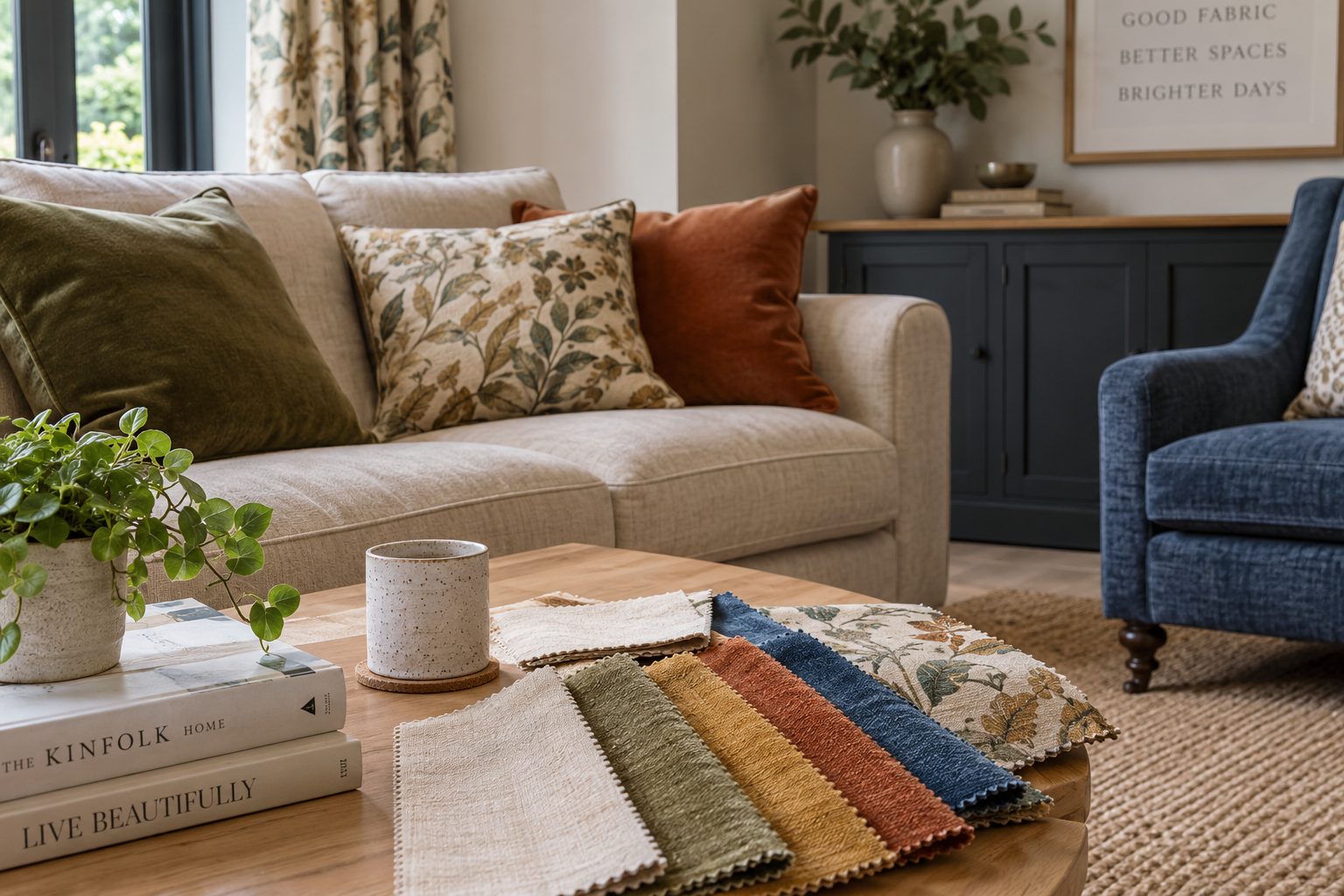
The right upholstery fabric should suit the furniture, expected level of use and maintenance needs, not just its appearance. Checking these factors before ordering helps reduce waste and costly mistakes.
An occasional chair has different requirements from a family sofa, while online images cannot fully show texture, weight or true colour. Before committing to several metres, compare the product specification carefully and consider ordering a sample where available. Balancing appearance, practicality and quantity will help you make a more confident buying decision.
1. Check the Fabric Composition
Check the fibre composition before buying because it affects texture, appearance and care. Fabrics with a similar look can perform differently, making it important to rely on the product specification rather than appearance alone.
What to Look for on the Product Page
Check for:
- Fibre composition
- Any backing or finish
- Intended use
- Care instructions
- Technical information, where provided
Why a Sample Can Help
A sample lets you assess texture, thickness and colour under your own lighting. It also helps you compare fabrics alongside existing furniture and décor before ordering larger quantities.
2. Consider the Durability and Rub Count
Choose durability according to how frequently the furniture will be used. A decorative chair has different requirements from a family sofa or dining bench.
Rub count measures abrasion resistance during testing. It should be considered alongside the product’s intended use rather than treated as the only measure of performance. Always verify ratings on the product page.
Match the Specification to the Project
Check:
- Intended use
- Abrasion information
- Care guidance
- Any verified technical specifications
What Rub Count Does Not Tell You
Rub count does not confirm stain resistance, washability, colourfastness or suitability for every project. Compare the full product specification before making your decision.
3. Think About Colour, Pattern and Room Style
Choose colour and pattern in relation to your furniture and the surrounding room. A design that looks balanced online may appear very different across a full sofa or armchair.
Consider lighting, existing décor and whether the furniture is intended to stand out or blend into the space.
Check Pattern Scale and Repeat
Before ordering, check:
- Pattern repeat
- Pattern direction
- Scale of large motifs
- Whether matching across panels may increase fabric requirements
View the Fabric in the Intended Room
Place a sample beside your furniture and view it in both daylight and evening light. This gives a clearer impression of colour, texture and scale before ordering larger quantities.
4. Measure How Much Upholstery Fabric You’ll Need
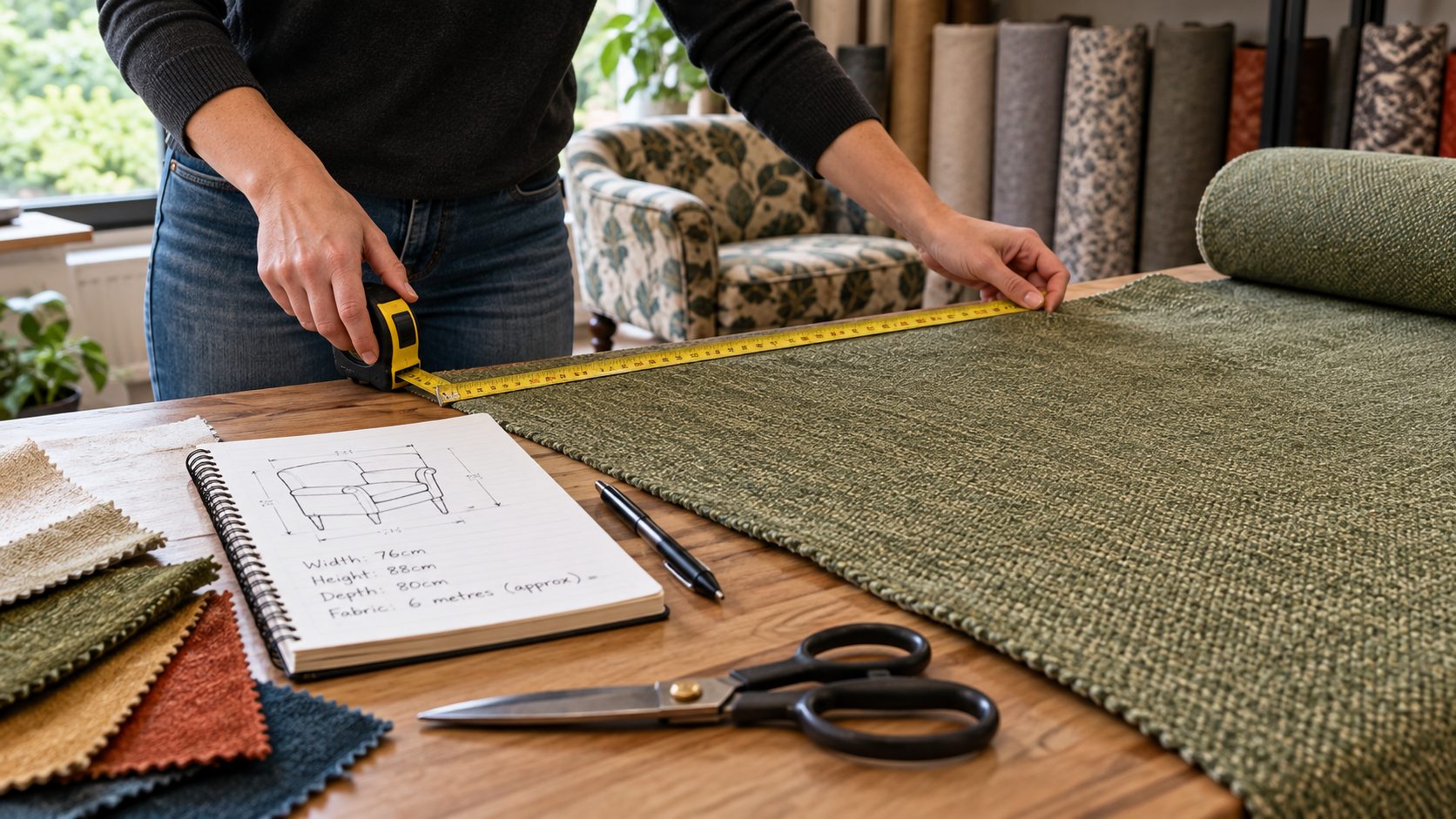
Measure carefully before ordering because furniture dimensions alone do not determine how much fabric you’ll need. Fabric width, pattern repeat and cutting layout can all affect the final quantity.
Check the usable width on the product page, then compare suitable upholstery fabric options before calculating your order.
Why Fabric Width Matters
Fabrics sold by the metre can vary in width. A narrower fabric may require extra joins or a different cutting layout.
When to Allow Extra Fabric
Allow additional fabric for:
- Pattern matching
- Directional pile
- Large repeats
- Piping
- Irregular furniture shapes
- Future repairs, if appropriate
Review your measurements before ordering to reduce the risk of under-buying.
5. Choose a Fabric That’s Suitable for Everyday Use
Choose upholstery fabric according to where it will be used and who will use it. A decorative bench has different demands from a family sofa or dining seat, making intended use just as important as appearance.
Think about daily wear, direct sunlight, comfort and any project-specific requirements before comparing products. Homes with children, pets or frequent visitors may have different priorities, although suitability should always be confirmed using the manufacturer’s guidance.
Questions to Ask Before Buying
Before ordering, ask yourself:
- How frequently will the furniture be used?
- Will it be exposed to food, pets or direct sunlight?
- Are fire or trade specifications required?
- Is the texture comfortable for everyday use?
These questions help narrow your choices before ordering.
6. Understand Care and Cleaning Requirements
Review the manufacturer’s care guidance before purchasing rather than waiting until cleaning becomes necessary. Maintenance should fit both the furniture and your household routine.
Some fabrics may recommend professional cleaning. Others may have specific guidance relating to spot cleaning, moisture or handling. These requirements vary between products and should never be assumed from appearance or fibre content alone.
Questions to Check Before Ordering
Review whether:
- Spot cleaning is recommended
- Household cleaning products are suitable
- Professional cleaning is advised
- Moisture could affect the finish
- The maintenance routine fits the intended room
For example, a pale dining chair fabric may suit your décor perfectly. If the recommended care routine is unlikely to fit everyday family life, another option may provide greater long-term confidence.
Common Mistakes to Avoid When Buying Upholstery Fabric by the Metre
Most ordering problems begin with assumptions rather than inaccurate measurements.
Before checking out, avoid these common mistakes:
- Buying from photographs without viewing a sample where available
- Assuming every upholstery fabric suits every furniture project
- Ignoring fabric width
- Forgetting pattern repeat or pile direction
- Treating rub count as the only performance measure
- Ordering the exact calculated quantity without allowing for the cutting layout
- Skipping the care instructions
- Assuming repeat orders will always match previous dye batches
- Forgetting to verify fire or trade requirements where relevant
Taking a few extra minutes to review the product specification can prevent costly adjustments later.
Frequently Asked Questions About Buying Upholstery Fabric
How Do I Know Whether a Fabric Is Suitable for Upholstery?
Check the intended use, technical specification and manufacturer guidance on the product page. If your project has specific requirements, ask before ordering.
How Much Upholstery Fabric Should I Order?
The amount depends on your furniture measurements, fabric width, pattern repeat and cutting layout. Measure carefully before buying.
Should I Order a Sample First?
A sample helps you assess colour, texture and weight under your own lighting before committing to a larger quantity.
What Does Rub Count Mean?
Rub count measures abrasion resistance during testing. It should be considered alongside the product’s intended use rather than as the only performance indicator.
Can I Use Any Upholstery Fabric for a Sofa?
No. Always check the product specification and intended use, as suitability varies between fabrics.
Who Can Help If I’m Unsure?
If you need advice on quantity or suitability, contact us with your project details before ordering.
Choosing upholstery fabric by the metre becomes much easier when you compare more than appearance alone. By checking composition, durability, pattern, quantity, intended use and care requirements, you can make a more informed purchase and reduce the risk of expensive mistakes. Where colour, texture or specification could influence the final result, comparing samples before ordering larger quantities provides additional reassurance.
Leave a Reply