How to Give Old Furniture a Gothic Makeover for Halloween
1st October, 2026
You do not need to replace your furniture to create a Gothic-inspired Halloween look. New upholstery, patterned fabric and a few decorative changes can give an existing chair, footstool or cabinet a very different character.
Your makeover can be permanent or temporary. You might recover a seat, add a fabric panel or use removable seasonal details. Start with the furniture you already have, then decide whether colour, texture, pattern or a smaller decorative change will make the biggest difference.
Reupholster Seating in Dark, Dramatic Fabric
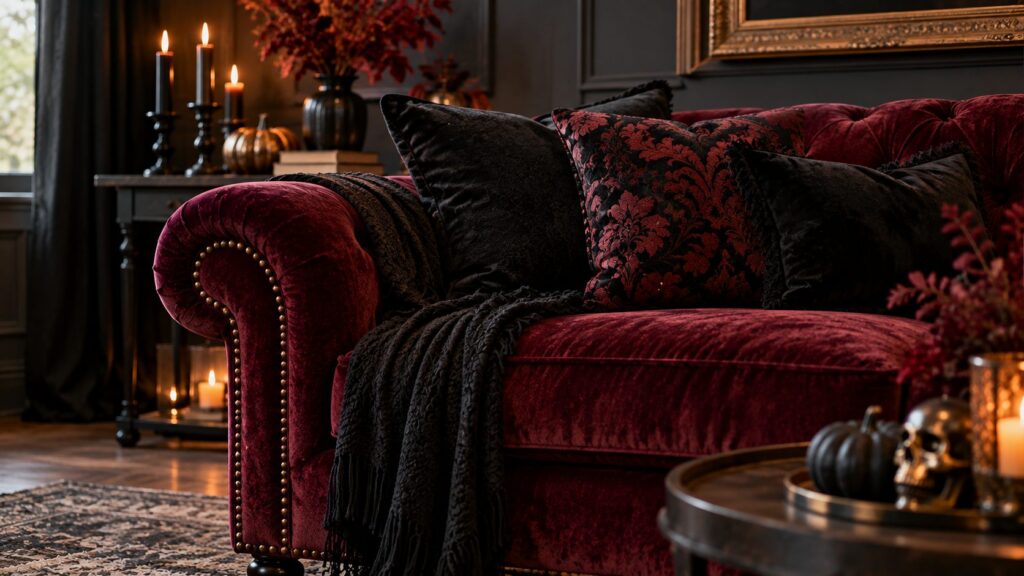
Replacing existing upholstery with a darker or more textural fabric can quickly change the character of a chair or footstool. Start by assessing the furniture and the scale of the job. A removable seat pad is very different from a fully upholstered armchair, so choose a project which matches your experience.
When browsing upholstery fabric, consider the frame, intended use and whether you want a plain or patterned finish. A sample can help you compare colour and texture against the furniture before committing.
Consider Velvet for a Richer Texture
Velvet can add visual depth without relying on pattern, especially in deep red, purple or black. For seating, look specifically at velvet upholstery fabric rather than assuming any velvet will suit the job.
Introduce Black, Burgundy and Deep Purple Colours
Black creates a strong Gothic look, but burgundy, aubergine and deep purple can feel just as dramatic while giving you more flexibility.
Consider the furniture frame and the rest of the room before choosing a shade. A dark wooden chair, for example, can work well with burgundy upholstery because the seat still stands apart from the frame.
You can also combine two deep colours rather than making every surface black. Check samples in the room where the furniture will sit, as natural and artificial light can change how darker shades appear.
Add Ornate Trims, Tassels and Decorative Fringing
Trims, tassels and fringing can add detail to plain furniture without requiring a complete upholstery change. They work particularly well when you want a smaller project or a detail which supports existing fabric.
A decorative trim could follow an appropriate edge on a footstool, while a contrasting fringe could introduce another texture. Keep embellishments away from areas where they could interfere with the furniture’s normal use.
Also decide whether you want the detail to stay all year. A removable addition gives you more flexibility if the Gothic look is mainly for Halloween.
Use Stencils to Create Gothic Patterns
Stencilled motifs can give plain wooden furniture a darker decorative character without changing its upholstery. Used selectively, they can also connect painted areas with the pattern or colour of nearby fabric.
A motif on a cabinet door or drawer front may be enough. If the furniture already features patterned upholstery, keep the stencil simpler so the two elements do not compete for attention.
Use paints and finishes that are appropriate for the surface you are working on, following the product manufacturer’s preparation and application instructions.
Replace Plain Handles With Antique-Style Hardware
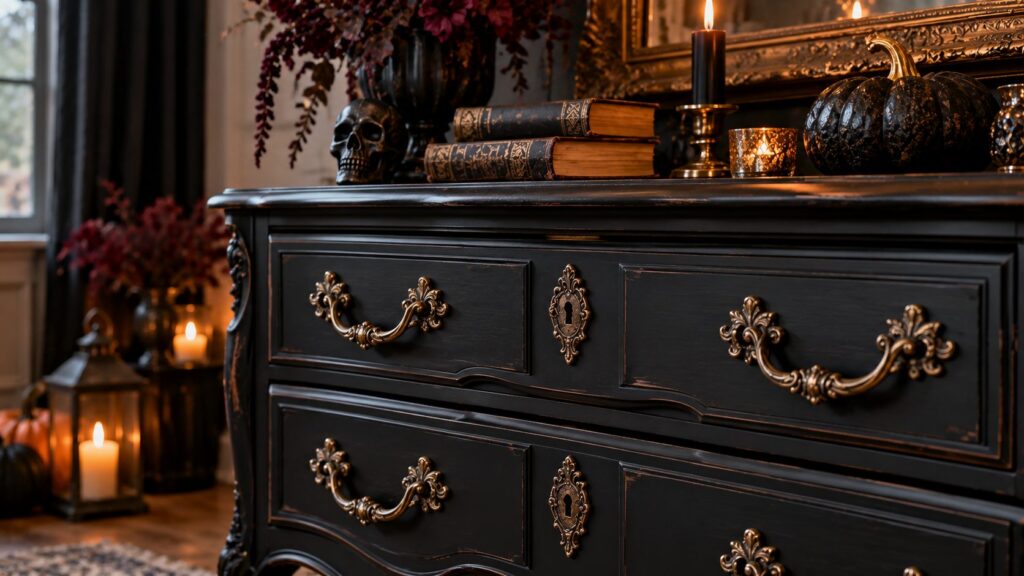
Replacing plain or modern handles with more decorative hardware can change the character of a cabinet or chest of drawers without altering the entire piece.
Look at the size of the furniture, its finish and the position of the existing fixing holes before choosing replacements. Large ornate handles can overwhelm a small cabinet, whereas a basic dark or aged-looking knob may provide enough detail.
This is also an easy way to echo the character of an upholstered chair or fabric panel elsewhere in the room.
Create an Aged Finish With Distressed Paint
A distressed finish can make newer-looking furniture feel more timeworn, which may suit a vintage Gothic-inspired scheme better than a pristine modern surface.
It will not suit every piece, so consider what you are changing before starting. Avoid altering furniture with value or a finish you may later want to preserve.
For an old wooden chair, a more aged-looking frame combined with newly chosen upholstery can create contrast between the worn surface and the fabric. Follow the relevant paint manufacturer’s instructions rather than assuming the same preparation or finish will work on every surface.
Add Dark Floral or Damask Fabric Panels
Decorative fabric panels can introduce Gothic-inspired patterns without covering the whole piece. They work well when you want florals, damask-inspired designs or other strong patterns to act as an accent.
Pattern scale matters, especially in smaller areas. A large motif may lose impact if only part of it is visible, while a very small repeat can look busy.
When browsing printed upholstery fabric, consider the panel size, visible repeat, existing furniture finish and how the fabric will be used. Where available, order a sample to check the pattern against the furniture before committing.
Decorate Shelves and Cabinets With Removable Gothic Details
Removable decorations are a good choice if you want a Gothic Halloween look without making permanent changes to your furniture.
Try fabric-backed details inside open shelving, small textile accents or decorative inserts which can be removed after Halloween. These can introduce colour and pattern without refinishing or reupholstering the whole piece.
Take care with tapes, glues and other fixings, especially on painted, polished or delicate surfaces. If you are unsure whether a fixing method is suitable, choose an option that does not attach directly to the furniture. Reusable fabric details can then be stored for next year.
Complete the Makeover With Halloween Accessories
Once the furniture has enough colour, texture or pattern, use Halloween accessories as finishing touches rather than covering the makeover itself.
A few well-placed textile details can be enough. Consider a removable cushion, small fabric accent, simple bunting or another seasonal decoration that picks up colours from the upholstery.
Halloween craft fabrics are a useful option if you prefer smaller, temporary projects instead of permanent changes.
Keep the overall look balanced. If a chair already has dark upholstery or a bold patterned seat, one or two accessories may be all it needs.
Choose the Scale of Makeover That Suits Your Furniture
Creating Gothic furniture for Halloween does not mean every piece needs black paint and complete reupholstery. A simple chair might justify new upholstery, while a cabinet may only need a patterned detail, different hardware or removable seasonal decoration.
Start with the furniture, then decide what you want to change about its colour, texture or pattern. If fabric is central to the makeover, explore upholstery options that suit the intended use and order samples where available to compare your favourites against the furniture and in your own lighting before committing.
Leave a Reply