Can You Dye Upholstery Fabric at Home?
15th September, 2026
Some upholstery fabric can be dyed at home, although success depends on the fibre content, existing colour, surface finish and whether the covering can be removed, rinsed and dried correctly. Fixed, blended or treated upholstery is far less predictable.
Before buying a dye, identify the fabric and check the manufacturer’s instructions carefully. If the existing covering is unsuitable for recolouring, replacing it with new upholstery fabric is usually the more controlled way to achieve a lasting result.
Can You Dye Upholstery Fabric at Home?
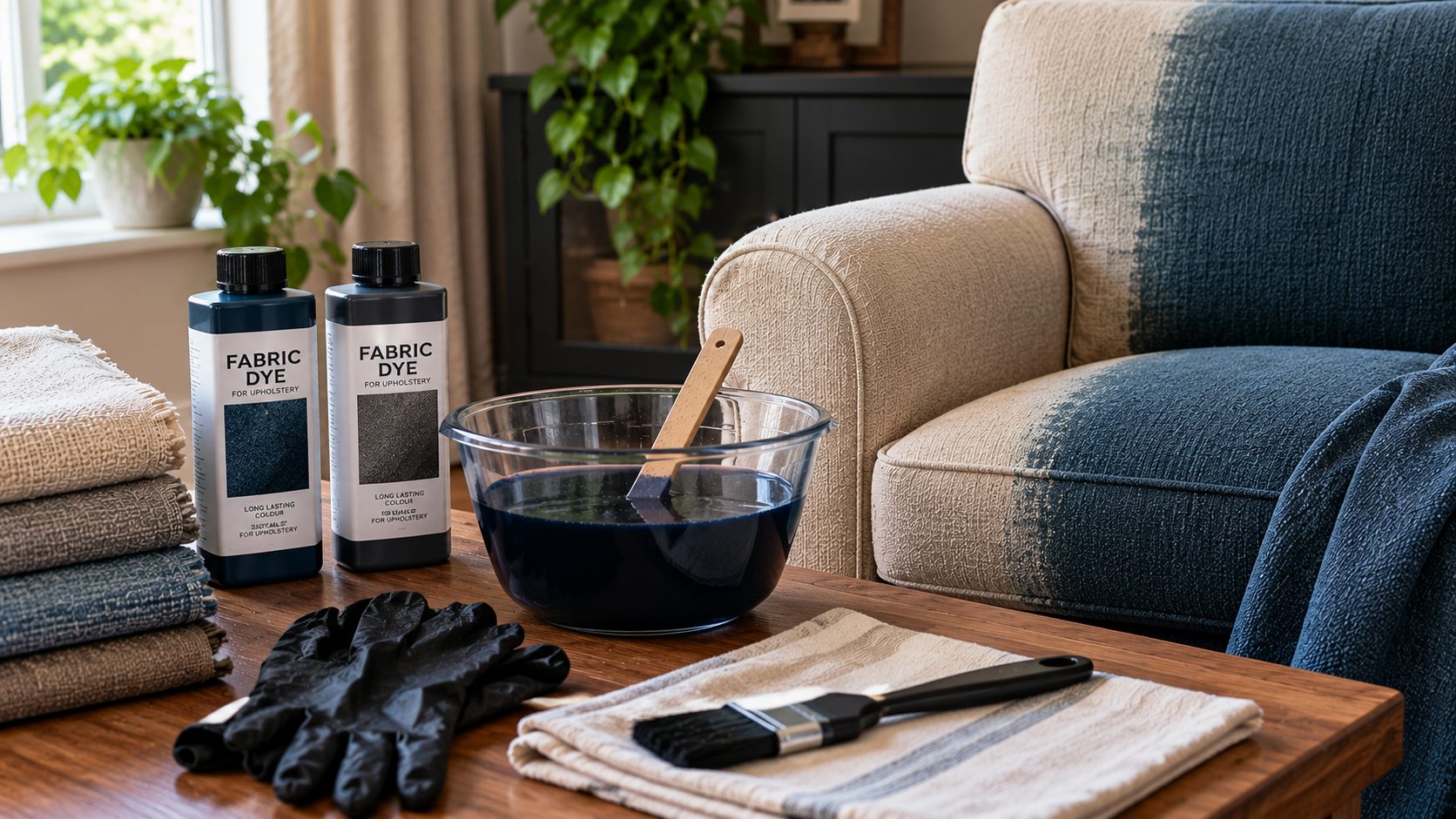
Some upholstery fabric can be dyed at home, provided the fibre content, existing colour and furniture construction are compatible with the chosen dye. Removable covers are generally easier to treat than fixed upholstery because they can be rinsed and dried separately.
Success is never guaranteed. Dye changes the existing colour rather than covering it completely, and stains, fading or wear may still show through. Before starting, confirm the fibre composition, check the manufacturer’s instructions and test a hidden area. If the furniture is valuable, fixed or has an unknown composition, reupholstering is the more reliable choice.
Which Types of Upholstery Fabric Can Be Dyed?
Whether upholstery fabric can be dyed depends on its verified fibre composition, not its appearance. Check the care label or manufacturer information before choosing a dye.
Natural-Fibre Upholstery
Some natural fibres may be compatible with certain dyes when the manufacturer’s instructions support the process.
Synthetic Upholstery
Synthetic fabrics may require specialist dyes and treatment methods. A standard household dye may not be suitable.
Blended Upholstery Fabric
Blended fabrics are less predictable because different fibres can absorb colour differently. Coatings, textured surfaces and trims may also affect the result. Always verify the composition and follow the dye manufacturer’s guidance before starting.
When Dyeing Upholstery Fabric Is Not Recommended
Dyeing is not recommended when the fabric composition is unknown, the upholstery is heavily worn or the required treatment cannot be completed safely. Coated, patterned and valuable furniture also presents greater risk.
Stop If the Existing Colour Cannot Support the New Shade
Dye changes the existing colour rather than covering it. Dark fabrics cannot usually become much lighter.
Stop If You Cannot Rinse and Dry the Fabric Correctly
Fixed upholstery is difficult to rinse and dry as required. If the manufacturer’s process cannot be followed, reupholstering is the safer option.
Choosing the Right Fabric Dye
Choose a dye only after confirming the exact fibre composition and checking it is suitable for the upholstery. The manufacturer’s instructions should always take priority over general DIY advice.
Fabric Dye Versus Surface Colourant
Fabric dye colours the fibres, while surface colourants sit on the fabric and may affect its texture or flexibility. Always check the product is intended for upholstery.
Check the Full Process Before Buying
Review the complete process before purchasing. Confirm the application method, any fixing or rinsing requirements, drying guidance and safety precautions. A dye is only suitable if both the furniture and fabric can complete the treatment correctly.
Preparing Upholstery Fabric Before Dyeing
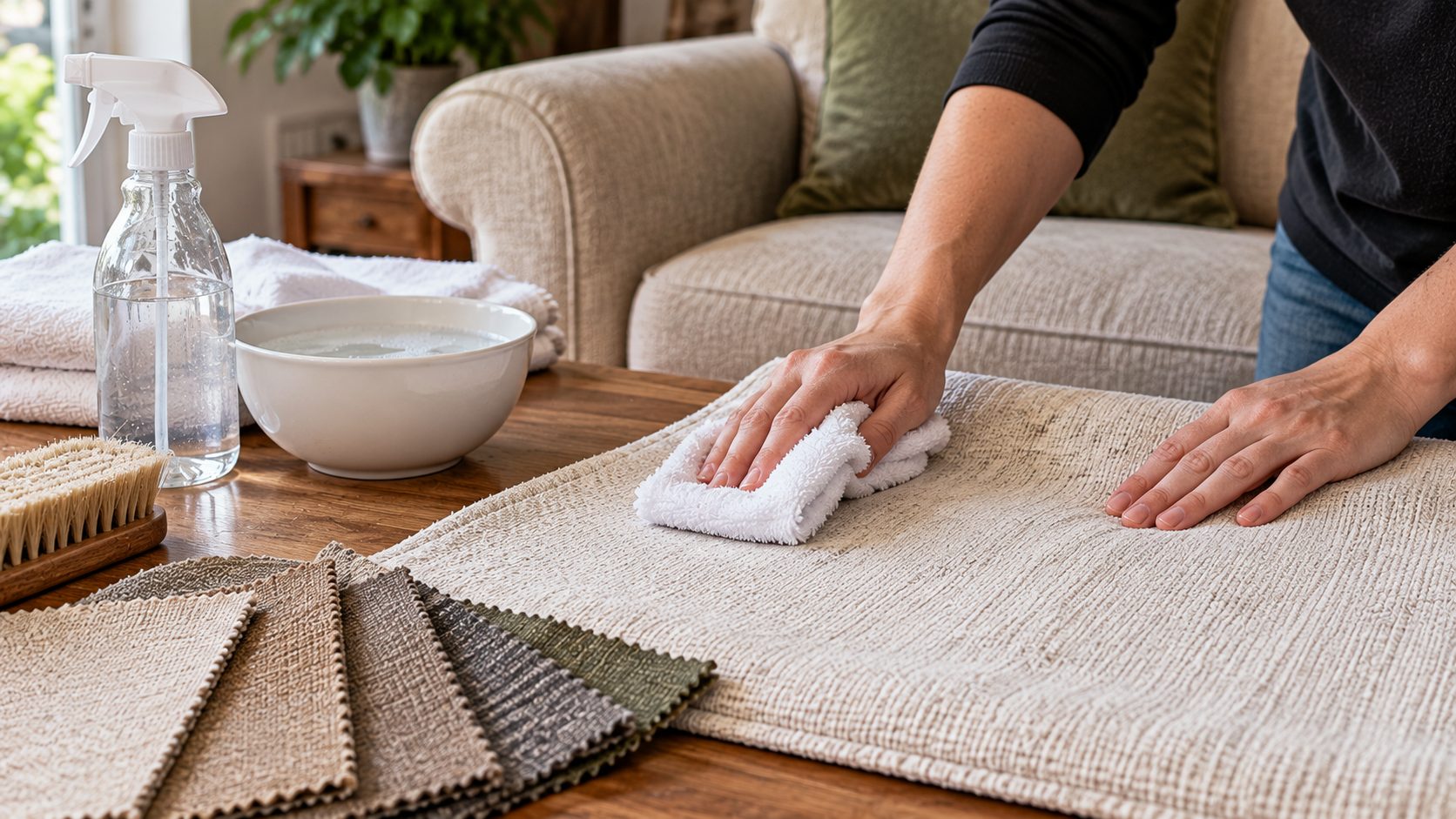
Preparation starts with identifying the fabric and reading both the upholstery care guidance and the dye manufacturer’s instructions before applying any colour.
Assess the Existing Condition
Check for stains, fading, worn areas or protective finishes that could affect colour absorption. Test the dye on a hidden area to assess the result.
Plan for Drying and Ventilation
Ensure the furniture can be dried according to the manufacturer’s guidance. Keep children and pets away during treatment and only use the furniture once it is fully dry and free from colour transfer.
How to Dye Upholstery Fabric at Home Step by Step
There is no single method for dyeing every upholstery fabric. Follow the dye manufacturer’s instructions and confirm they are suitable for both the fabric and the furniture.
Step 1. Confirm the Fabric
Verify the fibre composition, furniture construction and any finishes.
Step 2. Choose a Compatible Dye
Select a product designed for the verified fibre and read the full instructions.
Step 3. Test a Hidden Area
Check the colour, texture and any signs of colour transfer.
Step 4. Protect the Furniture
Cover nearby surfaces and follow the recommended safety precautions.
Step 5. Apply the Dye
Apply the product exactly as instructed.
Step 6. Complete the Process
Carry out any required fixing or rinsing.
Step 7. Dry and Test
Allow the upholstery to dry fully and test for colour transfer before regular use.
Common Mistakes to Avoid When Dyeing Upholstery Fabric
Most dyeing problems result from poor preparation rather than the dye itself. Common mistakes include guessing the fibre composition, choosing a product by colour instead of compatibility and expecting a dark fabric to become much lighter.
Skipping a hidden test, ignoring stains or faded areas, applying too much moisture to fixed upholstery and failing to complete the recommended fixing or rinsing process can also affect the result.
Avoid using valuable furniture for a first attempt or mixing different dyes and surface products without manufacturer approval. Before regular use, ensure the upholstery is fully dry and check for colour transfer with a clean, pale cloth.
How to Care for Dyed Upholstery Fabric
Care for dyed upholstery by following both the original fabric guidance and the dye manufacturer’s aftercare instructions. Allow the fabric to dry fully before regular use.
Watch for Colour Transfer
Test with a clean, pale cloth after drying. If colour transfers, stop using the furniture and follow the manufacturer’s guidance.
Expect the Finish to Change Over Time
Frequent use, cleaning and sunlight may gradually affect the colour. Keep a record of the dye product used for future maintenance.
When Reupholstering Is a Better Option Than Dyeing
Reupholstering is the better option when the existing fabric is worn, unsuitable for dyeing or a consistent finish is important. It also allows you to change both the colour and texture.
Dyeing Versus Reupholstering
Dyeing may suit sound upholstery with a verified fibre composition. Reupholstering is more suitable for fixed, damaged or incompatible fabrics.
Choosing Replacement Upholstery Fabric
Choose replacement fabric based on its intended use, fibre composition and care requirements. Ordering samples can also help you compare colour and texture before committing to a project.
Frequently Asked Questions About Dyeing Upholstery Fabric
Can You Dye a Fabric Sofa Without Removing the Covers?
Some specialist products may be suitable for fixed upholstery, although removable covers are generally easier to treat, rinse and dry.
Can You Dye Upholstery Fabric a Lighter Colour?
Usually not. Dye changes the existing colour rather than covering it completely, making major lighting unrealistic.
Can Polyester Upholstery Be Dyed?
Some synthetic fibres require specialist dyes. Always verify the composition and manufacturer’s guidance first.
Will Dye Cover Stains?
Not reliably. Stains and worn areas may remain visible after treatment.
Can Fabric Paint Replace Dye?
Not necessarily. Surface colourants and fibre dyes work differently and may affect the fabric’s texture.
How Do I Stop Dye Transfer?
Follow the manufacturer’s fixing and drying instructions, then test with a clean, pale cloth before use.
Is Reupholstering Better?
When the fabric is worn, fixed or unsuitable for dyeing, reupholstering usually provides a more predictable result.
Who Can Help Me Choose Replacement Fabric?
If you’re unsure, contact us for guidance on choosing suitable replacement upholstery fabric.
Leave a Reply