How to Vacuum Upholstery Fabric Without Damaging It
20th September, 2026
To vacuum upholstery safely, inspect the fabric first, use a clean suitable upholstery attachment and begin with controlled suction.
Work in light passes, avoid loose threads and powered brushes, and stop if the pile, weave or seams begin to change.
Always check the furniture care label, as the safest cleaning method depends on the upholstery rather than one universal approach.
Why Regular Vacuuming Helps With Upholstery Maintenance
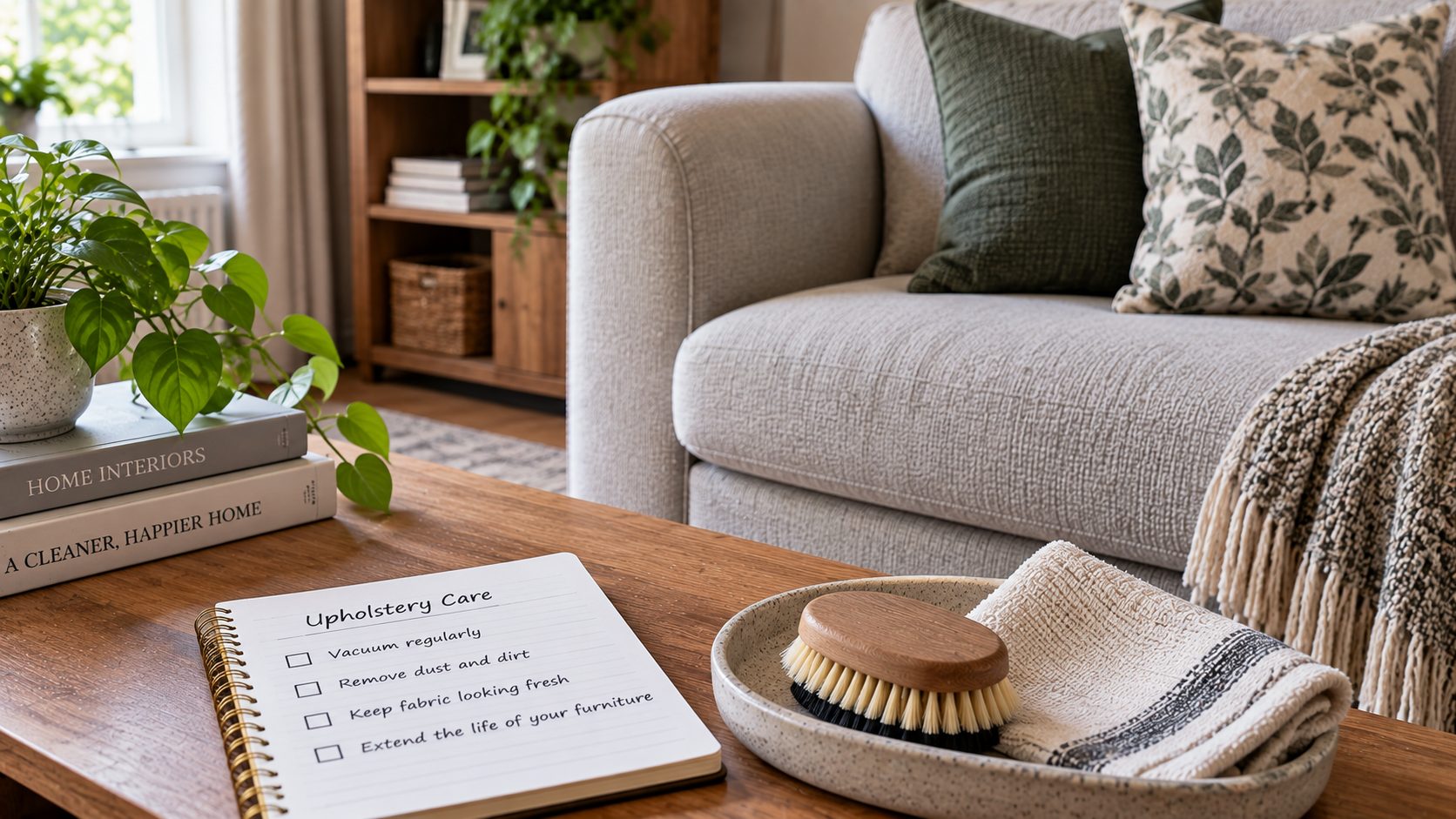
Routine vacuuming removes loose dust, crumbs and pet hair before they build up across the upholstery surface. It supports regular maintenance, though the best schedule depends on how the furniture is used and the manufacturer’s care guidance.
Busy family seating may need cleaning more frequently than an occasional chair. Vacuuming removes loose debris rather than stains or worn areas, making it one part of an overall upholstery care routine.
Choosing the Right Vacuum Attachment for Upholstery Fabric
Use a clean upholstery attachment or another smooth, non-abrasive tool that moves across the surface without catching threads. Avoid powered brush bars unless both the vacuum and fabric guidance confirm they are suitable.
Before cleaning, inspect the attachment for trapped grit, rough edges or damage.
| Attachment | Possible Use | Main Risk |
| Upholstery head | General cleaning | Excess suction |
| Soft brush | Some robust fabrics | Disturbing pile or yarns |
| Crevice tool | Gaps and edges | Hard edge touching fabric |
| Powered pet tool | Verified use only | Friction or pulled threads |
Upholstery Attachment
Usually the safest starting point. Choose one with smooth edges and controlled movement.
Soft Brush Attachment
May suit sturdy fabrics. Test first and stop if the surface changes.
Crevice Tool
Use between cushions and around frames, keeping hard edges away from visible upholstery.
Powered And Pet-Hair Attachments
These are not suitable for every fabric. Verify compatibility before use.
How to Vacuum Upholstery Fabric Without Damaging It
Inspect the upholstery before you begin, fit a clean suitable attachment and use controlled suction. Vacuum in slow light passes without pressing the nozzle firmly into the fabric.
Step 1. Check The Care Instructions
Read the furniture label and manufacturer guidance before cleaning.
Step 2. Inspect For Damage
Look for loose threads, open seams, frayed piping, loose buttons or tears. Avoid damaged areas.
Step 3. Clean The Attachment
Remove trapped hair and grit, and check for rough edges.
Step 4. Reduce The Suction
Start with lower suction where possible and test in a hidden area.
Step 5. Vacuum The Surface
Remove loose cushions if possible and use slow, overlapping passes.
Step 6. Clean Seams And Gaps
Vacuum carefully around seams, piping and cushion gaps. Remove larger debris by hand first.
Step 7. Follow The Surface
Check pile direction or texture where relevant and avoid repeated passes over one area.
Step 8. Inspect Afterwards
Look for raised threads, flattened piles or changes in sheen. Stop if the surface changes.
When comparing upholstery fabric, consider the recommended care alongside colour, texture and intended use.
Removing Dust, Pet Hair And Loose Debris Effectively
Dust, pet hair and crumbs respond best to gentle cleaning. Start with controlled suction, remove larger debris by hand and only use extra tools if they are suitable for the upholstery.
Dust And Lint
Vacuum with slow passes, paying attention to seams and textured areas.
Crumbs And Loose Particles
Lift larger pieces first, then clean beneath removable cushions.
Pet Hair
Use a standard upholstery attachment. Test powered brushes, rubber tools or adhesive rollers before wider use.
Large Or Sharp Debris
Remove hard objects by hand to protect both the fabric and the vacuum.
How Often Should You Vacuum Upholstery Fabric?
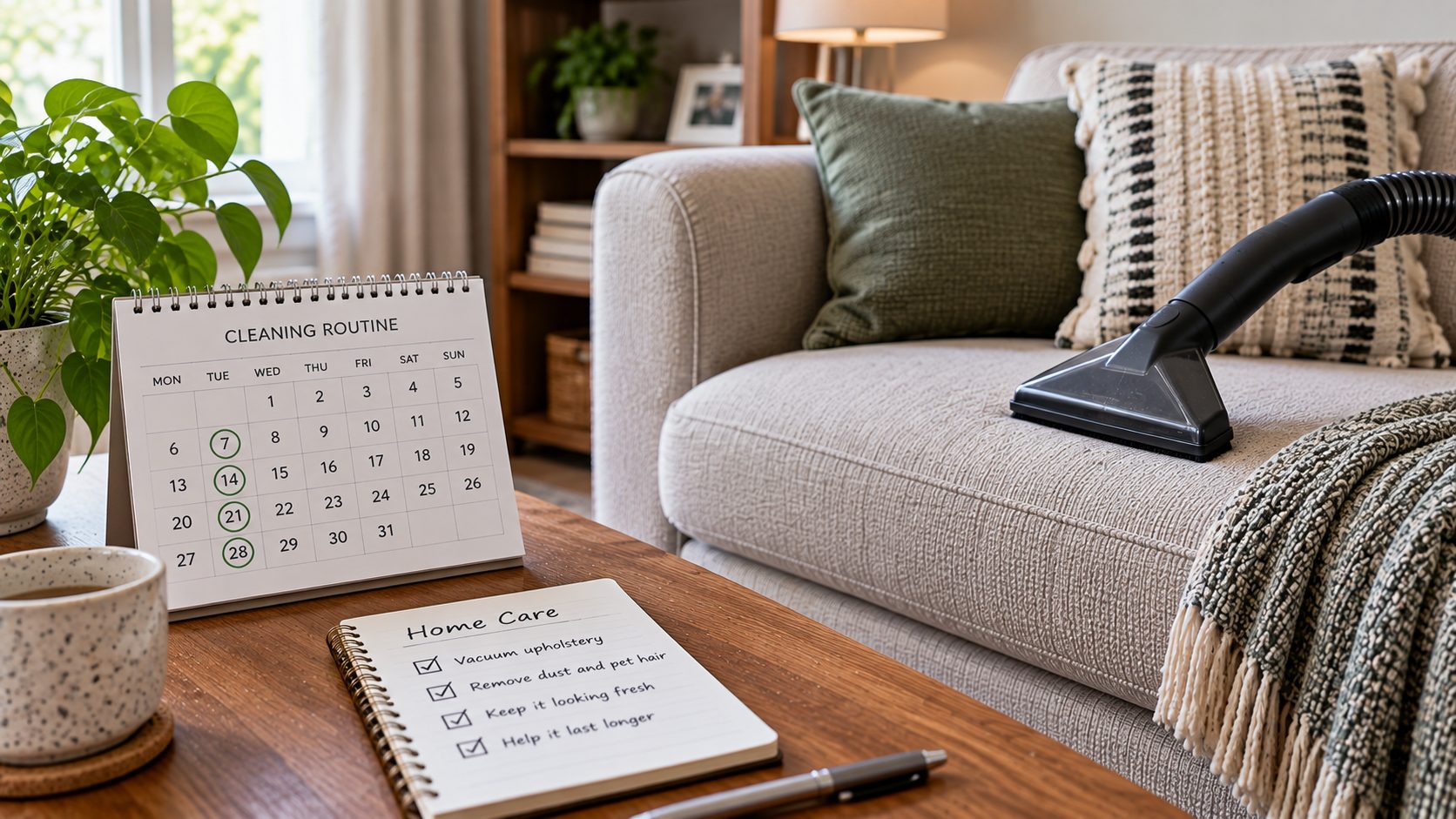
Vacuum upholstery according to how frequently the furniture is used, how quickly debris collects and the manufacturer’s care guidance. Busy household seating may need more regular attention than furniture used only occasionally.
A Practical Frequency Guide
| Furniture | General Guidance |
| Family seating | Inspect regularly and vacuum when debris is visible |
| Pet furniture | Check more frequently for hair and grit |
| Occasional chairs | Vacuum periodically as needed |
For broader advice on cleaning upholstery fabric, see our complete upholstery care guide.
Vacuuming Different Types Of Upholstery Fabric
Different upholstery surfaces respond differently to suction and movement. Always check the product care guidance and test your method in a hidden area first.
Smooth Woven Upholstery
Use a clean upholstery attachment with controlled suction and watch for pulled threads.
Velvet And Other Pile Fabrics
Check the pile direction and avoid heavy pressure. Stop if the sheen or texture changes.
Chenille And Textured Weaves
Inspect for loose yarns before cleaning and use light suction around seams.
Bouclé-Style And Looped Surfaces
Avoid rotating tools that may catch loops. Stop if any loop begins to lift.
Jacquard, Tapestry And Patterned Weaves
Work gently around raised details, decorative yarns and trims.
Faux Suede And Specialist Finishes
Follow the manufacturer’s care guidance and test for marking before cleaning the full surface.
Common Vacuuming Mistakes To Avoid
Most vacuum-related problems come from excessive suction, unsuitable attachments or cleaning damaged upholstery without inspecting it first.
| Mistake | Possible Consequence |
| Excess suction | Fabric may lift or seams may experience extra stress |
| Powered brush | Threads, loops or pile may catch |
| Dirty attachment | Grit or marks may transfer to the fabric |
| Heavy pressure | Texture may flatten or debris may move deeper |
| Vacuuming damaged areas | Existing pulls or seams may worsen |
| Repeated passes | The visible surface may change |
Other mistakes include dragging a crevice tool across the face fabric, vacuuming damp upholstery, scrubbing at pet hair and assuming every fabric can be brushed.
If the pile, sheen, weave or seams begin to change, stop.
When Vacuuming Alone Isn’t Enough
Vacuuming removes loose debris, though it will not treat stains, spills, odours or physical damage. These problems require care suited to the specific upholstery.
Check The Care Label Before Spot Cleaning
Always follow the manufacturer’s guidance before using water or cleaning products, and test any approved method in a hidden area first.
Consider Professional Cleaning
Seek specialist help for valuable furniture, delicate fabrics or widespread staining.
Repair Damage Before Cleaning
Fix loose seams, pulled threads, damaged piping or detached buttons before vacuuming or attempting further cleaning.
Tips To Keep Upholstery Clean Between Deeper Cleans
Regular inspections and prompt removal of loose debris help keep upholstery looking its best between deeper cleans. Always follow the furniture’s care guidance.
Create A Simple Maintenance Routine
- Remove crumbs and loose dirt promptly.
- Vacuum gently when needed.
- Check seams, trims and cushions for wear.
- Deal with spills using the approved care method.
- Keep vacuum attachments clean before each use.
Frequently Asked Questions About Vacuuming Upholstery Fabric
Most upholstery can be vacuumed safely with a clean attachment and controlled suction, provided you follow the furniture’s care guidance.
Can A Vacuum Damage Upholstery Fabric?
Yes. Excessive suction, powered brushes and rough attachments may damage some surfaces.
Which Vacuum Attachment Is Best?
A clean upholstery head is usually the safest starting point if the manufacturer recommends it.
Should I Use Full Suction?
Begin with reduced suction where possible and increase only if the fabric remains stable.
Can I Use A Brush On Velvet?
Only if the care guidance allows it. Test in a hidden area first.
How Do I Remove Pet Hair?
Use gentle suction with a suitable upholstery attachment. Test additional tools before wider use.
How Often Should I Vacuum?
Clean according to use, pets and visible debris rather than a fixed schedule.
Can Vacuuming Remove Stains?
No. Vacuuming removes loose debris, not stains.
Who Can Help?
If you are unsure about caring for a particular fabric, contact us with the product details and furniture type for further guidance.
Leave a Reply