How to Style Tartan in Your Home at Christmas
1st November, 2026
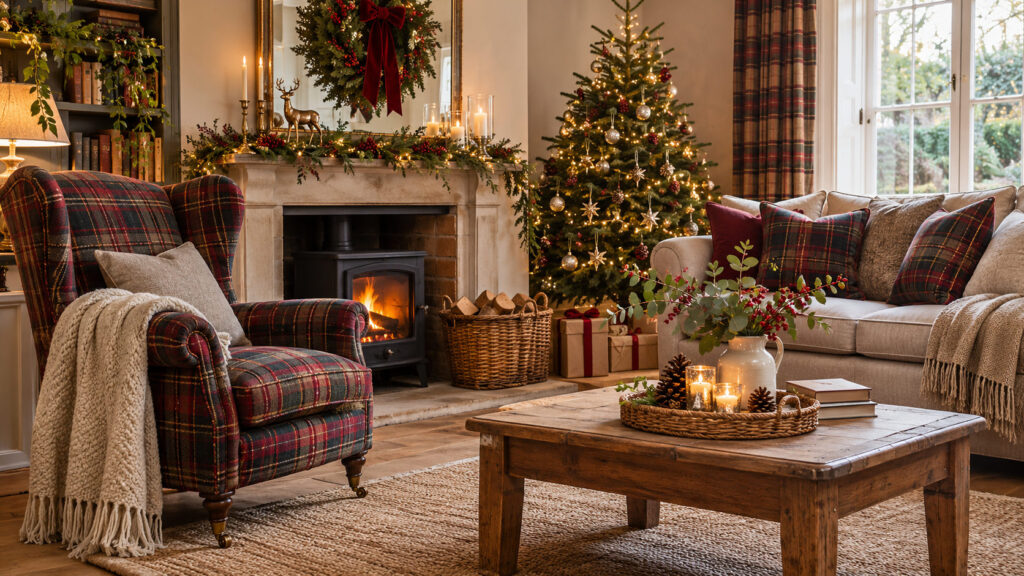
Tartan fabric for Christmas can take centre stage or work as a smaller seasonal detail. A statement chair or curtains make the pattern part of the room, while cushions, runners and handmade decorations offer less permanent options.
Start by deciding how much visual impact you want. Tartan combines several colours with a defined check, which means one well-placed feature can be enough. Look at the colours already in your room, consider how long the project will stay on display and check whether your chosen fabric is intended for the job.
Reupholster a Statement Chair in Tartan Fabric

A tartan upholstered chair can become the main patterned feature in a room. As reupholstery is a substantial commitment, choose a colour combination you would be happy to live with beyond Christmas.
First, confirm your chosen upholstery fabric is intended for furniture. A tartan pattern alone does not determine suitability for upholstery.
Consider how the check will sit across the seat, back and arms, especially where separate sections meet. The chair frame also matters, as its colour and finish will sit alongside the tartan.
Before committing, check:
- the fabric’s intended use;
- the scale of the check;
- pattern placement across separate sections;
- how the colours work with nearby furnishings;
- whether the finished chair suits the room beyond Christmas.
Where samples are available, compare shortlisted options against the chair in its usual position.
Check the Pattern Scale Before You Commit
A tartan check can look different on a finished chair compared with a small product image. Consider how much of the repeat will remain visible once the fabric is cut and fitted.
A larger check creates a prominent feature, while a smaller pattern can show more repeats across each upholstered section.
Add Tartan Cushions to Sofas and Armchairs
Tartan cushions introduce patterns without changing your main upholstery, making them ideal for seasonal decorating. They can also be stored after Christmas when you want a different look.
Choose a tartan with shades that complement your sofa, armchair or existing décor. Pair one or two patterned cushions with plain designs to maintain balance rather than repeating checks throughout.
Explore cushion fabric according to your intended project, checking the individual fabric details before ordering.
Dress the Christmas Table with Tartan
Tartan can give a Christmas table a clear focal point without covering the entire surface. A runner or napkins leave visual space for crockery, glassware and decorations.
For a restrained look, introduce tartan through smaller details. A runner creates a stronger centrepiece, while a tablecloth makes the check more prominent.
Explore crafting tartan fabric for smaller projects, checking the individual fabric details and care guidance against your intended use before cutting or sewing.
Introduce Tartan Through Curtains and Window Dressings
Tartan curtains make the pattern a major part of the room, which means colour and scale need careful consideration. For year-round window dressings, choose a design that works beyond Christmas.
Compare the tartan with your wall colour and larger furnishings, particularly where other patterns are present. Consider how the check will appear when the curtains are open, gathered and closed.
Always confirm the individual fabric is suitable for your intended window treatment before planning or cutting the project.
Create a Tartan Table Runner or Sideboard Display
A tartan runner creates a defined strip of pattern, making it a practical choice when a full table covering feels too dominant. The same approach works across a sideboard or display surface.
Let the runner provide the main pattern rather than surrounding it with competing prints. On a wooden sideboard, tartan can introduce colour while leaving much of the surface visible.
Before cutting, consider how the check will sit along the length and finish the edges appropriately for the project.
Use Tartan Fabric to Wrap Christmas Presents
Fabric wrapping turns tartan into part of your Christmas display while making use of suitable smaller pieces. It works well for boxed gifts, where the check remains visible.
Wrap the fabric around the gift and secure it with plain ribbon or twine to keep the tartan prominent.
Consider the material before cutting. Scraps or craft fabric may be more practical than fabric reserved for a larger project. Where suitable, keep finished pieces for future Christmas wrapping.
Add Tartan Ribbons to Wreaths and Garlands
Tartan ribbons provide a low-commitment way to repeat colours from elsewhere in your Christmas scheme. They can connect cushions, table details and decorations without adding another large checked surface.
Use bows on wreaths, garlands or suitable stair decorations, picking up a colour already present elsewhere in the room. Keep fabric decorations away from naked flames and unsuitable heat sources.
Make Tartan Stockings and Tree Decorations
Tartan stockings and fabric decorations provide seasonal pattern without changing permanent furnishings. They can be stored after Christmas and brought back in future years.
For stockings, pair a tartan front with a plain cuff or reverse to break up the check. Smaller offcuts can work for suitable hanging decorations, depending on the fabric and project.
Contrast is useful here. If several decorations use tartan, introduce plain fabrics between them rather than repeating the same check across every item.
Layer Tartan with Plain Fabrics and Natural Textures
Tartan already carries plenty of visual detail, which makes larger areas of plain fabric useful for creating balance. Texture can introduce variation without adding another competing print.
A tartan cushion against plain upholstery gives the check a clear role. The same principle applies to curtains, chairs and table settings. If tartan is the dominant pattern, surrounding textiles do not also need bold florals, stripes or geometric designs.
For more guidance, read about balancing plain and patterned fabrics before planning larger furnishings.
Let One Pattern Take the Lead
Choose which pattern should attract attention first. When tartan takes that role, quieter surrounding surfaces give its colours and check more room to work.
Choose a Tartan Colour Palette That Complements Your Décor
Choose tartan according to the colours already established in your room rather than assuming Christmas calls for red and green. This matters most for permanent projects such as chairs and curtains.
Start with three checks:
- Identify two or three colours already present in the room.
- Look for tartans containing related shades or a complementary background colour.
- Compare shortlisted fabrics in the room where possible before starting a larger project.
A room with navy upholstery and warm wood, for example, could use tartan containing related tones instead of an unrelated Christmas palette.
Where available, order samples to assess colour, texture and pattern scale. You can also explore tartan fabrics to compare options for your project.
Leave a Reply