Plain or Patterned Upholstery Fabric: Which Works Best?
10th September, 2026
Plain upholstery fabric creates a flexible, understated base, while patterned fabric can make furniture a stronger focal point. The better choice depends on furniture scale, room style, intended use and how the design sits across the finished piece.
Compare colour, texture, pattern scale and specifications, then assess preferred samples in the room before ordering.
Plain or Patterned Upholstery Fabric: Which Is Right for You?
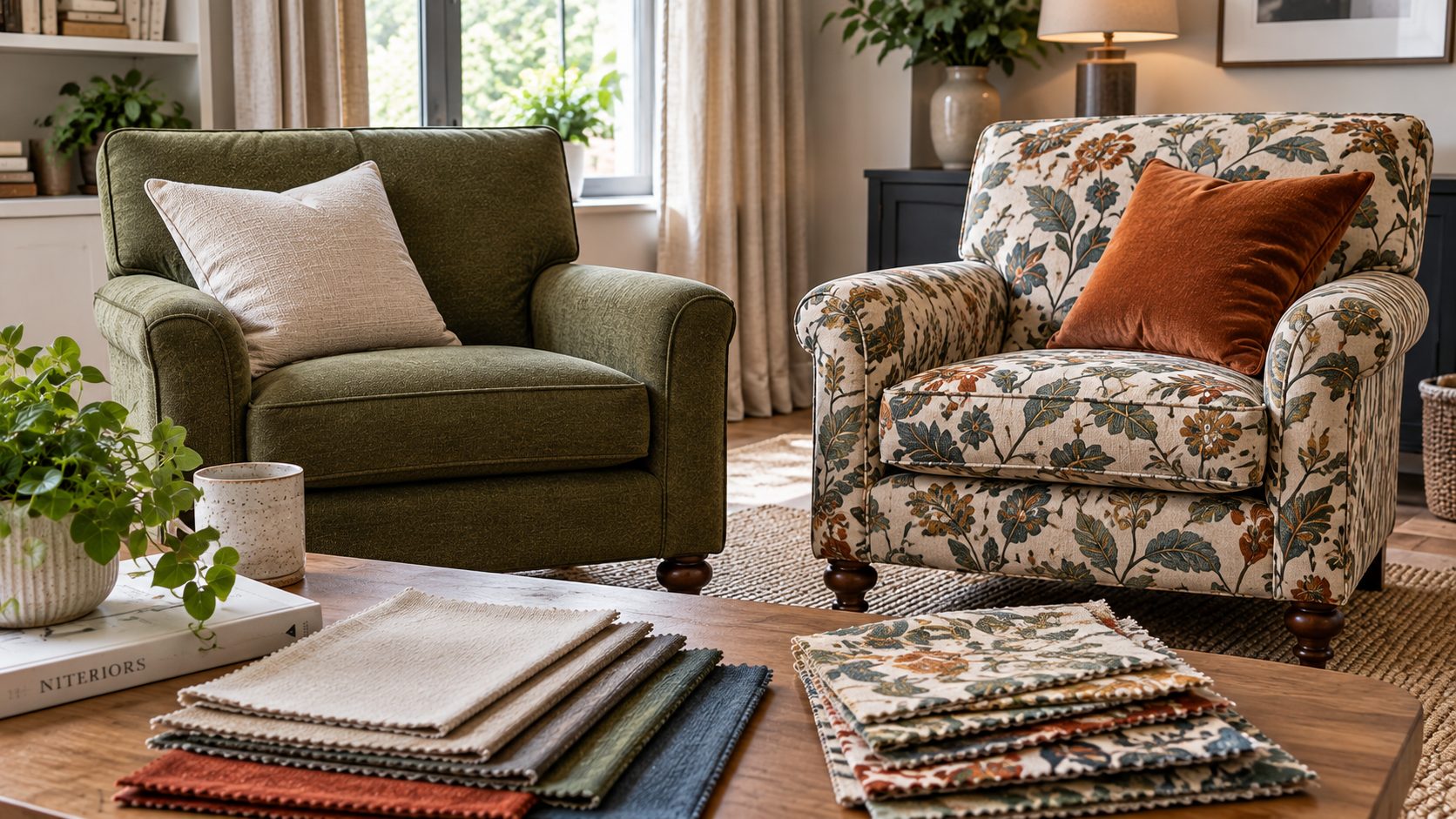
Plain upholstery suits furniture intended to blend into a room or adapt as décor changes. Patterned upholstery works well when the piece should attract attention, provided the motif suits its size and construction.
| Choose Plain When | Choose Patterned When |
| The furniture should form a flexible base | The furniture should become a focal point |
| Other furnishings already use strong motifs | The surrounding room is restrained |
| Texture matters more than motif | The design is central to the project |
| Future restyling matters | A distinctive finish is wanted |
Compare samples rather than relying on thumbnails. Scale, lighting and nearby finishes can change how each option reads.
The Benefits of Plain Upholstery Fabric
Plain upholstery fabric gives you freedom to change cushions, curtains and accessories without replacing the main upholstery. It can also highlight furniture shape, colour and texture.
Use Texture Instead of Pattern
Basketweave, chenille, velvet, corduroy, linen-look surfaces and bouclé-style textures can add depth where upholstery suitability is verified.
When Plain Fabric Works Particularly Well
Plain upholstery can suit large sofas, curved furniture and rooms already using patterned wallpaper or curtains. It may reduce motif-matching work, although pile direction and nap can still affect cutting.
Compare samples in daylight and evening light, as colour and texture can shift.
Why Patterned Upholstery Fabric Is So Popular
Patterned upholstery fabric can turn furniture into a focal point while introducing colour and character. The best results come from choosing a motif that suits the furniture’s size and considering how it will appear across the finished piece.
Match the Pattern Scale to the Furniture
Large motifs suit furniture with broad, uninterrupted panels, while smaller repeats can work well on dining chairs or matching seating. Seams may interrupt the design, making placement worth planning.
Check Pattern Direction and Repeat
Confirm whether the pattern has a directional design and check the repeat measurement. Pattern matching and motif placement may increase the amount of fabric required, making these details important before ordering.
Choosing Upholstery Fabric for Small and Large Rooms
Room size affects visual balance, yet it does not determine whether upholstery must be plain or patterned. Contrast, pattern scale and competing elements matter more than pattern alone.
Small-Room Considerations
Lower-contrast motifs may suit rooms where rugs, curtains or wallpaper already carry detail. Check the sample from the usual viewing distance.
Large-Room Considerations
Large furniture can carry broader motifs where panels allow the design to read clearly. A substantial plain sofa can gain depth through colour and texture.
How Colour and Pattern Affect the Look of Furniture
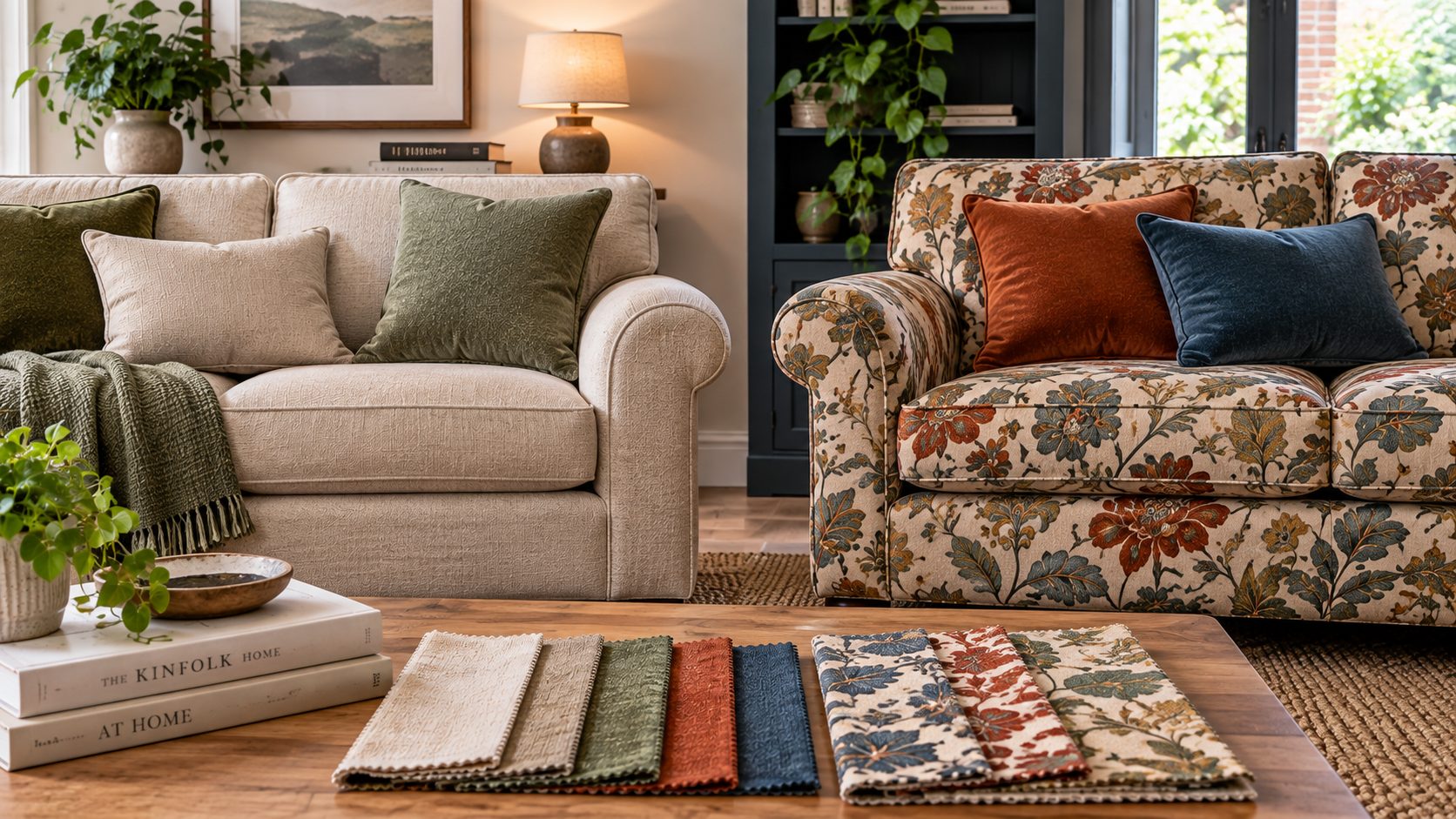
Colour contrast and motif placement can change how furniture shape reads. Plain colours show the silhouette clearly, while stripes or motifs can draw attention to panels.
Consider the Furniture’s Shape
Curved backs, deep cushions, narrow dining seats and broad sofa panels all interact with fabric differently. A stripe may emphasise chair height, while poor alignment can look uneven.
Think Beyond the Fabric Swatch
Hold the sample against the frame and nearby finishes. View it from several distances and consider where motifs may be cropped.
For wider project planning, read the complete guide to upholstery fabric.
Which Upholstery Fabric Hides Stains and Wear Better?
Mid-toned, textured or patterned upholstery fabrics may make some small marks or uneven wear less noticeable than very pale or uniform fabrics. This visual effect should not be mistaken for stain resistance or greater durability.
Consider the Type of Everyday Mess
Pet hair, crumbs, dust and spills appear differently depending on colour, texture and pattern. Mottled designs may visually disguise minor marks, while dark plain fabrics can highlight pale lint.
Check Performance Separately from Appearance
Always review the product specification before deciding. Check the intended use, care guidance, rub count where supplied, fibre composition and any confirmed finishes or treatments, as these determine performance rather than appearance.
Mixing Plain and Patterned Upholstery Fabrics
Plain and patterned upholstery fabrics can work together when they share a colour, texture or overall style. One fabric should anchor the design, while the other adds contrast without competing for attention.
Simple Ways to Combine Both
Pair a plain sofa with a patterned armchair, use patterned cushions on plain upholstery, or introduce a patterned footstool as an accent. These combinations create interest while keeping the scheme balanced.
Keep One Element Consistent
Use a shared colour, similar texture or repeated motif to tie the fabrics together. Compare samples side by side in the intended room and confirm each fabric is suitable for your upholstery project before ordering.
Matching Upholstery Fabric to Your Interior Style
Choose upholstery fabric that complements your room’s character rather than following a style label. Colour, texture, furniture shape and pattern scale create a stronger visual impact than whether a space is described as traditional or modern.
Traditional and Heritage-Inspired Rooms
Botanical motifs, rich plains and tapestry or jacquard effects, where suitable, complement classic furniture and established colour palettes.
Contemporary and Minimal Rooms
Textured plain fabrics, geometric patterns and bold single-colour upholstery create a clean, balanced look, with patterned accent pieces adding controlled contrast.
Cottage and Eclectic Rooms
Florals, checks and soft textures work best when linked by a shared colour palette or similar visual weight, keeping the overall scheme cohesive.
Things to Consider Before Choosing Upholstery Fabric
Before ordering, check the fabric at furniture scale, confirm intended use and assess whether pattern repeat may affect cutting or quantity.
Five Questions to Ask Before Ordering
- Should the furniture blend in or stand out?
- Does the pattern scale suit the item?
- Will it work with existing patterns in the room?
- Does the product specification suit the intended use?
- Have you checked the sample, width, repeat and required quantity?
Also review room lighting, care guidance and any relevant fire or trade requirements.
Frequently Asked Questions About Plain and Patterned Upholstery Fabric
Both plain and patterned upholstery fabrics can work well. The right choice depends on your furniture, room and the intended use of the finished piece.
Is Plain or Patterned Upholstery Better for a Sofa?
Plain or low-contrast fabrics create a versatile base, while patterned sofas suit rooms designed around a statement piece.
Can Patterned Upholstery Make a Small Room Look Busy?
It can if several bold patterns compete. One carefully chosen patterned item can still work well.
Does Patterned Fabric Hide Stains Better?
Some patterns may make minor marks less noticeable, though this does not indicate stain resistance or easier cleaning.
Is Plain Upholstery Easier to Match?
Plain fabrics generally coordinate more easily with changing accessories and décor.
Do I Need More Fabric When Using a Pattern?
Possibly. Pattern repeat and motif matching can increase the amount required.
Where Can I Get Help Choosing?
If you are unsure, contact us with your furniture details, dimensions and preferred designs for project-specific guidance.
Leave a Reply