The Complete Guide to Refreshing Your Furniture for Autumn and Winter
15th November, 2026
Refreshing furniture for autumn and winter does not have to mean replacing pieces or changing an entire room. Start by assessing what needs attention, then decide whether care, soft furnishings or reupholstery will make a worthwhile difference.
Think in three levels: maintain, refresh and transform. Furniture in good condition may only need appropriate care, while cushions and seat pads offer seasonal changes. A sound chair, footstool or dining seat with tired upholstery could justify a more substantial update using carefully chosen fabric.
Assess Your Furniture Before the Seasons Change
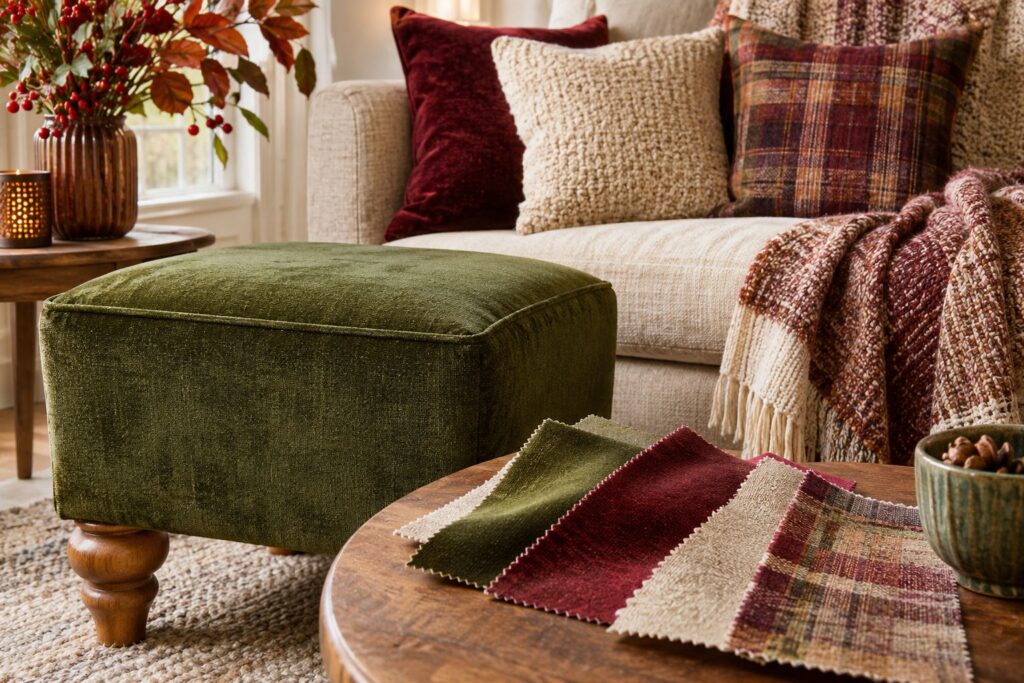
Start by checking the condition, purpose and appearance of each piece before buying fabric. An assessment helps separate furniture needing genuine attention from pieces that could remain unchanged.
Look at the furniture you use most and ask:
- Is the frame or structure sound?
- Is the upholstery damaged, marked or merely no longer to your taste?
- How frequently is the piece used?
- Could appropriate cleaning improve its appearance?
- Would changing one prominent item have enough impact?
- Is the work realistic for your upholstery experience?
- How much can you allocate to the project?
- Does the finished result need to work throughout the year?
This prevents a seasonal decorating idea from becoming a larger project without a clear purpose. A sound armchair with dated upholstery, for example, presents a different opportunity from one with structural damage.
Once you have identified suitable projects, you can compare upholstery fabrics for furniture makeovers with a specific piece and intended use in mind.
Decide What to Keep, Repair or Replace
Consider condition, function, sentimental value, project complexity and likely future use. Appearance should form only part of the decision.
Furniture with structural problems may need assessment or repair before upholstery work begins. More complex pieces can also require specialist skills. Recognising the limits of a DIY project early can prevent wasted fabric and avoid work that needs to be undone later.
Identify Furniture That Could Be Reupholstered
Dining seats, footstools and some chairs can offer manageable projects for people with suitable DIY experience, depending on their construction. Larger pieces may require more advanced upholstery skills or professional help.
Before ordering material, consider how much fabric is required, where seams will fall and whether a pattern needs matching. A visually striking fabric is not a useful choice if its specification does not suit the intended application.
Choose an Autumn and Winter Colour Palette
Build your seasonal palette around colours already in the room, then add deeper or softer shades that complement the permanent décor. Consider flooring, walls, curtains and furniture you plan to keep before choosing new upholstery or accessories.
Warm Neutrals
Creams, taupes and browns can provide a restrained base for stronger patterns or textures. Pay attention to undertones, as fabrics with similar colour names can appear noticeably different beside existing furnishings.
Order samples where available and view them in the room during daylight and under your usual evening lighting. This provides a more reliable indication of how each colour works with surrounding surfaces.
Rich Seasonal Shades
Rust, olive, burgundy and deeper blues can introduce stronger seasonal colour when they suit the existing palette. Consider scale before committing. A bold shade on a cushion or footstool has less visual impact than the same colour across a large sofa.
Colours That Work Beyond Winter
Choose permanent upholstery with year-round use in mind. Before recovering a large piece, consider whether the colour will still suit the room during spring and summer.
Keep strong seasonal shades for removable furnishings if you prefer regular changes. This allows your main furniture to provide a consistent foundation throughout the year.
Introduce Warmer Upholstery Fabrics
Velvet, chenille, tartan and corduroy can introduce different surface qualities, colours and patterns to an autumn and winter scheme. Here, “warmer” refers to their visual or tactile character rather than thermal performance.
The fabric family alone does not establish suitability. Check the specification of the individual material against the intended project, particularly when covering furniture exposed to regular use.
Velvet
Velvet has a pile which gives the surface a distinctive depth and appearance. Pile direction can influence how light falls across the finished furniture, making careful cutting and planning important.
When covering furniture, start with velvet upholstery fabric rather than assuming every velvet can withstand the intended use.
A sample also lets you assess the pile and colour alongside other furnishings before ordering enough material for a chair or larger project.
Chenille
Chenille provides another option where surface texture is part of the design. Individual fabrics can differ in construction, specification and intended application, which makes the product details more useful than assumptions based on the fabric name.
Consider where the furniture will sit, who will use it and how frequently. These practical questions should guide the shortlist alongside colour and texture.
Tartan
Treat tartan as a pattern choice rather than a single fibre or construction. Scale, colour combination and placement can produce very different results across furniture.
A bold tartan may become the main feature on an armchair or footstool. Smaller checks can create a different visual effect across repeated dining seats. Explore tartan upholstery fabric with the proportions of the finished piece in mind.
Pattern matching may increase fabric requirements. Account for this during measuring rather than discovering the issue after cutting begins.
Corduroy
Corduroy’s ribs introduce directional texture without relying on a printed design. Their orientation becomes part of the finished appearance, which needs consideration when planning and cutting sections.
Check the intended application of each corduroy fabric before choosing it for furniture. A fabric being described as corduroy does not automatically make it suitable for upholstery.
Reupholster a Statement Piece of Furniture
Reupholstering one prominent piece can change a room without updating every item. Choose furniture worth keeping, check its condition and make sure the fabric suits its intended use.
Measure carefully before ordering, accounting for pattern direction and matching. Compare samples on the furniture before committing to a larger quantity.
Armchairs
An armchair can carry stronger colour or pattern while larger furniture remains unchanged. Consider how a design will sit across the back, arms and seat, particularly with large motifs. Frequency of use should also influence fabric choice.
Footstools and Ottomans
A footstool provides a smaller surface for experimenting with colour or texture. Check its construction and plan how directional fabrics or patterns will run across each section.
Dining Chairs
Dining chairs create repetition, making consistency important. Calculate the quantity for the complete set and consider pattern placement between seats. Regular use should guide material selection, with suitable sofa furnishing fabric and other upholstery options chosen according to the project’s requirements.
Layer Different Colours, Patterns and Textures
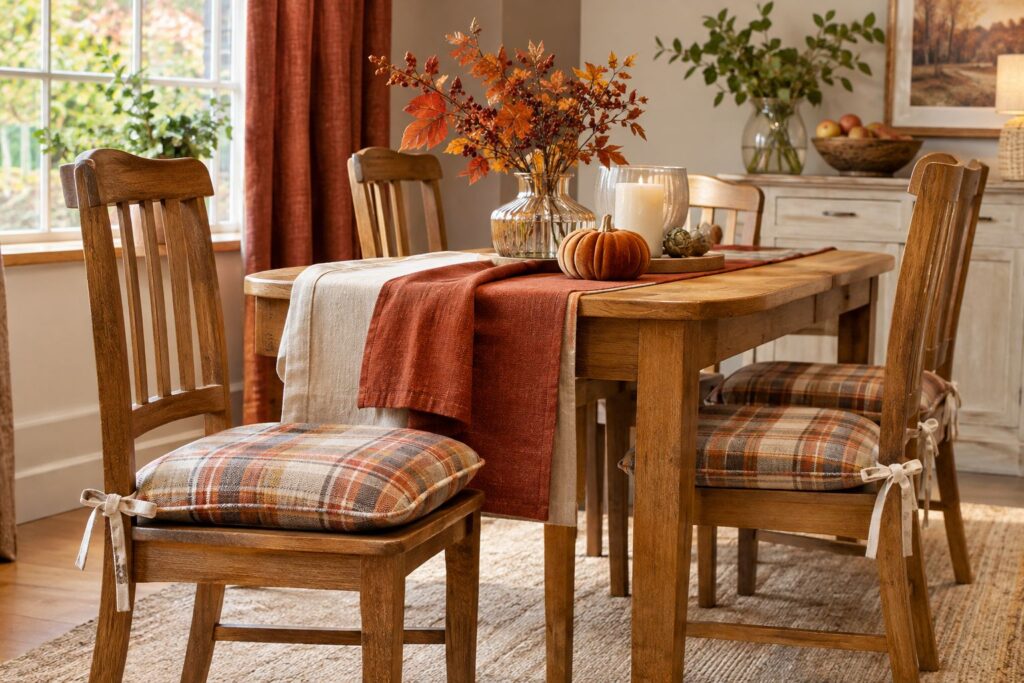
Choose one dominant pattern or surface and allow the remaining fabrics to support it through related colours or quieter finishes. This creates variation without making every upholstered surface compete for attention.
A practical formula is to select a feature fabric, identify one or two colours within it, then repeat those shades elsewhere through plainer materials.
Combine Plain and Patterned Fabrics
If an armchair carries a strong print, nearby cushions can pick up colours from the design without introducing another competing pattern.
Where the main furniture is plain, printed upholstery fabric on a smaller chair or footstool can become the focal point instead.
Pattern scale deserves attention. A design which looks balanced on a large chair may dominate a small seat pad, while a very small repeat can appear quite different across a broad upholstered surface.
Balance Smooth and Textured Materials
Surface variation can add interest without introducing another print. Place samples together to judge how different finishes interact rather than assessing each material separately.
This also provides an opportunity to check whether several textures enhance the scheme or make it feel unnecessarily busy.
Repeat Colours Across the Room
Repeating selected colours can connect furniture with different patterns and surfaces. Exact matching is not essential.
A shade from a patterned chair might reappear in a plain cushion or dining seat. This creates a visual relationship between separate pieces while allowing each one to retain its own character.
Refresh Furniture with Seasonal Soft Furnishings
Cushions, throws and seat pads can alter the colour and texture around existing furniture without changing its main upholstery. These removable additions are particularly useful when the desired look is seasonal rather than permanent.
Cushions
Cushions provide a manageable place to introduce a stronger colour, print or contrasting surface.
If you make your own covers, choose the material against the sofa or chair rather than in isolation. Browse cushion fabric with the dimensions, construction and intended use of the finished cushion in mind.
Removable covers also give you the option to store seasonal designs and return to them another year.
Throws
A throw can introduce temporary colour while leaving the upholstery beneath unchanged. Before buying something new, consider whether an existing throw can be repositioned to achieve the effect you want.
This approach works particularly well when your main upholstery already suits the room throughout the year.
Seat Pads
Seat pads can introduce colour or pattern to suitable dining chairs and other seating without permanently changing the furniture.
For a homemade version, measure the required dimensions carefully and plan the cover construction before cutting. Material choice should reflect how the finished pad will be used.
Update Wooden Furniture for a Warmer Look
Wooden furniture can be refreshed through new finishes, hardware or fabric details without replacing the piece. Keep alterations appropriate to its condition, construction and value.
Paint and Distressed Finishes
Paint can change suitable furniture significantly. Prepare the surface correctly and follow the chosen product’s instructions.
New Handles and Hardware
Replacing handles can update cabinets and drawers with limited alteration. Check existing measurements and fixing points before buying replacements.
Fabric Panels and Decorative Details
Suitable fabric panels can introduce colour or pattern to wooden furniture. Leftover material may work well, provided its dimensions and characteristics suit the project.
Prepare Fabric Furniture for Wetter Weather
Before furniture receives heavier winter use, review its care guidance and deal with existing marks using methods appropriate to the specific upholstery. No single cleaning process is suitable for every fabric.
Clean Upholstery Before Winter
Start with the care instructions supplied for the material or furniture. Avoid assuming water, steam, detergent, stain remover or vigorous scrubbing will be suitable.
Where an appropriate treatment is required, follow its directions carefully and carry out any recommended test first. UK Fabrics Online also offers fabric care kits, although compatibility with the specific upholstery still needs checking before use.
Protect Furniture from Mud and Moisture
Prevention can reduce the need for more involved cleaning later. Deal with wet coats, muddy footwear and damp items before they reach upholstered seating where practical.
If you plan to use a protector or care treatment, check both the upholstery guidance and the treatment instructions. Do not assume applying a product will make indoor furniture waterproof.
Reduce Fading and Heat Damage
Consider the environment surrounding upholstered furniture throughout the year, including exposure to direct sunlight and nearby heat sources.
Different furniture and fabrics can have different requirements. Follow relevant manufacturer or supplier guidance instead of relying on a fixed positioning rule for every material.
Adapt Your Dining Area for Autumn and Winter
Dining furniture can be updated through chair upholstery, seat pads and table textiles, introducing seasonal colour or pattern without replacing the dining set. Decide first whether you want a permanent furniture change or a removable seasonal layer.
Refresh Upholstered Dining Chairs
Recovering dining seats can repeat one colour or pattern around the table. Calculate fabric requirements across the complete set and consider motif placement before cutting.
For chairs exposed to regular use, suitability and care requirements should take precedence over seasonal appearance.
Add Fabric to Benches and Window Seats
A suitable bench or window seat can provide space for an upholstered pad or removable cushion. Accurate measurements are particularly important for long cushions designed to fit a defined area.
Think about how the seat will be used before selecting material. Decorative appeal should work alongside the practical requirements of the project.
Coordinate Furniture with Table Linens
Table textiles can repeat colours found in chair upholstery or cushions without adding another permanent furniture change.
If table textiles form part of the scheme, explore tablecloth fabrics after establishing the main furniture palette. This keeps the table setting connected to the room rather than allowing a temporary detail to dictate every other choice.
Create Cosy Areas for Relaxing and Entertaining
Concentrate furniture and fabric changes around the areas people use for reading, relaxing or entertaining instead of updating every item in the room. One or two purposeful changes can give a defined area more character without creating unnecessary projects.
Build a Reading Corner
Begin with an armchair you already use. A new cushion, recovered footstool or rearrangement may provide enough change without touching the chair’s upholstery.
If the chair itself needs attention, assess its condition before treating it as a reupholstery project. A permanent fabric change should solve more than a temporary desire for seasonal decoration.
Prepare Seating for Seasonal Guests
Consider how much seating the room needs when more people visit. Existing dining chairs, occasional chairs and footstools may already provide useful flexibility.
Where an upholstery update makes sense, favour pieces which will remain useful after the seasonal entertaining period ends.
Make Larger Rooms Feel More Inviting
Review how the furniture is grouped and how seating relates to the room’s everyday use. Repeating selected colours or textile details across different areas can create visual connections.
Avoid adding furniture purely to fill empty space. Rearranging what you own may solve the problem without increasing the number of pieces in the room.
Refresh Your Furniture Without Overspending
With a limited budget, prioritise furniture that is used or seen most, then consider smaller projects and suitable offcuts for secondary changes. Good budget planning involves reducing unnecessary purchases as well as comparing fabric costs.
Prioritise High-Impact Changes
Choose projects that solve an existing problem or create a meaningful improvement.
One tired footstool may be a better candidate for new upholstery than several pieces which remain in good condition. Elsewhere, two new cushion covers could provide enough seasonal colour without recovering any furniture.
Repurpose Leftover Upholstery Fabric
Keep useful offcuts after larger projects. Depending on their dimensions and material, they may suit smaller coordinated pieces later.
Measure remnants before designing a project around them. Fabric should never be used for an unsuitable application purely because it is left over.
Make Temporary Seasonal Updates
Removable covers, seat pads and decorative fabric details give you greater flexibility than changing permanent upholstery each season.
Clearance upholstery fabric can also be worth exploring for a defined project. Check suitability and confirm you can obtain the quantity required before planning the finished item around a particular fabric.
Choose Updates That Will Last Beyond Winter
Permanent furniture changes should continue to suit the room after winter, which means choosing upholstery according to year-round use as well as colour, pattern and texture. Reserve strongly seasonal ideas for elements which are easier to remove or change.
Before committing to a permanent update, check:
- Is the furniture itself worth recovering?
- Is the chosen fabric intended for the project?
- Will the colour work with the room throughout the year?
- How will the pattern appear across the complete piece?
- Have you calculated the required quantity?
- Does pattern matching affect the amount needed?
- Have you checked the individual care information?
- Have you viewed a sample beside the furniture and existing décor?
- Could a smaller removable change achieve the same objective?
These questions bring the project back to the three choices at the start of the process: maintain, refresh or transform.
Furniture in good condition may only need suitable care. A room needing seasonal variation could benefit from new cushions, seat pads or table textiles. When a sound piece genuinely needs a new surface, carefully selected upholstery provides a more substantial route.
Ready to refresh a piece of furniture? Explore upholstery fabrics by colour, pattern and texture, then check the individual product information to make sure your shortlist fits the intended project.
For larger upholstery work, order samples where available and compare them in the room before purchasing the full quantity. Place them beside the furniture, flooring, walls and textiles you plan to keep. This final check gives you a clearer view of colour, pattern, surface and scale before you commit to the project.
Leave a Reply