How to Wash Upholstery Fabric and Keep It Looking Fresh
20th February, 2026
Spills, pets and daily use are part of real life. Sofas, chairs and cushions naturally collect dust, marks and the occasional accident.
It is no surprise then that so many people search for reliable advice on how to keep their furniture looking clean without damaging the fabric.
Understanding how to wash upholstery fabric properly removes much of the uncertainty. Many materials can be cleaned safely at home, provided you follow the correct method.
Our guide explains how to identify your fabric type, check care labels and choose the safest washing approach. With the right steps, you can wash upholstery fabric at home confidently and extend its lifespan.
Understanding Different Types of Upholstery Fabric
Before washing anything, it is important to understand what you are working with. Different fibres react differently to water, heat and detergent. Exploring our full range of upholstery fabric options makes it clear that construction and fibre content vary significantly.
Common upholstery materials include cotton, linen, polyester, velvet, faux suede and blended fabrics. Each has its own cleaning requirements. Natural fibres such as cotton and linen are breathable and comfortable but may shrink if exposed to high temperatures. Synthetic fibres such as polyester are generally more resistant to moisture and easier to maintain. Velvet and faux suede require extra care to preserve their texture.
To simplify the difference:
- Natural fibres tend to be breathable and comfortable, but more sensitive to heat and shrinkage.
- Synthetic fibres are often more durable, stain-resistant and tolerant of gentle washing.
Blended fabrics combine qualities of both, which means cleaning instructions may depend on the dominant fibre. Always confirm the fibre content before proceeding.
Things to Check Before Washing Upholstery Fabric
Preparation prevents costly mistakes. Before attempting to clean sofa fabric safely, check the following:
- The cleaning code label, such as W, S, WS or X
- Colourfastness by testing in a hidden area
- Whether cushion covers are removable
- Risk of shrinkage
- Manufacturer care guidance
A W code allows water-based cleaning. S indicates solvent-based cleaning only while WS permits both. X usually restricts cleaning to vacuuming.
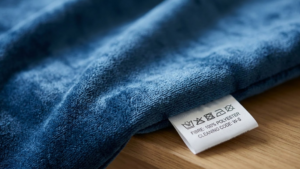
Even if the label allows washing, always test a small, concealed section first. This ensures the fabric will not fade, bleed or react unexpectedly.
How to Wash Upholstery Fabric Safely
When considering how to wash upholstery fabric, a structured approach reduces risk and improves results.
- Vacuum the surface thoroughly using an upholstery attachment to remove dust and debris.
- Spot treat visible stains before full washing.
- Choose the correct washing method based on the care label.
- Use only a mild detergent designed for delicate fabrics.
- Avoid soaking unless the care instructions specifically allow it.
Following these steps ensures your upholstery fabric cleaning guide begins with preparation rather than guesswork.
Hand Washing Upholstery Fabric
Hand washing is often the safest option for delicate or natural materials. If the covers are removable and the care code permits water, this method gives you greater control.
- Fill a clean basin with lukewarm water.
- Add a small amount of mild detergent and mix gently.
- Submerge the fabric and agitate lightly without scrubbing.
- Rinse thoroughly with clean water to remove detergent residue.
- Press out excess water carefully without wringing.
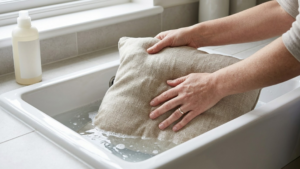
Learning how to hand-wash upholstery fabric correctly helps preserve colour and prevent fibre distortion. This approach is especially suitable for cotton blends, linen and certain lightweight synthetics.
Machine Washing Upholstery Fabric
Machine washing should only be considered if the care label clearly permits it. Not all fabrics can withstand agitation or spin cycles.
If approved, use a gentle cycle with cold or low-temperature water. Select a mild detergent and wash the covers separately to prevent friction damage. Avoid overloading the machine, as tight packing can cause creasing and uneven cleaning.
Even when instructions allow you to machine wash upholstery fabric, there is always some risk of shrinkage or texture change. For this reason, lower temperatures and minimal spin speeds are recommended.
Drying Upholstery Fabric Without Damage
Drying plays a crucial role in upholstery fabric maintenance. Incorrect drying can lead to shrinkage, stiffness or misshapen covers.
- Air dry flat where possible to maintain shape.
- Avoid tumble drying unless the care label explicitly allows it.
- Keep fabric away from direct heat sources such as radiators.
- Reshape whilst damp to ensure a proper fit.
- Brush nap fabrics, such as velvet or faux suede, gently once dry.
Patience during drying helps maintain both fit and finish.
Common Washing Mistakes to Avoid
Many issues arise from avoidable errors rather than the washing process itself. Take care to avoid the following:
- Ignoring care label instructions
- Using hot water unnecessarily
- Overloading the washing machine
- Applying bleach or harsh chemicals
- Skipping a patch test
These simple precautions protect your investment and support long-term upholstery care tips.
How to Keep Upholstery Fabric Looking Fresh
Washing is only one part of upholstery fabric maintenance. Regular upkeep reduces the need for deep cleaning.
Vacuuming weekly prevents dust from settling into fibres. Addressing spills immediately stops stains from setting. Rotating cushions ensures even wear, particularly on frequently used seating. Limiting prolonged exposure to direct sunlight helps preserve colour consistency.
Fabric protector sprays formulated for upholstery can add an additional layer of resistance when suitable for the fibre type. Small, consistent habits keep your furniture looking newer for longer.
Understanding how to wash upholstery fabric safely begins with identifying the material and checking the care label. Not all fabrics respond to water in the same way, and the correct method depends on fibre type and construction.
By following a clear upholstery fabric cleaning guide and handling each stage carefully, you can wash upholstery fabric at home without unnecessary risk. Proper washing, drying and ongoing maintenance all contribute to preserving appearance and longevity.
If you are unsure which fabric suits your project or how best to care for it, contact us for expert advice and guidance from those who know here at UK Fabrics Online.
Leave a Reply