Is Expensive Upholstery Fabric Worth the Extra Cost?
25th September, 2026
Expensive upholstery fabric is worth the extra cost when its verified construction, finish or performance directly benefits the project. A lower-priced option may offer better value when it meets the same essential requirements without adding features you do not need.
Compare intended use, specification, width, pattern repeat, care, appearance and total quantity. Samples can show whether colour, texture and handle justify the difference before you order several metres.
Is Expensive Upholstery Fabric Worth the Extra Cost?
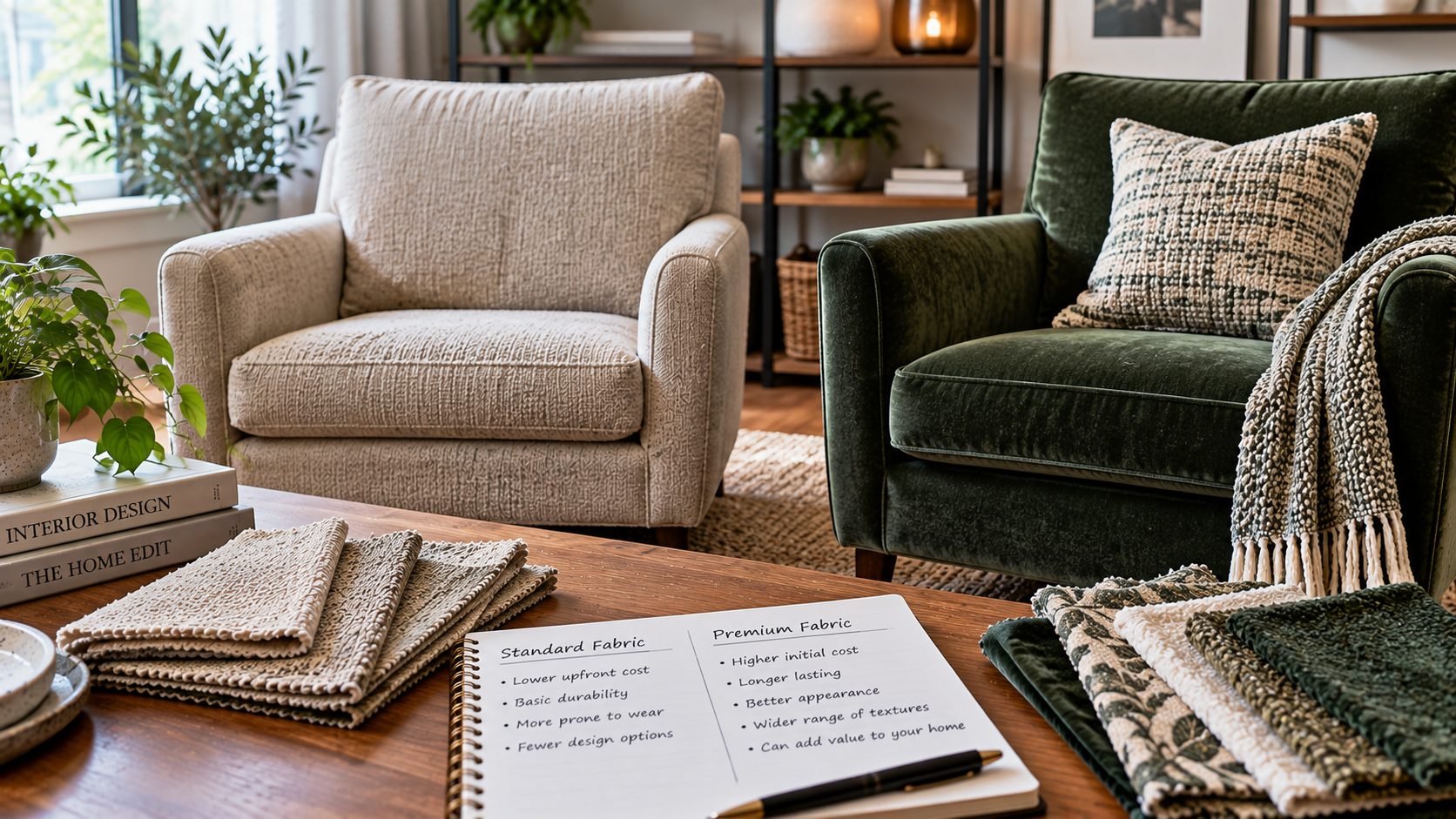
Paying more can be worthwhile when verified features suit the furniture and expected use. Price alone does not prove durability or suitability.
An occasional bedroom chair has different needs from an everyday family sofa. A distinctive fabric may be manageable for a footstool, while that price per metre could make a large sofa impractical.
| More Likely to Be Worth It When | Not Necessarily Worth It When |
| A verified feature matches the project | The feature adds little practical value |
| The finish is central to the design | The finish will be hidden |
| Rework would be costly | The project is experimental |
| Limited metreage is needed | Large meterage stretches the budget |
What Makes Some Upholstery Fabrics More Expensive?
Upholstery fabric prices can vary because of fibre composition, construction, pattern complexity and specialist finishes. Always check the product specification before deciding whether the additional cost offers value.
Fibre and Construction
Different fibres, weaves and pile constructions can affect appearance and performance without making one fabric universally better.
Pattern and Design Complexity
Large repeats, woven designs and licensed patterns can increase production complexity and fabric requirements.
Treatments and Technical Requirements
Verified treatments or specialist finishes may influence price where they are relevant to the intended use.
Does Higher Quality Mean Better Durability?
A higher-priced or well-made upholstery fabric may offer useful performance, although durability should always be judged using the intended use and verified product specifications. Price and appearance alone do not confirm how well a fabric will perform over time.
Check Intended Use First
Choose a fabric designed for the furniture’s expected use. Decorative, occasional and high-use seating can require different performance characteristics.
What a Rub Count Does Not Confirm
Rub count measures abrasion resistance. It does not confirm stain resistance, colourfastness, washability, fire compliance or comfort.
Workmanship Also Matters
Correct cutting, seam placement and fitting contribute to the finished result alongside the fabric itself.
Comparing Budget and Premium Upholstery Fabrics
Budget and premium upholstery fabrics can both offer excellent value when they suit the project’s intended use. Compare specification, appearance, care requirements and total fabric quantity before deciding whether a higher-priced option is justified.
Suggested Comparison Table
| Consideration | More Affordable Option | Higher-Priced Option |
| Appearance | May have a simpler weave or pattern | May offer a more distinctive texture or design |
| Specification | Must still be verified | Must still be verified |
| Quantity | Can make larger projects more affordable | May suit smaller statement pieces |
| Best Choice | Suitable when it meets the project’s needs | Suitable when verified features add genuine value |
Compare Like with Like
Assess fabrics with a similar intended use, composition, width, pattern complexity and care guidance. This provides a fair comparison and highlights meaningful differences.
Check the Total Project Cost
Look beyond the price per metre. Include fabric quantity, pattern repeat, piping, filling, labour and samples before deciding which option offers the best overall value.
When Premium Upholstery Fabric Is Worth the Investment
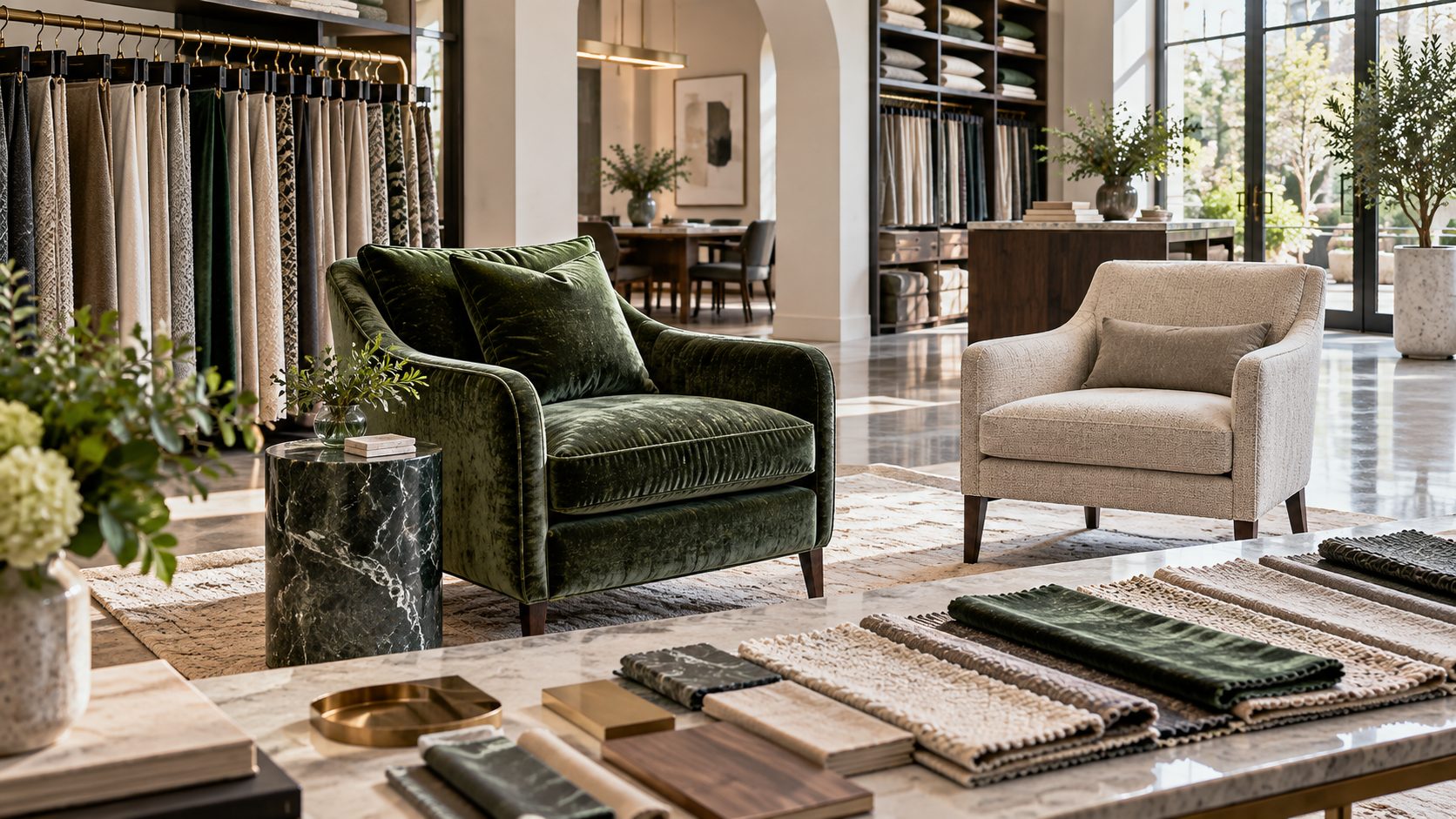
A higher-priced upholstery fabric is worth considering when a verified feature, distinctive finish or technical specification directly supports the furniture’s intended use or appearance. Paying more makes sense only when the added benefits are relevant to the project.
High-Use Furniture
For frequently used seating, check the intended use, verified durability data and care guidance before deciding whether the additional cost is justified.
Statement Pieces
Feature chairs, footstools and headboards may justify a distinctive texture or pattern where the fabric is central to the finished design.
Client and Trade Projects
Consistent specifications, technical documentation and reduced rework risk can be valuable for professional upholstery projects. Verify availability and lead times before committing to repeat orders.
When a More Affordable Upholstery Fabric May Be the Better Choice
A more affordable upholstery fabric can offer excellent value when it meets the required specification, suits the intended use and keeps the project within budget.
Experimental and Learning Projects
Lower-cost options can be suitable for first upholstery projects, prototypes or practising new techniques, provided the fabric is appropriate for its intended use.
Large-Quantity Projects
Recovering sofas, multiple dining chairs or other large items may make a more affordable fabric the practical choice.
Lower Price Still Requires Checks
Always confirm intended use, composition, width, care guidance and any verified performance requirements before ordering.
-
How Upholstery Fabric Affects the Look and Feel of Furniture
- Upholstery fabric shapes the colour, texture and overall character of furniture. A higher-priced option may be worthwhile when its finish, weave or pattern creates an effect that better suits your design. Appearance should always be balanced with the furniture’s intended use and practical requirements.
-
Texture Can Add Value Without Pattern
- Velvet, chenille, basketweave and other textured fabrics can create depth and visual interest, even in plain colours. Different surfaces also influence how light reflects across the furniture.
-
Pattern Can Become Part of the Design
- Large-scale patterns and woven designs can turn furniture into a focal point. Pattern repeat should also be considered, as it may affect fabric quantity.
-
View Samples on the Furniture
- Compare samples in natural and artificial light, alongside nearby furnishings, to judge colour, texture and overall compatibility before placing your order.
Common Buying Mistakes to Avoid
Common mistakes include assuming price proves quality, ignoring suitability, width or pattern repeat.
| Buying Mistake | Why It Creates Poor Value |
| Choosing only by price | Suitability remains unknown |
| Ignoring width | Quantity calculations can be wrong |
| Skipping a sample | Colour or texture may disappoint |
| Focusing only on rub count | Other performance needs are missed |
| Forgetting repeat | Extra fabric may be required |
| Paying for an unused feature | The additional spend adds no useful benefit |
Avoid assuming future stock, identical dye lots or commercial suitability. Verify requirements affecting safety or repeat orders.
Frequently Asked Questions About Upholstery Fabric Costs
Choosing upholstery fabric is about matching the specification, appearance and intended use to your project. Price alone does not determine value.
Why Is Some Upholstery Fabric More Expensive?
Fibre composition, construction, pattern complexity, specialist finishes or verified treatments can influence price, depending on the product.
Is More Expensive Upholstery Fabric More Durable?
Not necessarily. Check the intended use and any verified performance data rather than relying on price.
Is Lower-Priced Upholstery Fabric Poor Value?
No. A more affordable fabric can be an excellent choice when it meets the project’s requirements.
Does Patterned Upholstery Fabric Cost More?
Some woven or licensed designs may cost more, while larger pattern repeats can increase fabric requirements.
Should I Order a Sample?
Yes. A sample helps you assess colour, texture and suitability before placing a larger order.
How Can I Compare Upholstery Fabric Prices?
Compare intended use, composition, width, care requirements, pattern repeat and total metreage, not simply the price per metre.
Who Can Help Me Compare Options?
If you are unsure which fabric best suits your project, contact us for guidance on specification, quantity and suitability.
Leave a Reply