The Best Fade-Resistant Upholstery Fabrics for Bright, Sunny Spaces
20th August, 2026
Natural light can transform a room, although it also presents challenges for upholstered furniture. Prolonged exposure to sunlight gradually changes the appearance of fabric, making colour fading a consideration when choosing materials for conservatories, south-facing living rooms and bright open-plan spaces.
Selecting the right upholstery fabric starts with realistic expectations. No fabric is completely fade-proof, and the way it ages depends on several factors, including fibre type, colour, room orientation and daily exposure to sunlight. Understanding these factors helps you make a more informed choice before starting an upholstery project.
Why Some Upholstery Fabrics Fade Faster Than Others
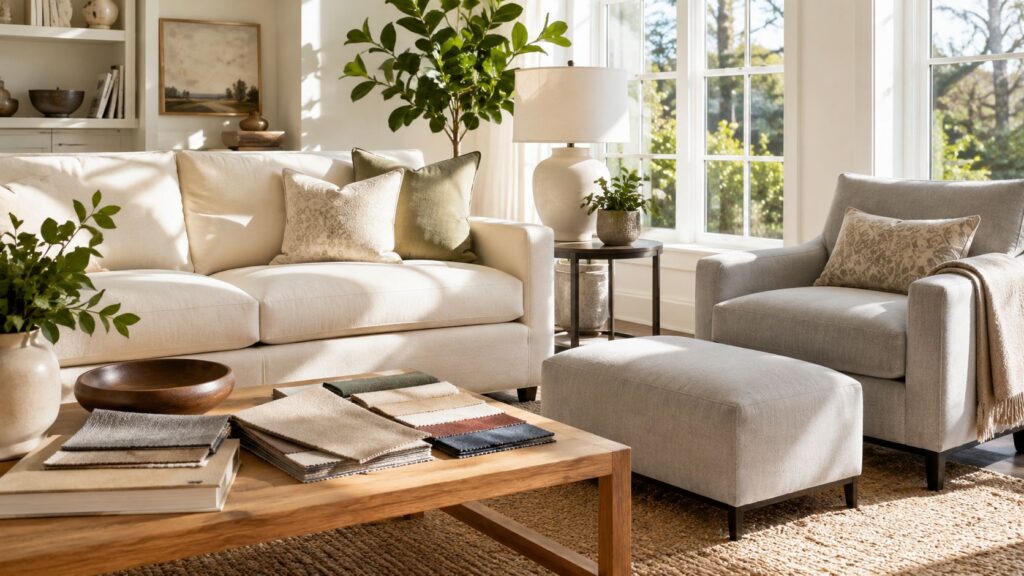
Sunlight gradually breaks down dyes and fibres, causing upholstery fabrics to lose colour over time. The rate of fading depends on fabric type, dyeing methods and the amount of direct sunlight a room receives.
Ultraviolet (UV) rays are the main cause of fading, while heat can accelerate natural ageing. A south-facing living room or conservatory with large windows exposes furniture to far more sunlight than a shaded space. Daily exposure, furniture placement and window coverings also influence how quickly colours change. Although fading is unavoidable over time, understanding these factors helps you choose upholstery fabric with realistic expectations.
The Best Fade-Resistant Upholstery Fabrics for Sunny Rooms
Some upholstery fabrics are better suited to bright spaces because of their construction or manufacturing process, although no fabric is completely resistant to fading.
Rather than searching for one perfect material, compare fabrics based on their intended use, manufacturer guidance and the conditions within your home. Fibre composition, colour and weave all influence long-term appearance. Ordering fabric samples allows you to assess colours in your own lighting before making a decision. UK Fabrics Online offers a wide selection of upholstery fabrics, making it easier to compare options and choose a material that suits both your project and your room.
How Sunlight Affects Different Upholstery Fabrics
Different fibres respond differently to prolonged sunlight, making it important to understand the intended use of each upholstery fabric.
Natural fibres and synthetic fibres each have strengths, although neither category is universally better for bright interiors. Fibre composition is only one part of the decision, alongside weave, colour, dyeing process and manufacturer specifications.
When comparing upholstery fabric, consider how the material will be used as well as how much sunlight the room receives. A fabric suitable for an occasional chair may not be the right choice for a family sofa positioned beside full-height windows.
Selecting an appropriate upholstery fabric involves balancing appearance, durability, maintenance and the environment where the furniture will be placed.
Solution-Dyed and UV-Resistant Upholstery Fabrics Explained
Some upholstery fabrics are manufactured using methods designed to improve colour retention, although performance depends on the specific product. Terms such as “solution-dyed” and “UV-resistant” describe manufacturing processes or product features rather than guarantees against fading.
Always check the manufacturer’s specifications before relying on these characteristics. If you’re unsure whether a fabric is suitable for a bright room, seek advice before purchasing to ensure it matches your project’s requirements.
Natural vs Synthetic Upholstery Fabrics in Bright Spaces
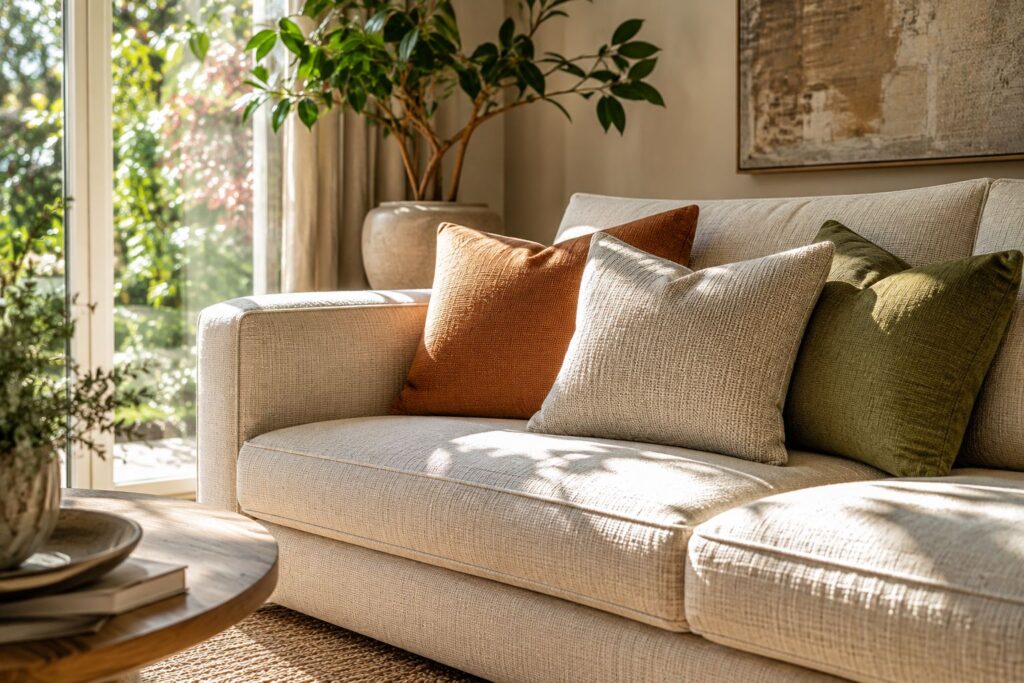
Neither natural nor synthetic upholstery fabrics are universally better. The most suitable choice depends on appearance, maintenance expectations and manufacturer guidance.
| Fabric Type | Appearance | General Considerations | Best Uses |
| Natural fibres | Soft, textured finish | Performance varies between fibres. Check product guidance for bright rooms. | Traditional interiors and decorative seating |
| Synthetic fibres | Wide choice of finishes | Some products are designed to improve colour retention, depending on the manufacturer. | Family spaces and everyday furniture |
| Blended fabrics | Combines different characteristics | Suitability depends on the blend and intended use. | Versatile upholstery projects |
How Fabric Colour Affects Fading
Colour choice influences how noticeable fading becomes over time, although all upholstery fabrics can change with prolonged sunlight exposure. Deep and vibrant shades may show fading more clearly, while lighter neutrals can make gradual colour changes less obvious.
Patterned fabrics may also help disguise subtle variation across larger pieces of furniture. When choosing upholstery for a bright room, think about how the colour will age as well as how it looks on the day you buy it.
Tips to Help Prevent Upholstery Fabric from Fading
Simple changes to room layout and maintenance can help reduce the visible effects of sunlight on upholstery. Although fading cannot be prevented completely, these steps can help preserve its appearance for longer.
- Rotate cushions regularly.
- Close blinds or curtains during peak sunlight.
- Reposition furniture where possible.
- Clean upholstery following the manufacturer’s care guidance.
- Order fabric samples to check colours in natural daylight before purchasing.
These practical habits can help upholstery age more evenly in bright rooms.
Choosing Upholstery Fabric for Conservatories and South-Facing Rooms
Rooms with prolonged sunlight need extra thought when selecting upholstery fabric. Conservatories, south-facing lounges and garden rooms expose furniture to more direct daylight, making fabric choice, colour and placement increasingly important.
Consider how the room is used, whether window coverings can reduce sun exposure and where furniture will sit throughout the day. If you’re unsure which fabric suits your project, UK Fabrics Online can help you compare suitable options before you order.
How to Keep Upholstery Fabric Looking New for Longer
Regular care helps preserve the appearance of upholstery, even though some natural ageing is unavoidable. Follow the manufacturer’s cleaning guidance, remove dust with routine vacuuming and deal with spills promptly.
Where possible, reduce prolonged exposure to direct sunlight by using blinds or repositioning furniture. Checking cushions and high-use areas during regular cleaning can also help you spot early signs of wear, keeping your upholstery looking its best for longer.
Frequently Asked Questions About Fade-Resistant Upholstery Fabrics
Which upholstery fabric fades the least?
There is no single upholstery fabric that can be described as fading the least in every situation. Performance depends on the specific product, manufacturing process, colour, room orientation and daily sunlight exposure.
Does velvet fade in sunlight?
Velvet can fade when exposed to prolonged direct sunlight. The degree of change depends on the individual fabric and its manufacturer.
Is linen suitable for sunny rooms?
Linen may be suitable for bright interiors depending on the product and intended use. Reviewing manufacturer guidance and considering room conditions will help you make a more informed choice.
Can faded upholstery be restored?
Some professional cleaning or restoration services may improve the appearance of faded upholstery, although colour loss cannot always be reversed. Prevention remains the most effective approach.
Should I avoid dark upholstery in south-facing rooms?
Dark colours are not automatically unsuitable. They may show visible fading more readily than certain lighter shades, making it worthwhile to consider both colour choice and furniture placement before purchasing.
Bright, sun-filled rooms deserve upholstery that complements the space while meeting realistic expectations for long-term appearance. Understanding how sunlight affects fabrics, comparing materials carefully and considering room orientation will help you make a confident decision for your next project.
If you would like guidance on choosing upholstery fabrics for a conservatory, south-facing lounge or another bright interior, explore our upholstery fabric collection or contact us for project-specific advice before placing your order.
Leave a Reply