Can Upholstery Fabric Be Used for Cushions and Soft Furnishings?
28th August, 2026
Yes, upholstery fabric can be used for many cushions and soft furnishing projects, although the best choice depends on how the finished item will be used. A window seat, decorative scatter cushion and dining chair pad all have different requirements, making project planning just as important as colour or pattern.
This guide explains where upholstery fabric works well, when a lighter furnishing fabric may be a better option and what to consider before placing an order.
Can Upholstery Fabric Be Used for Cushions and Soft Furnishings?
Quick Answer
Yes, upholstery fabric can be used for many cushions and soft furnishing projects. The best choice depends on how the finished item will be used, whether for everyday seating or decorative display.
Upholstery fabric works well for seat cushions, window benches, dining chair pads, footstools and many scatter cushions where a more structured finish is preferred. However, lighter furnishing fabrics may be better suited to projects that need a softer drape. By considering function, texture and overall style before buying, you can choose a fabric that complements both your project and your home.
What Makes Upholstery Fabric Different From Standard Furnishing Fabric?
Upholstery fabrics are generally designed for heavier use, although individual products vary in construction and intended application. They usually have a firmer feel and more structure than lighter furnishing fabrics, helping create a tailored finish on seating and other soft furnishings.
Texture also influences the overall look, with options ranging from smooth weaves to rich velvets and textured finishes. Weight affects how the fabric behaves, as heavier materials tend to hold their shape while lighter fabrics drape more freely. Comparing samples is the best way to judge which fabric suits your project.
Using Upholstery Fabric for Seat Cushions
Seat cushions can benefit from upholstery fabric because they combine comfort with a structured appearance. It is a popular choice for window seats, dining benches and built-in seating where a neat, tailored finish is important. Matching seat cushions with nearby upholstery or soft furnishings can help create a coordinated look throughout the room.
Before choosing a fabric, consider how the cushion will be used, along with the type of cushion filling, as both influence the finished result. Ordering samples allows you to compare texture and colour before committing to a larger purchase.
Can Upholstery Fabric Be Used for Scatter Cushions?
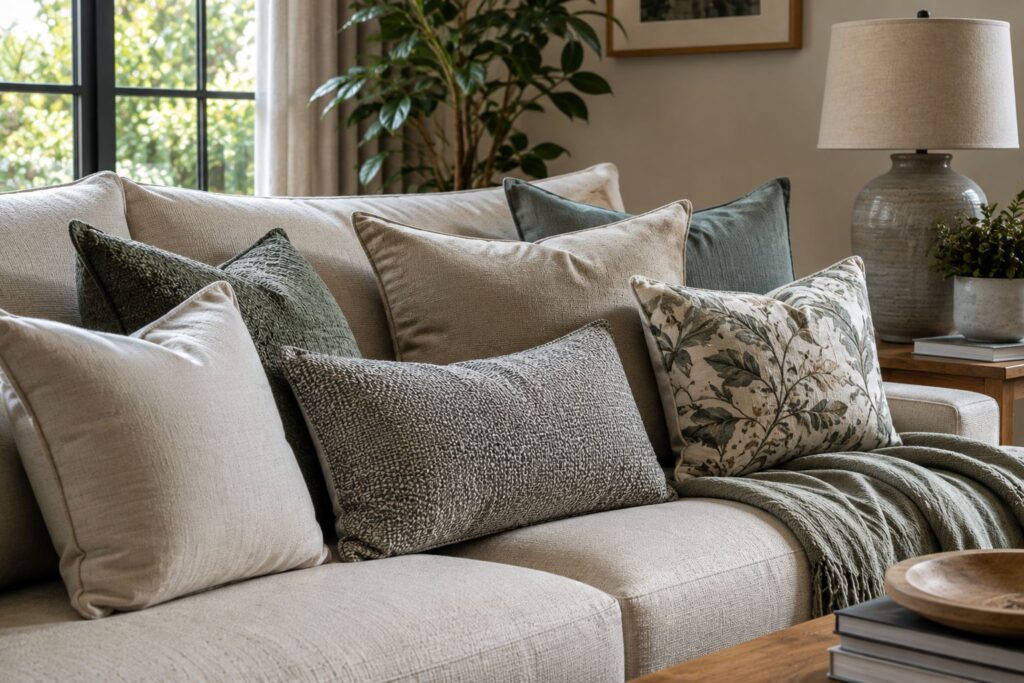
Upholstery fabric can create attractive scatter cushions, particularly when texture and structure are part of the design. It works well for adding depth, colour and pattern to sofas, beds or occasional chairs. Mixing upholstery fabrics with lighter materials can create a balanced look without making every cushion feel the same.
For example, velvet scatter cushions can be paired with linen seating for added contrast. If you’re making cushions for your home or to sell, ordering samples first lets you compare colour and texture before choosing fabric for a larger project.
Using Upholstery Fabric for Footstools, Ottomans and Benches
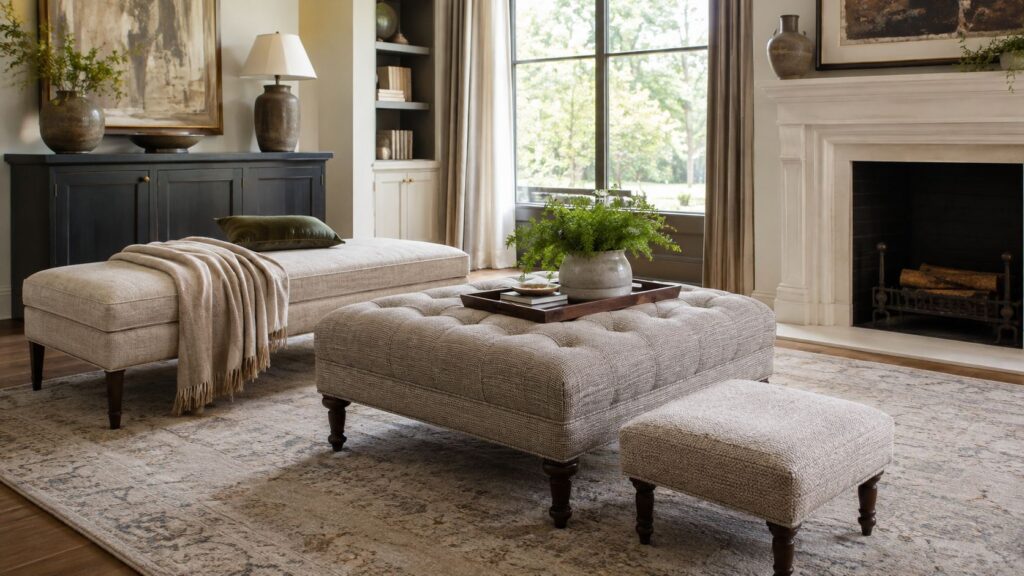
Footstools, ottomans and benches are well suited to upholstery fabric because they combine decorative appeal with practical use. Choosing a fabric that complements nearby seating or cushions helps create a cohesive look without making the room feel overly matched.
For furniture makeovers, consider how the colour and texture work alongside flooring, curtains and existing furnishings. Repeating subtle design elements can bring the space together while allowing each piece to stand out. Ordering samples before buying larger quantities makes it easier to compare colours and textures in your own home.
Is Upholstery Fabric Suitable for Dining Chair Pads?
Dining chair pads can be a good match for upholstery fabric, especially where a structured finish and coordinated appearance are important. Whether you’re updating family dining chairs or creating custom seat pads, choose a fabric that suits both the room and the intended use.
Consider how the colour, texture and pattern work with your existing furniture to create a balanced look. If you’re sewing fitted chair pads with piping or shaped edges, compare fabric samples first to help you choose a material that matches both your design and project requirements.
Pros and Cons of Using Upholstery Fabric for Soft Furnishings
Upholstery fabric offers several advantages for soft furnishings, although lighter furnishing fabrics may suit some projects better.
| Advantages | Considerations |
| Structured appearance | May feel heavier |
| Wide choice of textures | Some fabrics have less drape |
| Suitable for many seating projects | Suitability varies by project |
The right choice depends on the intended use rather than appearance alone. Decorative scatter cushions, seat cushions and furniture makeovers all have different requirements, making it worthwhile to compare samples and check individual product information before placing an order.
How to Choose the Right Upholstery Fabric for Your Project
Start by thinking about how the finished item will be used rather than choosing purely by colour or pattern. Consider whether the project is decorative or for everyday use, along with the room, texture and overall style you want to achieve. Comparing fabric samples is one of the easiest ways to assess colour and texture in your own home, where lighting can change their appearance.
Reviewing individual product information before ordering also helps you choose a fabric that suits your project and gives you greater confidence before purchasing larger quantities.
Caring for Upholstery Fabric Used on Cushions and Furnishings
Regular maintenance helps upholstered cushions and furnishings retain their appearance over time.
Removing dust with gentle vacuuming can help keep fabrics looking fresh, particularly on cushions used every day. Rotating loose cushions also helps distribute wear more evenly across the surface.
If spills occur, deal with them promptly by following the care guidance supplied with the individual fabric. Cleaning recommendations vary between products, making it important to check the manufacturer’s instructions rather than applying the same method to every material.
Good day-to-day care supports the appearance of your finished project while helping you get the best from your chosen fabric.
Frequently Asked Questions About Upholstery Fabric
Can upholstery fabric be used for cushions?
Yes. Upholstery fabric is suitable for many seat and decorative cushion projects, depending on the individual fabric and intended use.
Is upholstery fabric too heavy for scatter cushions?
Not always. Some upholstery fabrics work well for scatter cushions, while lighter furnishing fabrics may create a softer finish.
Can I sew upholstery fabric on a home sewing machine?
Many home sewing machines can handle upholstery fabrics, although this depends on the machine, fabric and project.
Is upholstery fabric suitable for outdoor cushions?
Some products are designed for outdoor use, while others are not. Always check the individual product specification.
Should I order samples before buying?
Yes. Samples let you compare colour and texture in your own home, helping you choose the most suitable fabric before placing a larger order.
Upholstery fabric is suitable for many cushions and soft furnishing projects when chosen with the intended use in mind. Considering texture, structure and style alongside your project’s requirements helps you make a more informed decision.
Explore our upholstery fabric collection to compare suitable options, or contact us if you’d like advice before ordering. Our team can help you choose a fabric that complements both your project and your home.
Leave a Reply