Why Does Sofa Fabric Start Bobbling?
20th October, 2026
Sofa fabric bobbling is usually known as pilling, where fibres collect on the surface and form small, visible balls. Repeated friction can contribute, while fibre characteristics and fabric construction may also influence how the material behaves.
Finding bobbles does not automatically mean your upholstery is poor quality. Where the pilling appears, how frequently the sofa is used and its fabric specification can provide useful clues. Understanding these factors can help you identify possible causes, follow suitable care guidance and make informed upholstery choices.
Friction From Everyday Use
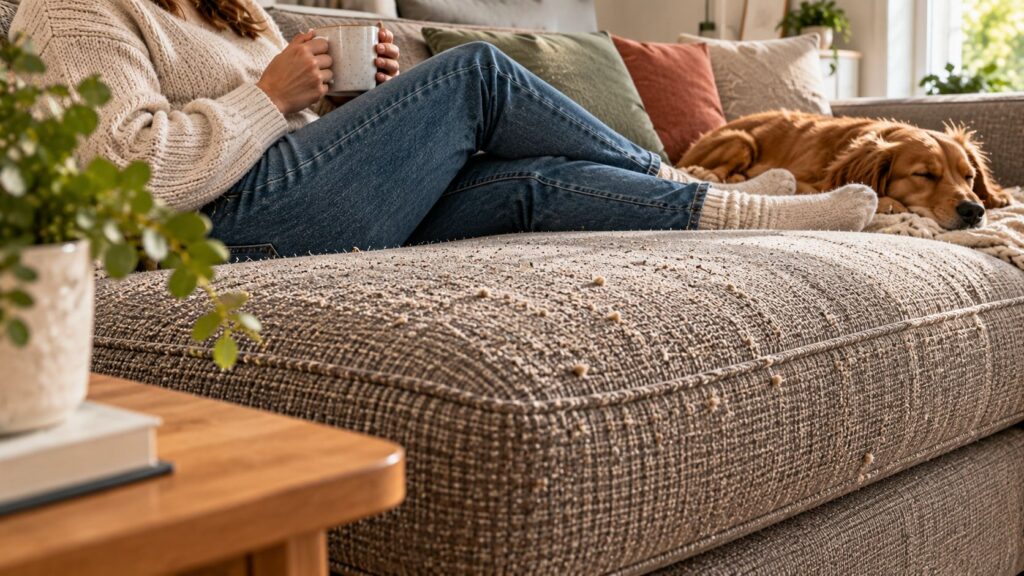
Repeated contact can contribute to pilling, which can make regularly used parts of a sofa more likely to show surface changes.
Sitting down, standing up and shifting position create contact between clothing and upholstery. As a result, a favourite seat may receive considerably more friction than the opposite end of the same sofa.
Look at where the bobbles have developed. Seat centres, armrests and other high-contact areas can provide useful clues about how use relates to the change.
This pattern cannot confirm the cause alone. However, comparing affected areas with less frequently used sections can help you assess whether repeated contact may be contributing.
Loose and Short Fabric Fibres
Fibre characteristics can influence pilling, although they are only one part of a fabric’s overall performance.
Pilling develops when fibres protruding from the surface, become entangled and form small balls. Fibre properties, yarn structure and fabric construction can all influence this process.
Avoid judging upholstery by fibre content alone. Labels such as cotton, polyester or blended fabric cannot predict how the finished material will perform. Product-specific construction, intended use and available performance information provide a more useful basis for assessing upholstery.
The Type of Upholstery Fabric Used
Fabric construction, fibre content and surface characteristics can influence how upholstery responds to regular use.
Two materials may look similar yet have different constructions and performance specifications. This makes product-specific information more useful than assumptions based on appearance or fabric type.
When comparing sofa upholstery fabric, check whether each option is intended for your project and review the available specifications and care guidance.
Ordering a sample also lets you assess colour, texture and handle in person. These details can help you choose confidently, although a sample cannot predict every aspect of long-term performance.
Does Fabric Rub Count Affect Bobbling?
A rub count measures abrasion resistance and should not be treated as a pilling-resistance score.
Abrasion and pilling are assessed separately, meaning a higher rub count does not guarantee resistance to bobbling.
When comparing upholstery fabric, check each specification according to what it measures. Consider the intended application, composition, care guidance and relevant performance information together. This provides a clearer picture of suitability than relying on one figure to predict how fabric will perform during regular use.
Clothing and Blankets Rubbing Against the Sofa
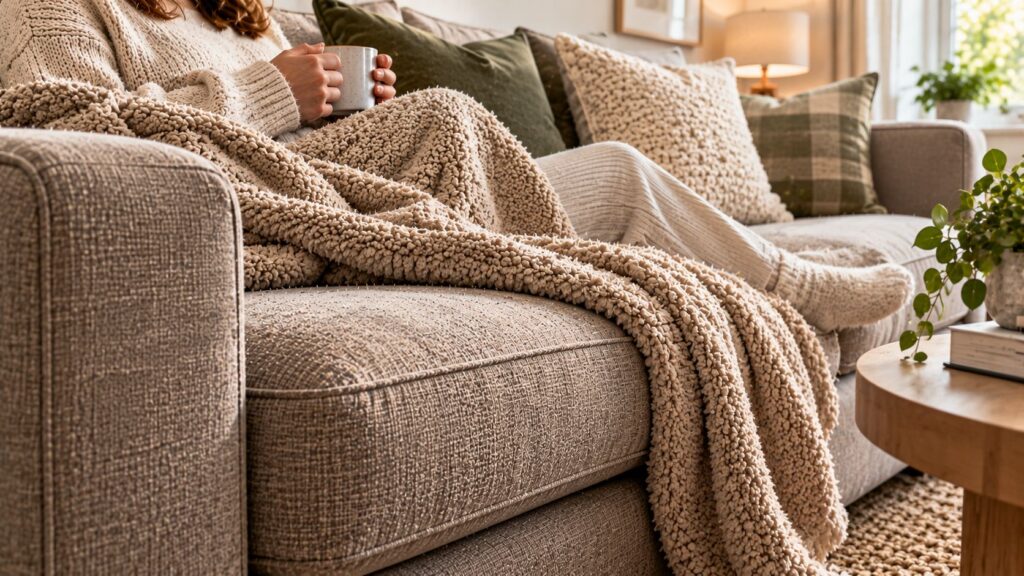
Clothing, throws and blankets add further contact with upholstery, although their effect will depend on the materials and pattern of use.
A throw left across a favourite seat every day creates a different contact pattern from one used occasionally. Clothing also moves against the surface whenever someone changes position.
Rather than assuming a particular jumper or blanket is responsible, look at the wider pattern. Consider what regularly touches the affected area and whether the pilling appears where repeated contact is greatest.
Pets and Regular Contact With the Sofa
Pets can change how frequently particular parts of a sofa are used, although pet hair itself should not automatically be blamed for bobbling.
A dog that sleeps at one end each evening creates a concentrated pattern of contact. Another section of the same sofa may receive much less use.
If the pet’s preferred area shows different surface changes, note the pattern without jumping to conclusions about the precise cause. The upholstery’s construction, care history and other household use still matter.
Incorrect Cleaning Methods
Using an unsuitable cleaning method can affect an upholstery surface, making fabric-specific care guidance essential before applying any treatment.
Before cleaning:
- Identify the upholstery material where possible.
- Check the manufacturer’s or supplier’s care instructions.
- Confirm that any cleaning product is suitable for the fabric.
- Avoid aggressive rubbing or scrubbing as a response to pilling.
- Seek product-specific advice if the care requirements are unclear.
Water, steam and cleaning products are not suitable for every upholstery material. UK Fabrics Online stocks upholstery fabric care kits, although you should check the individual product information and your fabric’s care guidance before use. Avoid treating a care product as a universal solution for removing or preventing bobbling.
Natural Wear in Frequently Used Areas
Parts of a sofa receiving the most contact may develop surface changes differently from sections used less frequently.
Compare the middle of a seat with its edges, the arms with the back, or a favourite sitting position with an unused section. Uneven appearance can reflect uneven use.
This comparison gives you useful information, although it cannot confirm whether every visible change is expected wear. If the fabric’s behaviour seems unusual, refer to the original product information or ask the furniture or fabric supplier for guidance.
What Should You Do If Your Sofa Fabric Is Bobbling?
Identify the upholstery and check its care guidance before attempting to remove bobbles or applying any treatment.
Use the following steps:
- Find the fabric name, composition or furniture care information if available.
- Check the recommended cleaning and maintenance instructions.
- Note where the pilling is concentrated.
- Compare those areas with your household’s usual seating and contact patterns.
- Avoid cutting, shaving, scrubbing or treating the surface unless the relevant care guidance confirms an appropriate method.
- Contact the furniture retailer, manufacturer or fabric supplier if the behaviour seems unusual or the instructions are unclear.
This approach gives you more useful information than applying a generic online remedy to an unidentified material.
What Should You Check When Choosing New Sofa Fabric?
Choose fabric intended for your upholstery project and assess the relevant specifications rather than relying on appearance or one performance figure.
For a sofa used regularly, consider:
- whether the fabric is suitable for the intended upholstery application;
- abrasion information where supplied;
- pilling information where supplied;
- fibre composition and construction;
- cleaning and care requirements;
- how frequently the furniture will be used;
- a sample to assess colour, texture and handle.
A family sofa used daily faces different demands from an occasional chair. Review the available product information together rather than treating rub count, composition or another single detail as a guarantee. This gives you a stronger basis for comparing fabrics and choosing an option suited to your project.
Leave a Reply