What Are Waterproof Ratings for Fabric?
20th July, 2026
Waterproof ratings can seem confusing when you are comparing fabrics for outdoor use. Product descriptions often include technical terms like Hydrostatic Head or waterproof ratings, yet many buyers are left wondering what those numbers actually mean.
In simple terms, waterproof fabric ratings help indicate how well a material resists water under testing conditions. They can be useful when comparing fabrics, but they only tell part of the story.
At UK Fabrics Online, many customers ask whether waterproof ratings should drive their buying decision for cushions, furniture covers or sewing projects. The short answer is no, not on their own. Fabric construction, coatings, seam quality and intended use all matter just as much.
This guide explains waterproof fabric ratings in plain English so you can choose the right material with more confidence.
What Are Waterproof Fabric Ratings?
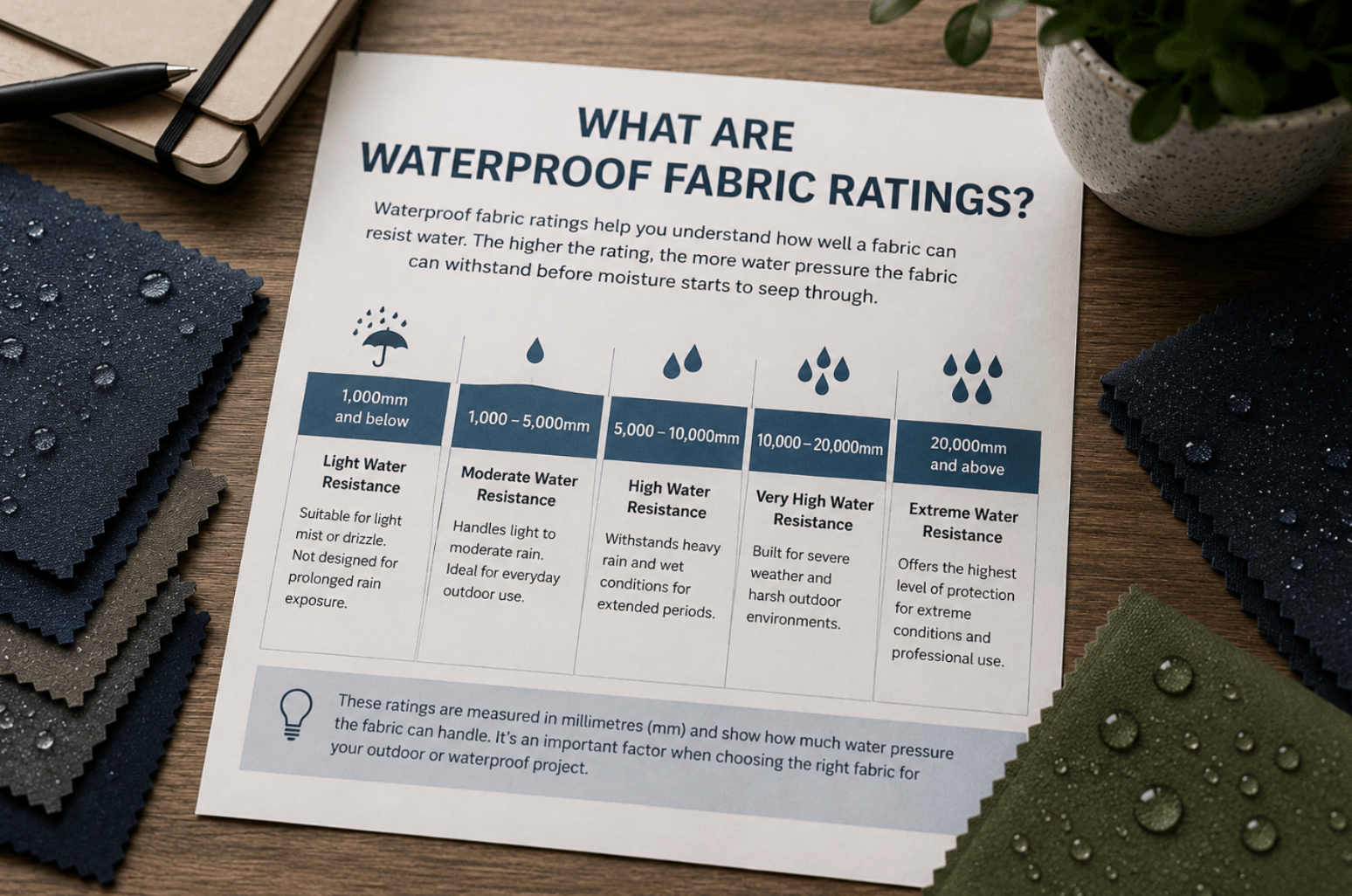
Waterproof fabric ratings indicate how well a material resists water under controlled testing, helping buyers compare different fabrics for different uses.
These ratings are designed to give a measurable way of assessing water resistance. In practice, they help manufacturers describe how much moisture a fabric can resist before water begins to pass through.
That sounds straightforward, but waterproof ratings can be misleading if taken in isolation.
A fabric with a high waterproof rating may not automatically be the best option for your project. A heavily coated material might resist water well, but it could also feel stiffer or less suitable for soft furnishings.
That is why choosing fabric should always involve more than just looking at numbers.
How Waterproof Ratings Are Measured
Waterproof ratings are usually measured through standardised testing that assesses how much water pressure a fabric can withstand before moisture penetrates.
Most testing involves exposing fabric to increasing water pressure under controlled conditions.
The goal is simple. Testing measures the point at which water begins to penetrate the material.
This helps create a comparable benchmark between fabrics, especially when buyers need to assess different outdoor materials.
It is important to remember that laboratory conditions do not perfectly replicate real-world use.
In practice, fabric performance can also be affected by:
- Folding and creasing
- Repeated use
- Dirt build-up
- Stitching and seams
- Weather exposure
This is one reason waterproof ratings should be treated as guidance rather than guarantees.
What Hydrostatic Head Ratings Mean For Waterproof Fabric
Hydrostatic Head measures how much water pressure fabric can withstand before moisture passes through it.
Hydrostatic Head is one of the most commonly referenced waterproof measurements.
In simple terms, it measures resistance to water pressure using a vertical column of water applied during testing.
Higher measurements generally indicate greater water resistance, but higher does not always mean better for every application.
When choosing waterproof fabric, it helps to consider Hydrostatic Head alongside other factors such as:
- Fabric weight
- Flexibility
- Texture
- Coating type
- Intended use
For example, a garden cushion and a heavy-duty furniture cover may prioritise very different characteristics.
A softer fabric may be more comfortable for seating, even if another fabric offers a higher waterproof rating.
Understanding The Difference Between Water-Resistant And Waterproof Fabrics
Water-resistant and waterproof fabrics offer different levels of protection, so the terms should not be used interchangeably.
This is one of the biggest areas of confusion for buyers.
| Feature | Water-Resistant | Waterproof |
| Moisture Protection | Resists light moisture | Designed for stronger water protection |
| Typical Use | Light outdoor use, occasional exposure | Heavier exposure to rain or wet conditions |
| Limitations | Can eventually absorb moisture | Performance depends on construction and seams |
| Maintenance | Still requires care | Still requires cleaning and maintenance |
Water-resistant fabrics may be perfectly suitable for decorative outdoor cushions in sheltered areas.
Waterproof materials are often better suited to projects exposed to more consistent rain or moisture.
Understanding waterproof material vs water-resistant fabrics makes product comparison much easier.
How Breathability Works Alongside Waterproof Ratings

Breathability affects comfort and airflow, but not every waterproof fabric is designed to prioritise it.
Some waterproof fabrics are engineered to resist water while still allowing moisture vapour or heat to escape.
This matters more for applications such as:
- Outdoor clothing
- Pet accessories
- Covers with enclosed airflow
- Certain specialist sewing projects
For many UK Fabrics Online projects such as outdoor seating, bench cushions or furniture covers, breathability may matter less than durability, cleanability and comfort.
This is why waterproof ratings and breathability should be viewed as separate considerations.
Which Waterproof Ratings Are Suitable For Different Uses?
Different projects require different levels of waterproof performance.
The most important question is not “What rating is best?” but “What does this project need?”
Consider how the fabric will actually be used.
Garden cushions
Comfort, appearance and moderate water resistance often matter most.
Furniture covers
These may need stronger water protection, especially during prolonged outdoor exposure.
Pergolas or awnings
Weather exposure and coverage become more important than softness.
Bags and accessories
Flexibility, weight and seam construction often matter as much as waterproof performance.
At UK Fabrics Online, project suitability usually matters more than chasing the highest rating available.
How Weather Conditions Affect Waterproof Fabric Performance
Weather conditions can influence real-world waterproof performance more than many buyers expect.
Even a well-rated fabric can perform differently depending on its environment.
Common factors include:
- Prolonged rain
- Strong sunlight
- Wind-driven moisture
- Dirt or pollen build-up
- Seasonal storage conditions
Dirt is often overlooked.
Surface contamination can gradually affect coatings and water repellency, especially when fabrics are left outdoors for extended periods.
Knowing how to protect outdoor fabric helps maintain performance between seasons.
Why Fabric Construction And Coatings Matter
Fabric construction often matters just as much as waterproof ratings.
Two fabrics with similar ratings may perform very differently depending on how they are made.
Construction factors include:
- Tight woven structures
- Surface coatings
- Laminated layers
- Backing materials
- Finish quality
A coated fabric may offer stronger moisture resistance but feel firmer.
A woven waterproof material may feel softer and more natural while behaving differently under pressure.
Understanding different waterproof fabrics helps explain why numbers alone never tell the full story.
How Seam Sealing Impacts Waterproof Protection
Seams are often the weakest point in waterproof projects.
Even when the fabric itself resists water well, stitching creates needle holes.
Those holes can allow moisture to pass through.
This is especially important for:
- Covers
- Outdoor bags
- Protective panels
- Weather-exposed upholstery
Depending on the project, seam sealing may help reduce water ingress.
Using seam tape or sealants can improve seam performance where extra protection is needed.
This is why seam sealing matters for projects exposed to regular rain.
Common Misunderstandings About Waterproof Ratings
Many buying mistakes come from misunderstanding what waterproof ratings actually tell you.
Avoid these common assumptions:
- Higher ratings always mean better fabric
- Waterproof means maintenance-free
- Waterproof automatically means breathable
- Ratings stay unchanged forever
- Waterproof fabric never needs cleaning
Waterproof performance can change over time depending on wear, cleaning and storage.
Choosing Waterproof Fabrics For Outdoor Clothing And Furniture
Choosing the right waterproof fabric depends on the project, not just the rating.
Outdoor clothing often prioritises movement and breathability.
Furniture and home projects usually prioritise different qualities.
For garden and upholstery projects, consider:
- Comfort
- Texture
- Flexibility
- Ease of cleaning
- Water resistance
- Visual appearance
A fabric that works brilliantly for rainwear may feel completely wrong for a bench cushion.
Matching material to purpose leads to better results.
How To Maintain Waterproof Fabric Performance Over Time
Regular maintenance helps waterproof fabrics perform more consistently.
Use this simple checklist:
- Brush off dirt regularly
- Clean spills promptly
- Store dry where possible
- Avoid harsh detergents
- Inspect seams periodically
Poor maintenance can gradually reduce waterproof performance.
Knowing how to wash waterproof fabric properly also helps protect coatings and finishes.
Signs Of Low-Quality Waterproof Fabric
Poor-quality waterproof fabric often shows warning signs before failure becomes obvious.
Look out for:
- Uneven coatings
- Inconsistent texture
- Weak backing
- Visible surface wear
- Early seam stress
- Poor finishing
Good waterproof fabric should feel consistent across the material.
Sudden variations in finish or texture can indicate weaker construction.
Frequently Asked Questions About Waterproof Fabric Ratings
What does Hydrostatic Head mean?
Hydrostatic Head measures how much water pressure fabric can resist before water penetrates.
Does a higher waterproof rating always mean better fabric?
No. Higher ratings may improve water resistance but may not suit every project.
Is waterproof better than water-resistant?
Not always. It depends on how much moisture protection your project needs.
Do seams affect waterproof performance?
Yes. Stitching creates needle holes that may allow water ingress.
Can waterproof fabric lose performance over time?
Yes. Wear, dirt and poor maintenance can reduce effectiveness.
Are waterproof ratings enough to choose fabric?
No. Ratings help, but construction, coatings and intended use matter too.
Waterproof fabric ratings are useful, but they are only one part of choosing the right material.
Hydrostatic Head and waterproof testing help compare fabrics, but real-world performance depends on far more than laboratory measurements. Construction, coatings, seams and maintenance all influence how fabric performs over time.
The best choice depends on your project.
If you are comparing fabrics for outdoor cushions, furniture covers, upholstery or sewing projects, exploring the details behind each material will help you choose more confidently. If you need help selecting the right fabric, please contact us, and the UK Fabrics Online team will be happy to help.
Leave a Reply