How to Mix Different Textures in a Living Room
10th October, 2026
Mixing textures in a living room works best when one main upholstered surface sets the direction and smaller pieces introduce contrast. Colour and selective repetition can then help different fabrics feel connected.
Texture includes how a fabric looks as well as how it feels. Velvet pile, woven tweed and corduroy ribs each create a different visual effect. The goal is to choose where contrast helps and where a quieter surface keeps the room balanced.
Start with One Dominant Upholstery Texture
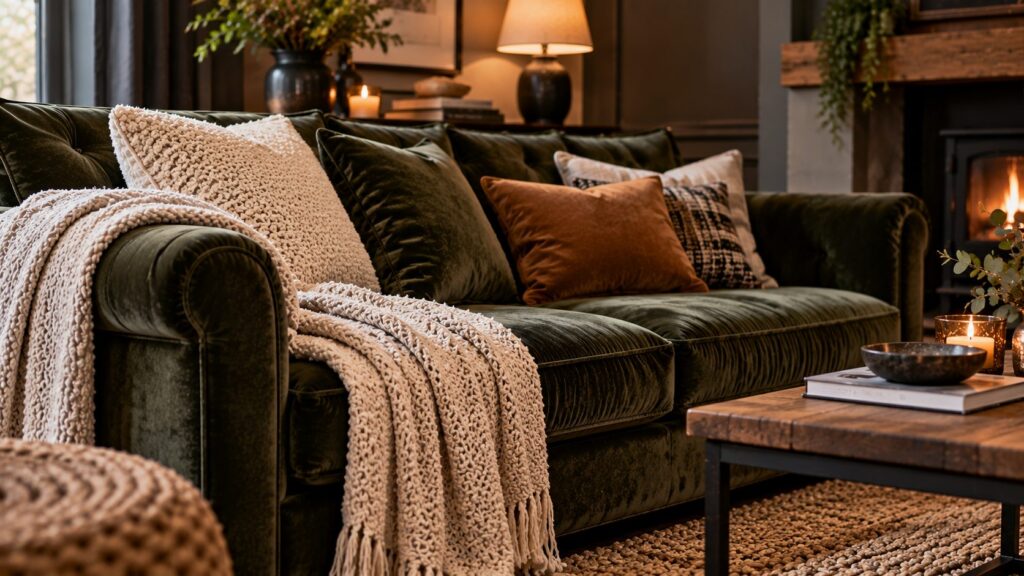
Start with the largest upholstered surface in the room, usually the sofa or a prominent armchair, and use its texture as the foundation for later choices.
If the sofa is staying, treat its colour and surface as fixed reference points. A smoother-looking sofa leaves room for more pronounced cushions or an occasional chair. A sofa with a strong rib, pile or woven character may need calmer supporting fabrics.
When comparing upholstery fabrics, ask:
- Is the surface visually smooth or pronounced?
- Does its colour need to lead the palette?
- Is the piece already the main focal point?
Combine Smooth Fabrics with Heavily Textured Materials
Combining a smoother surface with an obvious pile, weave or rib makes the contrast easier to see. Strong colour differences are not essential.
A smooth-looking sofa could sit with ribbed cushions, a woven chair or a velvet accent piece. If the main upholstery already has pronounced texture, reverse the approach and use quieter surfaces around it.
Velvet
Velvet brings texture through its pile. The surface can appear different as the pile direction and room lighting change, giving it a distinct visual character.
Compare velvet upholstery fabric with flatter-looking fabrics when you want an accent piece to stand apart from the main seating.
Tweed
Tweed introduces a visibly woven surface rather than a pile. This can give an upholstered piece more visual definition without relying on pattern.
When exploring textured tweed upholstery fabric, check individual product information rather than assuming all tweeds share the same fibre content or upholstery suitability.
Corduroy
Corduroy is recognisable by its visible ribs, creating a more linear surface than velvet or a varied woven texture.
When comparing corduroy fabric, look at the scale of the rib beside other fabrics in the room. A pronounced rib may need quieter surrounding surfaces.
Use Contrasting Textures on Sofas and Armchairs
A sofa and armchair do not need matching upholstery to feel connected. Different textures can work together when colour, proportion or nearby soft furnishings create continuity.
Decide which piece should attract more attention. An understated sofa can support a velvet or visibly woven chair in a related colour. The surface change gives the chair its own identity without disconnecting it from the room.
Pattern adds another visual layer. If both pieces use strong patterns and pronounced textures, consider simplifying one element to create a clearer hierarchy.
Layer Cushions in Different Upholstery Fabrics
Cushions are a lower-commitment place to test different textures because they change the surface mix without replacing the main upholstery.
Begin with the sofa fabric. A plain, smoother sofa might take one woven cushion, one ribbed option and one quieter fabric in related colours. Avoid making every cushion different. Repeating one colour or surface characteristic can hold the group together.
Pattern should be considered separately from texture. Several patterned cushions already create visual movement, which means pronounced surfaces may need a lighter touch.
Browse cushion fabrics alongside the sofa rather than choosing each fabric in isolation.
Introduce Texture Through a Statement Footstool
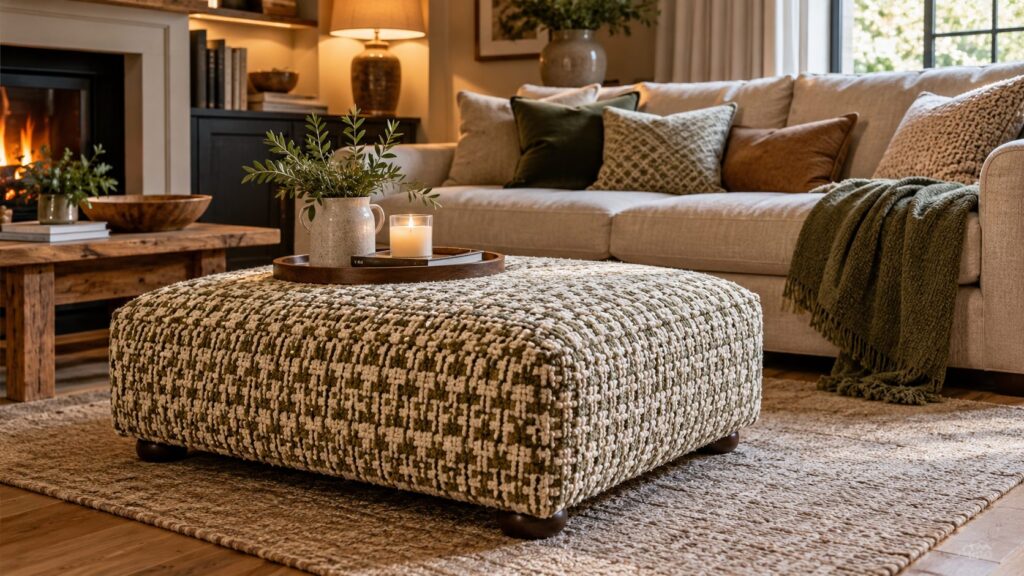
A footstool can carry stronger texture without the commitment of changing a sofa, making it useful when larger upholstery is restrained.
A quieter sofa and armchair can leave room for a footstool with a pronounced pile, rib or woven surface. If nearby furniture already uses strong texture, the footstool may work better in a calmer fabric.
Colour can either connect the piece to the seating or make it more prominent. Check any chosen fabric for the intended application rather than selecting on appearance alone.
Mix Natural and Synthetic Fabric Finishes
Natural and synthetic fibres can both produce many textures. Choose according to the actual fabric’s surface, composition, care information and intended use rather than fibre type alone.
Do not assume velvet is synthetic, tweed is natural or corduroy has one standard composition. Blended fabrics may contain both.
Compare specific products instead. Look at how each fabric sits beside the existing upholstery, how it feels in hand and whether its product information fits the project.
Repeat Each Texture Across the Living Room
Repeating a texture, or a related surface, can make a mixed scheme feel deliberate without following a rigid formula.
A velvet chair might be echoed by one velvet cushion. A woven footstool could connect with a similarly textured cushion elsewhere.
Exact repetition is not essential. Colour can provide continuity when surfaces differ.
Use a Consistent Colour Palette to Unite Different Textures
Keeping several textures within the same colour family, or a small group of related colours, can make contrasting surfaces feel more connected.
Different shades of green, for example, could appear across a smoother sofa, velvet chair and ribbed cushions. The colour relationship gives the eye a common reference point while each surface remains distinct.
Compare samples together in the room where they will be used. Texture affects how light falls across fabric, which can change how colour appears. Check undertones as well as colour names.
Balance Textured Upholstery with Simpler Surfaces
If several upholstered pieces already have pronounced texture, leave some surrounding surfaces quieter to prevent the room becoming visually crowded.
Not every cushion needs a pile, rib or strong weave. Plain fabric can give a textured armchair or footstool more space to stand out. Curtains, rugs and patterned furnishings should also be included because they contribute to the overall mix.
If the room feels busy, remove one competing element before adding another. The same thinking applies when choosing between plain and patterned upholstery fabric: texture and pattern both demand attention and should be planned together.
Successful texture mixing starts with the largest upholstered surface, then builds contrast through smaller pieces. Colour and selective repetition help different materials feel connected.
Compare fabrics side by side before committing to a larger project. Samples can reveal differences in pile, rib, weave and colour that are harder to judge on screen.
Explore upholstery fabrics to compare velvet, tweed, corduroy and other textures, and order samples where available to see how different fabrics work together in your room.
Leave a Reply