Can You Use Two Different Fabrics on One Sofa?
25th November, 2026
Yes, you can use two different fabrics on one sofa. A successful combination starts with deciding where each material will sit, then assessing colour, pattern, texture and upholstery suitability together.
Plan the placement before buying either material. Both fabrics need to suit their intended role, while width, pattern repeat, direction and pile can influence cutting and quantity.
When comparing sofa upholstery fabric, consider the requirements of each sofa area rather than choosing two designs purely because they look attractive together. Complex reupholstery may also warrant advice from an experienced upholsterer.
Why Use Two Different Fabrics on One Sofa?
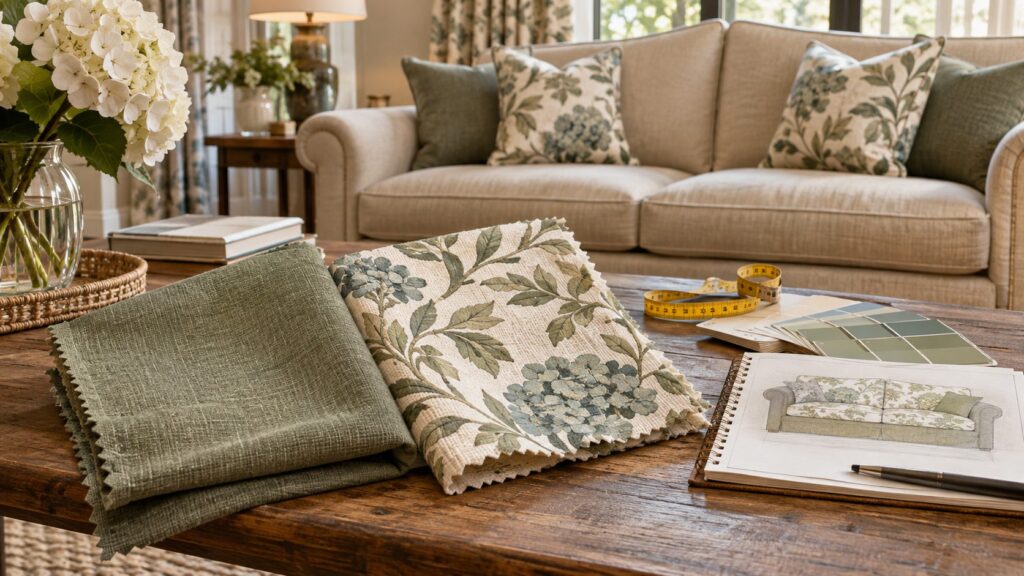
Using two fabrics can highlight the sofa’s shape, introduce pattern in a controlled area or create contrast between selected sections.
A second material could:
- add pattern to removable cushions;
- introduce a different texture;
- highlight arms, backs or side panels;
- repeat a colour from elsewhere in the room;
- connect contrasting sections through piping.
For example, use plain fabric across the main body and reserve a patterned design for the back cushions, giving each material a defined role.
Which Parts of a Sofa Can Use Contrasting Fabric?
Contrasting fabric can cover cushions, backs, arms, side panels or piping, depending on the sofa’s construction and how each area is used.
Start by identifying separate upholstered sections, then consider the level of contact each receives. Seat cushions and front edges face regular wear, while outer backs may have a more decorative role.
Removable cushions can provide a clear dividing point between fabrics. For fixed sections, inspect the sofa’s construction before deciding where the contrast should begin and end.
Choose a Dominant and an Accent Fabric
For most two-fabric sofas, one dominant material and one accent create a clear, balanced design.
Use the dominant fabric across larger areas, then reserve the accent for cushions, panels or piping. A noticeable pattern can work well in these defined sections without overwhelming the sofa.
Decide each material’s role before comparing upholstery fabric. This also helps you plan placement and calculate quantities accurately before ordering fabric for the project.
Combine Colours That Work Well Together
Two fabrics do not need to match, although a visual connection can make the combination feel intentional.
Three useful approaches are:
- Share a colour. Choose an accent pattern containing a shade from the main upholstery.
- Work tonally. Pair related shades and use texture for contrast.
- Create contrast. Select different colours while considering nearby furnishings.
Compare both fabrics together in daylight and artificial light, as lighting and surrounding colours can affect how each shade appears.
Balance Plain, Patterned and Textured Fabrics
Contrast can come from pattern, colour or texture. A plain material can support a stronger print, while fabrics in similar shades can create distinction through their surfaces.
If both designs are patterned, consider scale, direction and placement before cutting. Our guide to choosing patterned or plain fabric can help you decide which should take the stronger visual role.
Using Velvet as One of the Fabrics
Velvet can introduce contrast through its pile. Check individual product details for upholstery suitability and consider pile direction when planning pieces.
Using Tweed as One of the Fabrics
Tweed offers another route to texture. Check each fabric’s composition, intended use, care guidance and supplied specifications before choosing its position on the sofa.
Make Sure Both Fabrics Suit Their Upholstery Role
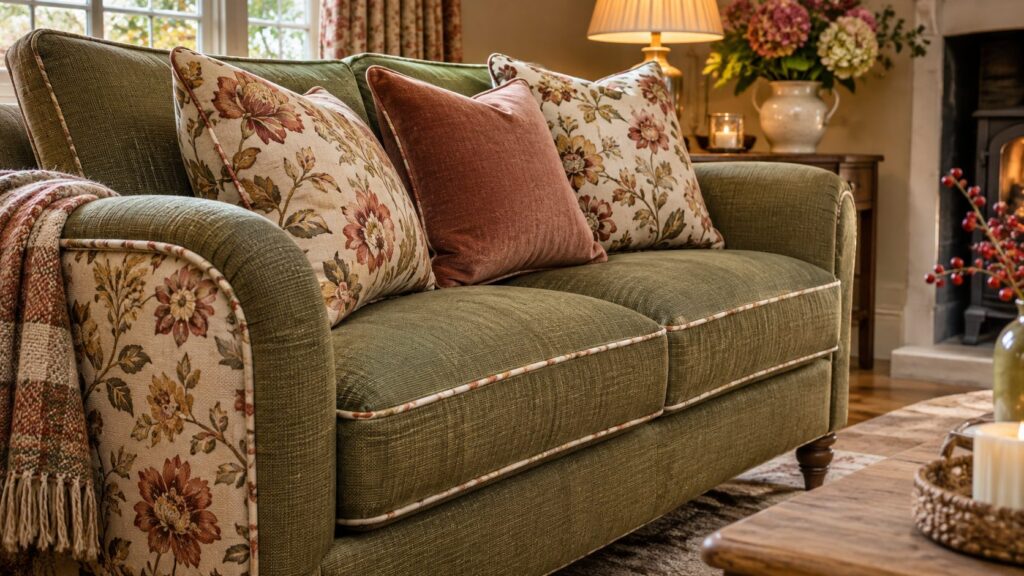
Both fabrics should suit the sofa areas they will cover, especially sections exposed to frequent sitting, rubbing or handling.
Visual compatibility does not guarantee similar performance. Before choosing each material, check:
- intended upholstery use;
- relevant abrasion data where supplied;
- care requirements;
- level of contact in its planned position;
- other product-specific performance information.
Consider the complete specification rather than relying on a single figure, such as rub count, to judge whether a fabric suits its intended role.
Consider Pattern Scale and Direction
If either fabric is patterned or directional, plan its placement before cutting. Pattern repeat, motif position and orientation can affect both appearance and the amount of material required.
Check how stripes, checks or large motifs align across neighbouring cushions and panels. Directional designs and pile fabrics may also restrict the cutting layout. Review the fabric width, repeat and relevant directional details before ordering, allowing for additional material where pattern matching requires it.
Calculate How Much of Each Fabric You Need
Calculate each fabric from the sofa sections it will cover rather than dividing the total requirement equally.
Assign every upholstered section to fabric A or B, then measure using the appropriate project method. Account for:
- fabric width;
- pattern repeat and matching;
- direction or pile;
- piping;
- cutting layout and allowances.
For complex projects, confirm final quantities with an upholsterer or reliable project instructions before ordering.
Do Not Assume the Split Is 50/50
A two-fabric sofa rarely requires equal amounts of each material. The frame may use one fabric while the second covers only cushions or piping. Surface area, width, pattern repeat and cutting requirements determine the final quantity needed.
Use Piping and Trims to Unite the Design
Piping can repeat one fabric against the other or carry a shared colour between contrasting sections, giving the upholstery scheme a deliberate connection.
You might use the accent fabric as piping around a plain seat cushion, use matching piping for a quieter finish or select a shared colour where the main materials differ.
Include piping in your quantity planning. It requires material and additional construction work rather than functioning as a quantity-free finishing detail.
Avoid Common Two-Fabric Upholstery Mistakes
The main problems arise when appearance drives the entire decision, placement is left until late in the project or cutting requirements are overlooked.
| Mistake | Better Approach |
| Buying both fabrics before assigning their placement | Map each sofa area first |
| Choosing on appearance alone | Check suitability for each upholstery role |
| Dividing quantities equally | Calculate each material separately |
| Ignoring pattern repeat | Plan motif placement before cutting |
| Overlooking pile or direction | Establish orientation across relevant pieces |
| Assuming matching colours mean matching performance | Review each product specification |
| Forgetting piping | Include it within material planning |
| Comparing fabrics only on screen | View physical samples together where available |
Should You Order Samples of Both Fabrics?
Where available, order samples of both fabrics and compare them together before committing to larger quantities. This helps you assess whether the colours, patterns and textures work as one upholstery scheme.
View the samples against the sofa and nearby furnishings in daylight and artificial light. Check pattern scale, surface texture and how each colour responds to its surroundings.
Samples also provide a useful reference for weight and handle. However, they do not replace checking the individual product specifications to confirm each material is suitable for its intended area of the sofa.