What is the Best Way to Clean Linen Upholstery Fabric?
10th August, 2026
Linen upholstery adds natural texture and timeless style to sofas, armchairs and other soft furnishings. Looking after it properly helps preserve its appearance and extend its lifespan. If you’re wondering how to clean linen upholstery fabric, the safest approach is to use gentle cleaning methods, deal with spills promptly and always follow the manufacturer’s care instructions.
This guide explains how to clean linen upholstery safely, avoid common mistakes and recognise when professional cleaning may be the better option.
How To Clean Linen Upholstery Fabric Safely
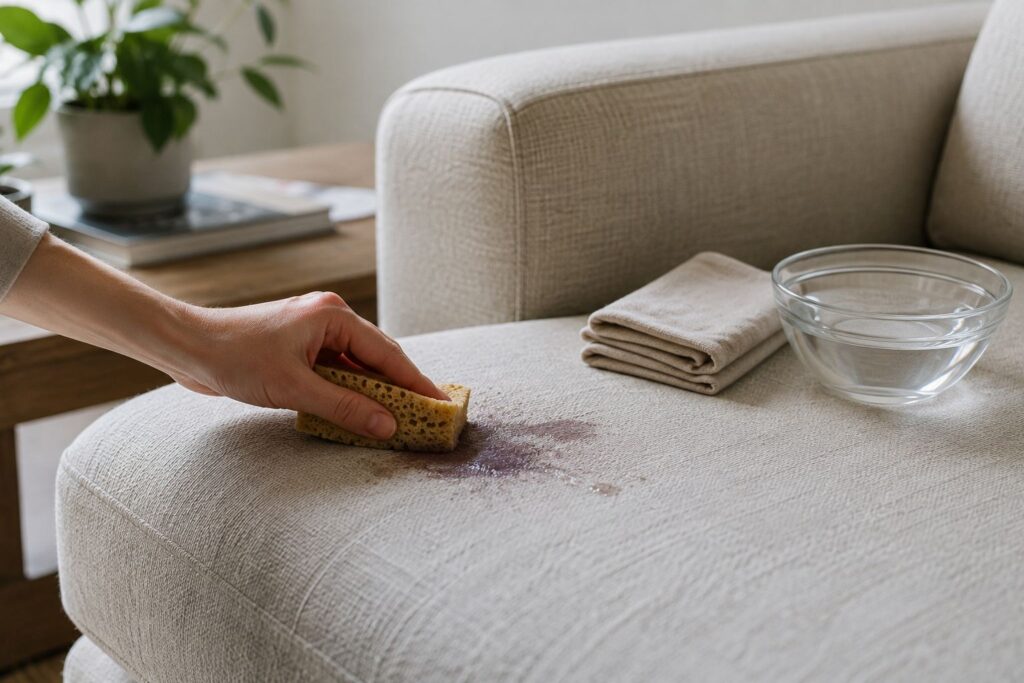
Linen upholstery should be cleaned using gentle methods that remove dirt without saturating or damaging the fabric. Always check the manufacturer’s care instructions before using any cleaning product.
Quick Answer
- Read the manufacturer’s cleaning guidance before starting.
- Remove loose dust using a vacuum with an upholstery attachment.
- Test any cleaning product on a hidden area first.
- Blot spills with a clean cloth instead of rubbing them.
- Keep moisture to a minimum.
- Allow the upholstery to dry naturally in line with the manufacturer’s recommendations.
Choosing upholstery fabric designed for its intended purpose also helps support long-term care. The right fabric for the job provides a strong foundation for years of regular maintenance.
Why Linen Upholstery Needs Gentle Care
Linen upholstery has a distinctive woven texture that benefits from careful cleaning rather than aggressive stain removal techniques.
Its textured finish can be affected by harsh scrubbing or excessive moisture, making gentle maintenance the safest approach. Regular vacuuming and prompt attention to spills help preserve the fabric’s appearance while reducing the need for deeper cleaning. For more advice on selecting and caring for upholstery materials, explore the complete guide to upholstery fabric.
Check The Manufacturer’s Cleaning Instructions First
Manufacturer guidance should always take priority over general cleaning advice because upholstery fabrics can differ in composition and finish.
Some linen upholstery fabrics are produced as blends, while others may include finishes or treatments that influence suitable cleaning methods. Care labels may also include cleaning codes, warranty information or recommendations for professional cleaning.
General guidance cannot replace product-specific instructions. If any recommendation conflicts with the manufacturer’s advice, follow the manufacturer’s guidance instead.
How To Remove Dust And Loose Dirt
Routine vacuuming removes dust before it settles into the fabric and reduces the need for deeper cleaning.
Follow these steps:
- Attach the upholstery nozzle to your vacuum cleaner.
- Vacuum every visible surface using light, even strokes.
- Pay close attention to seams, piping and cushion creases where dust gathers.
- Lift removable cushions, where appropriate, and vacuum beneath them.
- Repeat this routine as part of your regular household cleaning schedule.
Removing surface debris before it works deeper into the weave helps maintain the fabric’s appearance while reducing unnecessary wear during future cleaning.
Spot Cleaning Stains From Linen Upholstery
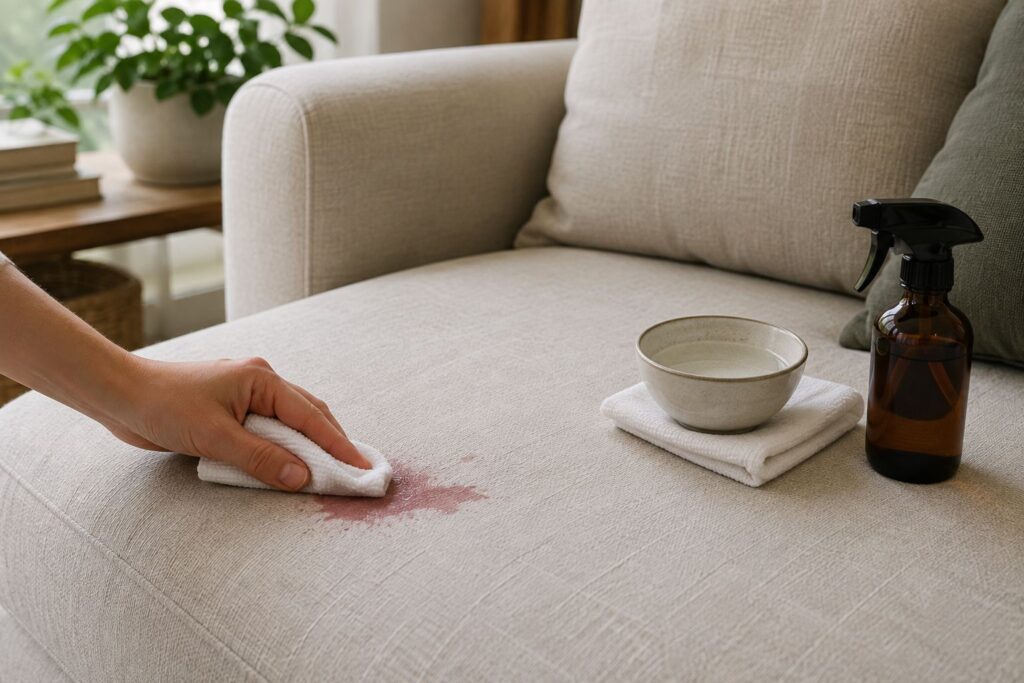
Treat stains as soon as possible using gentle blotting techniques rather than vigorous rubbing.
Blot spills with a clean, absorbent cloth to lift excess liquid. If further cleaning is needed, use a product suitable for the specific upholstery fabric and test it on a hidden area first. Work from the outside of the stain towards the centre to help prevent spreading. When choosing upholstery fabric, consider how it will be used, as maintenance requirements vary between different upholstery materials.
Choosing The Right Cleaning Products For Linen Fabric
Cleaning products should be selected according to the manufacturer’s guidance and the specific upholstery fabric.
As a general approach:
- Select cleaners suitable for the individual upholstery fabric.
- Carry out a patch test before wider application.
- Avoid bleach unless the manufacturer specifically approves its use.
- Do not use harsh solvents unless recommended for that particular fabric.
- Follow the product instructions carefully throughout the cleaning process.
Requires Verification: The suitability of any cleaning product depends on the individual upholstery fabric, its composition and any applied finishes. Product-specific recommendations should always be confirmed before use.
How To Deep Clean Linen Upholstery Fabric
Deep cleaning should be occasional and carried out using methods suitable for the specific upholstery fabric.
Routine vacuuming and prompt stain treatment are sufficient for many households. When the upholstery begins to look generally tired or heavily soiled, deeper cleaning may become appropriate.
Avoid excessive moisture throughout the process, allow adequate drying time and resist the temptation to speed drying with excessive heat unless recommended by the manufacturer.
Where care instructions recommend professional cleaning, or where valuable furniture is involved, specialist upholstery cleaning provides additional reassurance.
Common Cleaning Mistakes That Can Damage Linen
Many upholstery problems are caused by incorrect cleaning techniques rather than everyday use.
Avoid these common mistakes:
- Scrubbing stains instead of blotting them.
- Saturating the fabric with water.
- Skipping patch tests before using cleaning products.
- Applying more detergent than necessary.
- Ignoring the manufacturer’s care instructions.
- Delaying treatment until stains become more difficult to remove.
Correct technique protects the woven surface and helps maintain the appearance of the upholstery over time.
How To Keep Linen Upholstery Looking Its Best
Regular maintenance helps preserve the appearance of linen upholstery and reduces the likelihood of stubborn stains.
Good habits include:
- Vacuuming regularly.
- Removing spills promptly.
- Rotating cushions where appropriate to encourage even wear.
- Following the manufacturer’s recommended care routine.
- Limiting prolonged exposure to direct sunlight where practical.
These small maintenance tasks help keep upholstered furniture looking fresh while reducing the need for more intensive cleaning.
Frequently Asked Questions About Cleaning Linen Upholstery Fabric
Can linen upholstery be washed?
Not every linen upholstery fabric can be washed. Always follow the manufacturer’s care instructions before attempting any cleaning method.
Is steam cleaning safe for linen upholstery?
Steam cleaning is not suitable for every linen upholstery fabric. Check the manufacturer’s guidance before considering this approach.
How often should linen upholstery be cleaned?
Regular vacuuming helps remove dust and everyday debris. Deeper cleaning should only take place when required and in line with the manufacturer’s recommendations.
Can water stain linen upholstery?
Some upholstery fabrics may react differently to moisture depending on their composition and finish. Avoid over-wetting the fabric and follow the manufacturer’s care guidance.
When should I use a professional upholstery cleaner?
Professional cleaning may be appropriate for valuable furniture, persistent staining or upholstery where the manufacturer recommends specialist care.
Gentle, consistent care helps preserve the appearance and texture of linen upholstery for longer. Regular vacuuming, prompt attention to spills and following the manufacturer’s instructions provide the best foundation for long-term maintenance without unnecessary risk.
If you’re planning a new upholstery project or replacing existing fabric, explore our upholstery fabric collection for inspiration. If you’d like tailored guidance before choosing a fabric, contact us and our team will be happy to help.
Leave a Reply