How to Store Waterproof Fabrics Without Causing Damage
10th June, 2026
Proper storage helps waterproof fabrics maintain their performance, appearance and lifespan by reducing exposure to moisture, excessive heat and unnecessary stress.
Whether you’re storing fabric for a future sewing project, packing away garden cushions for winter or keeping upholstery materials between jobs, the way you store waterproof fabrics can influence how they perform when you need them again.
Unlike ordinary textiles, waterproof materials often rely on coatings, laminates or specialised constructions that can be affected by environmental conditions over time. A few simple storage habits can help protect your investment and reduce the risk of mould, creasing or premature deterioration.
Why Proper Storage Matters For Waterproof Fabrics
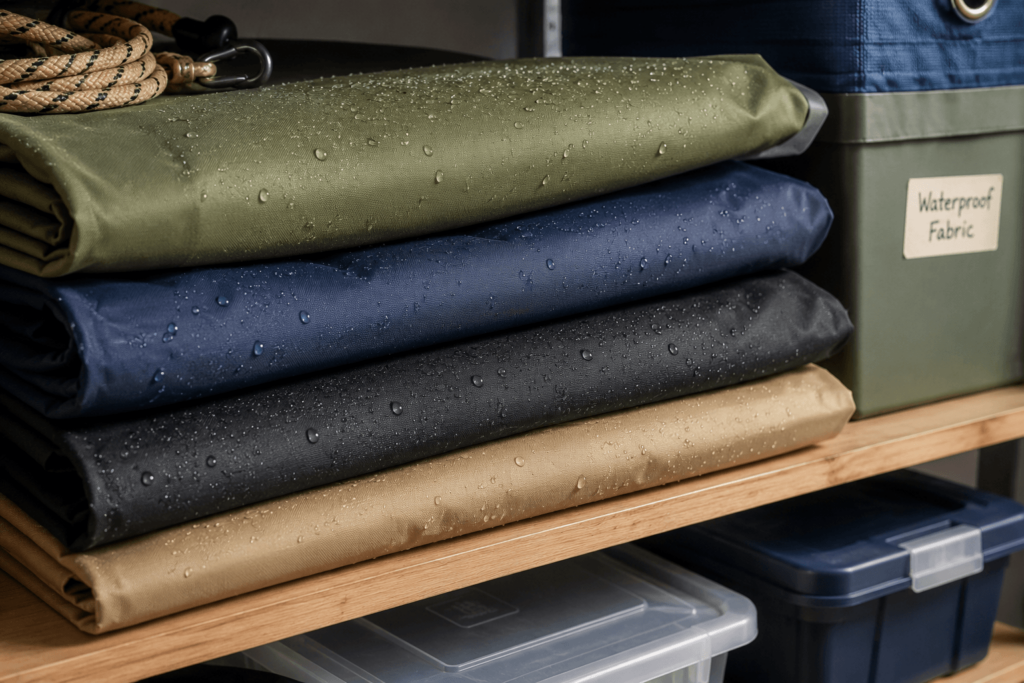
Proper storage helps waterproof fabrics retain their protective properties for longer.
Many waterproof materials rely on treatments, coatings or bonded layers to keep moisture out. While these materials are designed to withstand outdoor use, they can still be affected by prolonged exposure to poor storage conditions.
For example, storing fabric in a damp shed, compressing it under heavy items or leaving it exposed to direct sunlight for extended periods may place unnecessary stress on the material.
Good storage practices can help preserve:
- Waterproof performance
- Appearance and colour
- Fabric flexibility
- Coating integrity
- Overall lifespan
This is particularly important when storing fabric purchased for future projects, where materials may remain unused for several months before being cut and sewn.
What Happens When Waterproof Fabrics Are Stored Incorrectly?
Incorrect storage can contribute to mould, coating damage, creases and reduced waterproof performance.
The effects are not always visible immediately. In many cases, damage develops gradually while the material is sitting unused.
Potential issues include:
Mould And Mildew
Moisture trapped within folded fabric can create conditions where mould or mildew may develop.
Permanent Creasing
Repeated folding in the same location can sometimes leave long-term creases, particularly during extended storage periods.
Coating Deterioration
Waterproof coatings may be affected by excessive heat, prolonged pressure or poor environmental conditions.
Delamination
Some waterproof materials use bonded layers. If these layers begin separating over time, performance can be affected.
Storage is only one factor, but it can contribute to the long-term durability discussed when considering how long waterproof fabric stays waterproof throughout its usable life.
How To Store Waterproof Fabrics Properly
Store waterproof fabrics clean, dry and away from extreme temperatures in a breathable environment.
Following a simple process can help minimise storage-related issues.
Step 1: Clean The Fabric
Remove dirt, dust and debris before putting fabric away.
Contaminants left on the surface may become harder to remove after long-term storage.
Step 2: Allow The Fabric To Dry Completely
Never store waterproof fabric while damp.
Even small amounts of trapped moisture can create problems over time.
Step 3: Fold Or Roll Carefully
Avoid sharp folds where possible.
For larger pieces of waterproof fabric, rolling can often reduce pressure points and minimise creasing during long-term storage.
Step 4: Choose A Suitable Storage Space
Select an area that remains relatively dry, clean and well-ventilated throughout the year.
Step 5: Check Stored Fabric Periodically
If fabric is being stored for several months, occasional inspection can help identify potential issues before they become significant problems.
The Best Conditions For Long-Term Fabric Storage
Stable conditions are usually better than extreme ones.
Temperature
Avoid areas that experience significant temperature fluctuations.
Hot lofts, garden outbuildings and poorly insulated storage spaces may expose fabrics to conditions that can place additional stress on waterproof coatings.
Humidity
Excessive humidity creates a greater risk of condensation, mould and mildew.
A dry environment is generally preferable.
Light Exposure
Prolonged direct sunlight may contribute to fading and material degradation over time.
Air Circulation
Good airflow helps reduce moisture build-up and creates a more stable storage environment.
Should Waterproof Fabrics Be Folded Or Hung?
The best storage method depends on the fabric type, quantity and intended use.
| Folding | Hanging |
| Suitable for smaller fabric cuts | Suitable for larger lengths |
| Easier for compact storage | Can reduce heavy fold lines |
| Requires careful folding | Requires adequate space |
| May create creases over time | Can reduce compression |
For large upholstery pieces or premium outdoor materials, rolling may offer a useful alternative to both methods.
The storage requirements for coated fabrics can differ from those used for laminated materials, which is one reason understanding various waterproof fabric types can be useful when planning long-term storage.
How Moisture And Humidity Affect Waterproof Materials
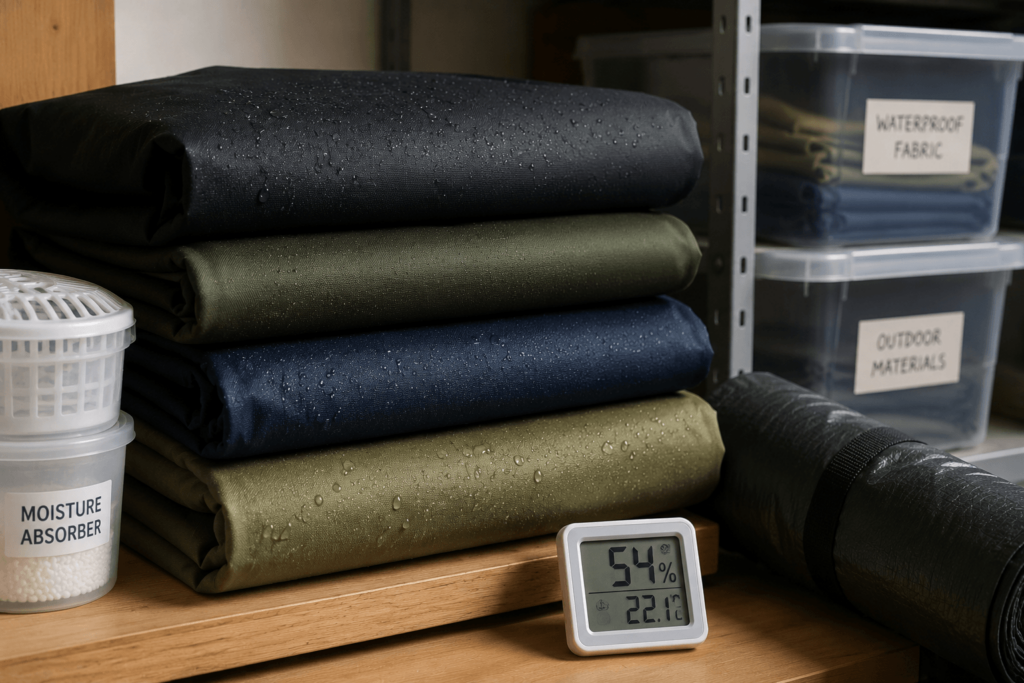
Moisture remains one of the biggest threats to stored waterproof fabrics.
Many people assume waterproof materials cannot be affected by moisture because they repel water during normal use. In reality, prolonged exposure to damp conditions can still create problems.
Potential risks include:
- Condensation
- Mould growth
- Mildew formation
- Unpleasant odours
- Coating deterioration
- Material staining
This is especially relevant when fabric is stored in garages, sheds or outbuildings where temperature fluctuations can encourage condensation.
Preventing Creases, Cracks And Delamination
Reducing pressure on the fabric can help prevent unnecessary wear during storage.
Avoid Excessive Compression
Do not place heavy items on top of stored waterproof fabrics.
Long periods of compression may increase the likelihood of creasing or stress within coated materials.
Consider Rolling Instead Of Folding
Rolling distributes pressure more evenly across the fabric.
This can be particularly useful for larger outdoor projects, upholstery materials and premium waterproof textiles.
Reposition Long-Term Storage Items
If fabric remains in storage for an extended period, occasional repositioning may help reduce stress on the same areas.
Why Breathable Storage Solutions Matter
Breathable storage solutions help reduce moisture build-up.
While it may seem logical to seal waterproof fabric inside airtight plastic bags, this can sometimes trap residual moisture and reduce airflow.
Better options may include:
- Cotton storage bags
- Breathable fabric covers
- Well-ventilated storage cupboards
- Shelving in dry indoor spaces
The goal is not simply to keep moisture out. It is also to prevent moisture becoming trapped within the storage environment.
How To Clean Waterproof Fabrics Before Storage
Cleaning before storage helps reduce the risk of stains, odours and contamination developing over time.
Storage Preparation Checklist
- Remove surface dirt
- Brush away debris
- Clean according to available care guidance
- Allow the material to dry completely
- Inspect for damage
- Store in a dry location
This is particularly important for outdoor fabrics exposed to pollen, mud, bird droppings or environmental debris throughout the season.
Common Mistakes That Damage Waterproof Fabrics
Many storage issues result from avoidable mistakes.
Common examples include:
Storing Fabric While Damp
This remains one of the most frequent causes of mould and mildew.
Using Airtight Plastic Bags
Limited airflow can increase moisture-related problems.
Leaving Fabric In Direct Sunlight
Extended UV exposure may affect appearance and material condition.
Storing Fabric In Hot Lofts
High temperatures can place unnecessary stress on coatings and bonded layers.
Ignoring Seasonal Checks
Long-term storage does not mean forgetting about the fabric entirely.
A quick inspection every few months can help identify issues early.
Storing Waterproof Clothing, Outdoor Gear And Accessories
Waterproof clothing and outdoor accessories often face many of the same storage challenges as fabric by the metre.
Jackets, waterproof bags, outdoor covers and seasonal equipment all benefit from being cleaned, dried and stored in stable conditions.
Proper storage forms part of a wider approach to how to protect outdoor fabric, particularly during winter months or periods of extended non-use.
Garden furniture provides a good example. Cushions and covers are often packed away for several months of the year, making the fabric you should use for outdoor cushions an important consideration long before storage becomes necessary.
How Temperature Changes Affect Waterproof Coatings
Frequent temperature changes can place additional stress on waterproof materials.
Heat Exposure
Excessive heat may affect some coatings, adhesives and bonded constructions over time.
Cold Conditions
Cold environments are generally less problematic than excessive heat, but repeated freezing and thawing cycles may not be ideal for all waterproof materials.
Expansion And Contraction
Like many materials, waterproof fabrics can respond to changing temperatures through expansion and contraction.
Stable storage conditions are generally preferable whenever possible.
Tips For Seasonal Storage Of Waterproof Fabrics
If you’re storing fabric between seasons, these practical steps can help:
- Clean fabric before storage
- Ensure materials are completely dry
- Avoid direct sunlight
- Use breathable storage solutions
- Prevent excessive compression
- Keep fabrics away from heat sources
- Check stored items periodically
- Address mould or moisture issues quickly
- Label stored materials for easy identification
- Store similar materials together
Frequently Asked Questions About Storing Waterproof Fabrics
Can waterproof fabric be stored in a garage?
It depends on the conditions. A dry, well-ventilated garage is generally preferable to a damp environment with frequent condensation.
Should waterproof fabrics be stored in plastic bags?
Breathable storage options are often preferable because they allow airflow while helping to reduce trapped moisture.
Can waterproof fabric develop mould?
Yes. Waterproof materials can still develop mould if stored while damp or kept in humid conditions.
Is folding or rolling better for waterproof fabric?
Both can work. Rolling is often preferred for larger pieces because it may reduce pressure points and creasing.
Can storage affect waterproof performance?
Poor storage conditions may contribute to issues such as coating deterioration, mould or material stress over time.
How often should stored waterproof fabric be checked?
For long-term storage, a quick inspection every few months is usually sensible.
Should waterproof fabric be cleaned before storage?
Yes. Removing dirt and ensuring the fabric is dry can help prevent problems developing during storage.
Proper storage helps waterproof fabrics maintain their appearance, flexibility and performance for longer.
Keeping materials clean, dry and protected from excessive heat or moisture can help reduce the risk of mould, creasing and unnecessary wear. While waterproof fabrics are designed to handle challenging conditions during use, they still benefit from careful storage when not in service.
If you’re planning a future project, explore our range of waterproof fabric suitable for outdoor furnishings, covers, upholstery and practical sewing applications. If you’d like advice on choosing the right material for your project, contact us and we’ll be happy to help.
Leave a Reply